A Habitat of Recognition enacts an infrastructural imaginary where an ore of granule particles (silica and iron) is written and read as a granular record. The imaginary consists of a coupled machine that reads the ore by performing its erosion and magnetic sorting layer by layer, while simultaneously writing the ore by depositing its residue sediments linearly according to the measured values. The infrastructure depends upon the manual labor of exchanging what was read as an ore with what is written as one, and what was written as an ore with what is read as one in order for the process to continue. The recognition of the ore as a record paradoxically requires its dismantling, and its new writing is prone to the resilience of its residues, entangled labor, and discrete measured values. The ore and the record alter iteratively upon each cycle, thus exhibiting the agencies of matter itself and how it entangles with information.
How it works
Reading mechanism
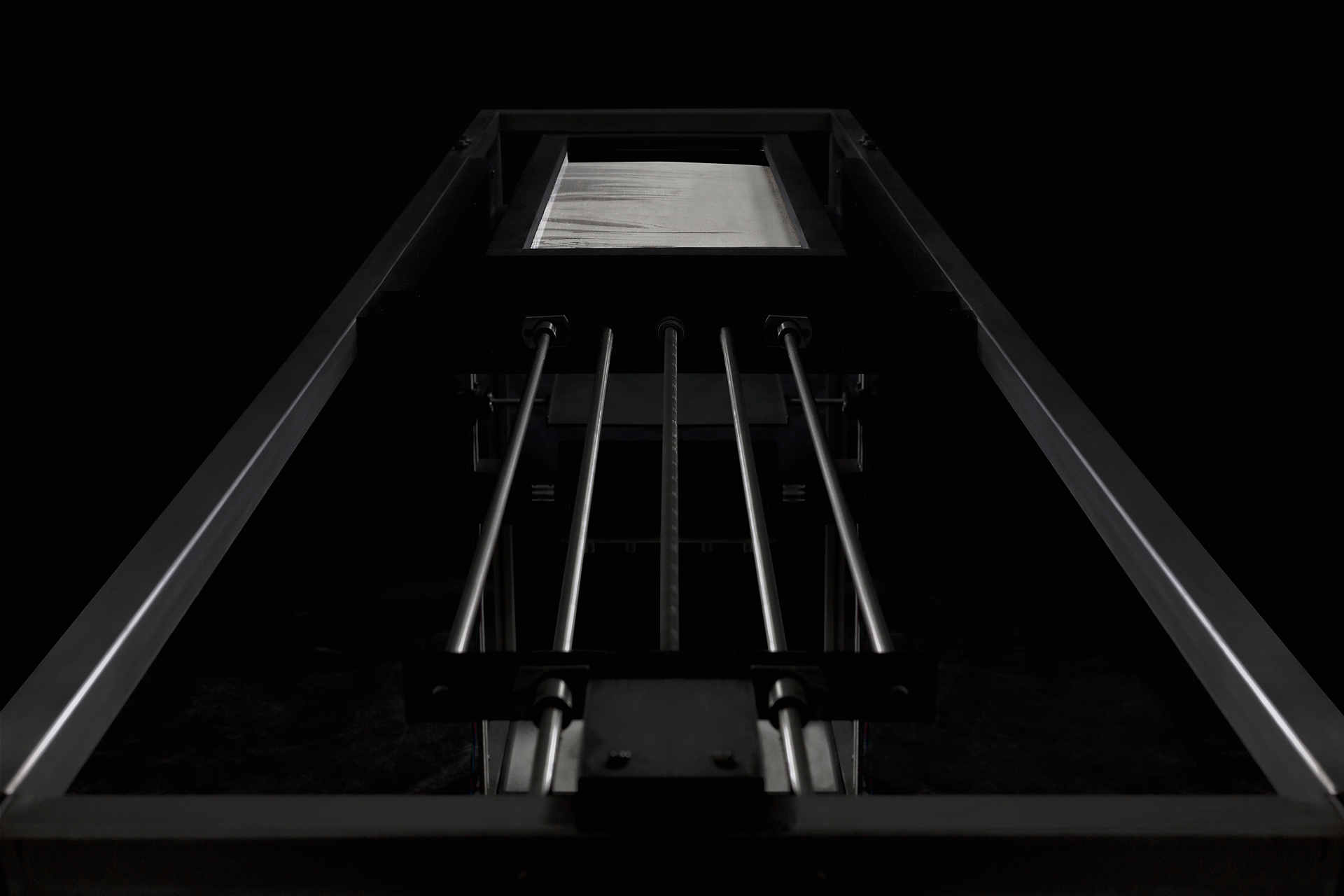
The reading of the ore and writing of the record is performed by extracting from the ore layer by layer abstract discrete values according on weight. It incorporates a mechanism for filtering matter into binaries by separating granules magnetically. An ore is manually put on top of the machine, and opened.
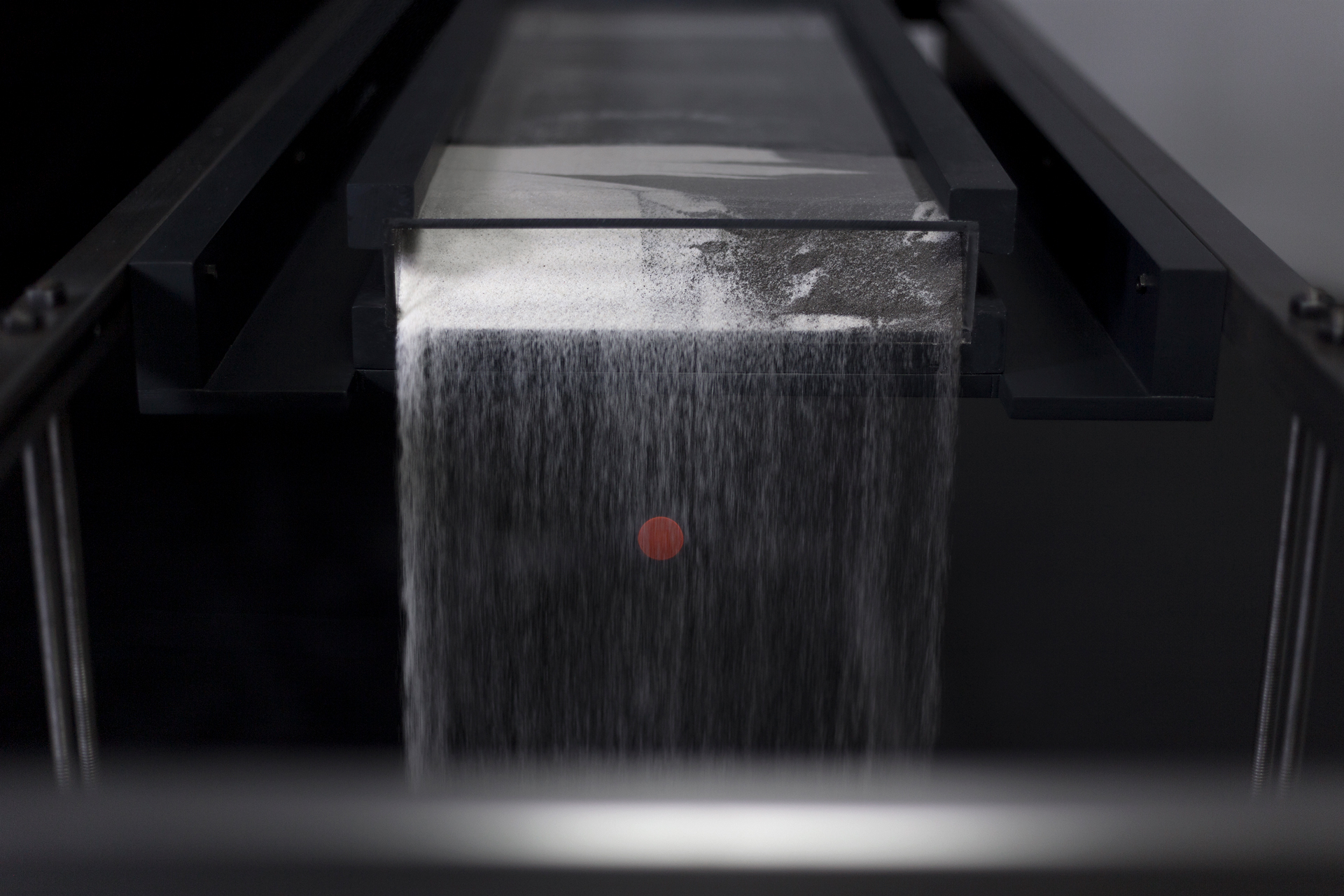
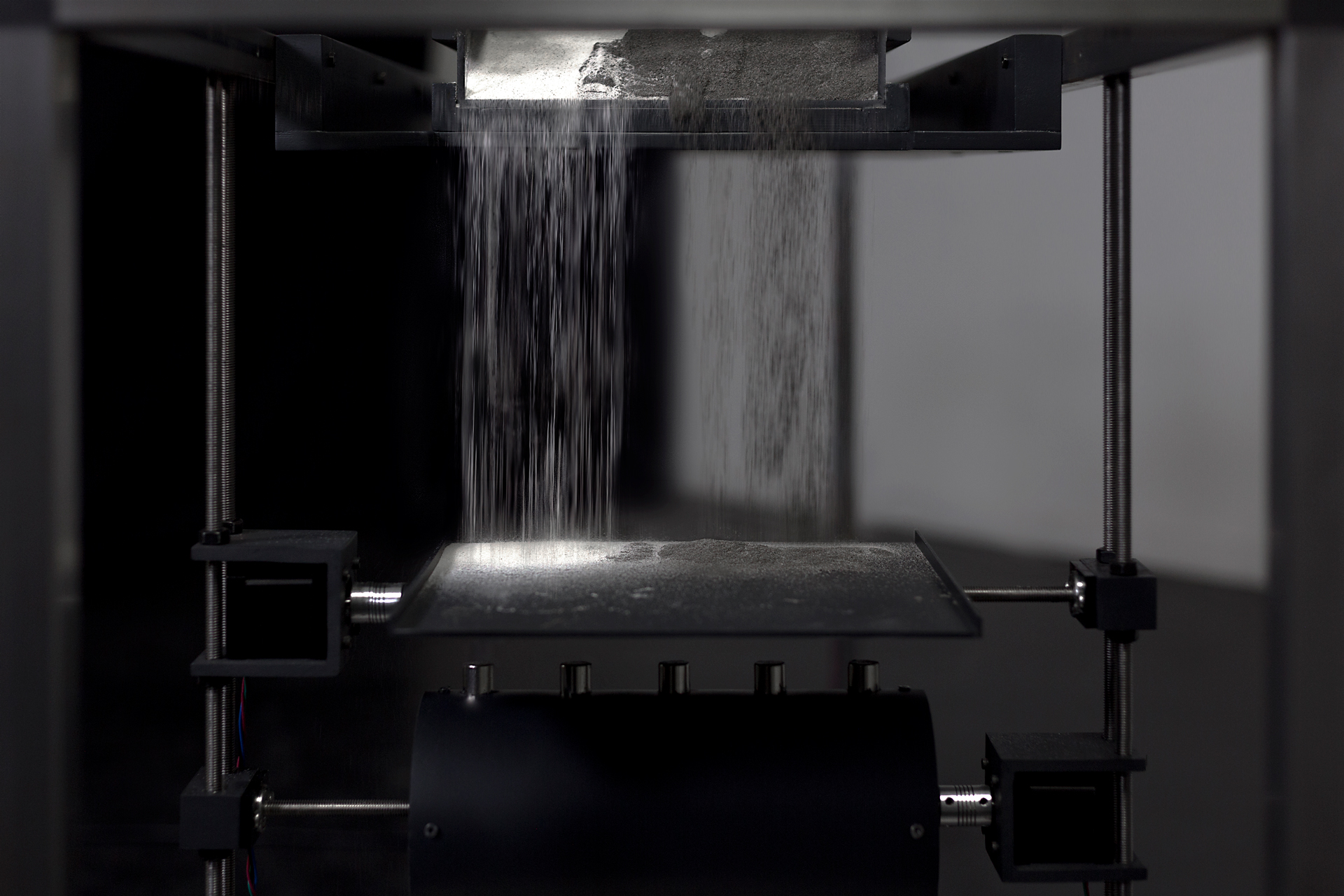
The machine then pushes it by one side via a linear motion system, causing the mixed particles to fall slowly to the other. As soon as the particles fall, a sorting plate and a magnet interface begins its sorting.
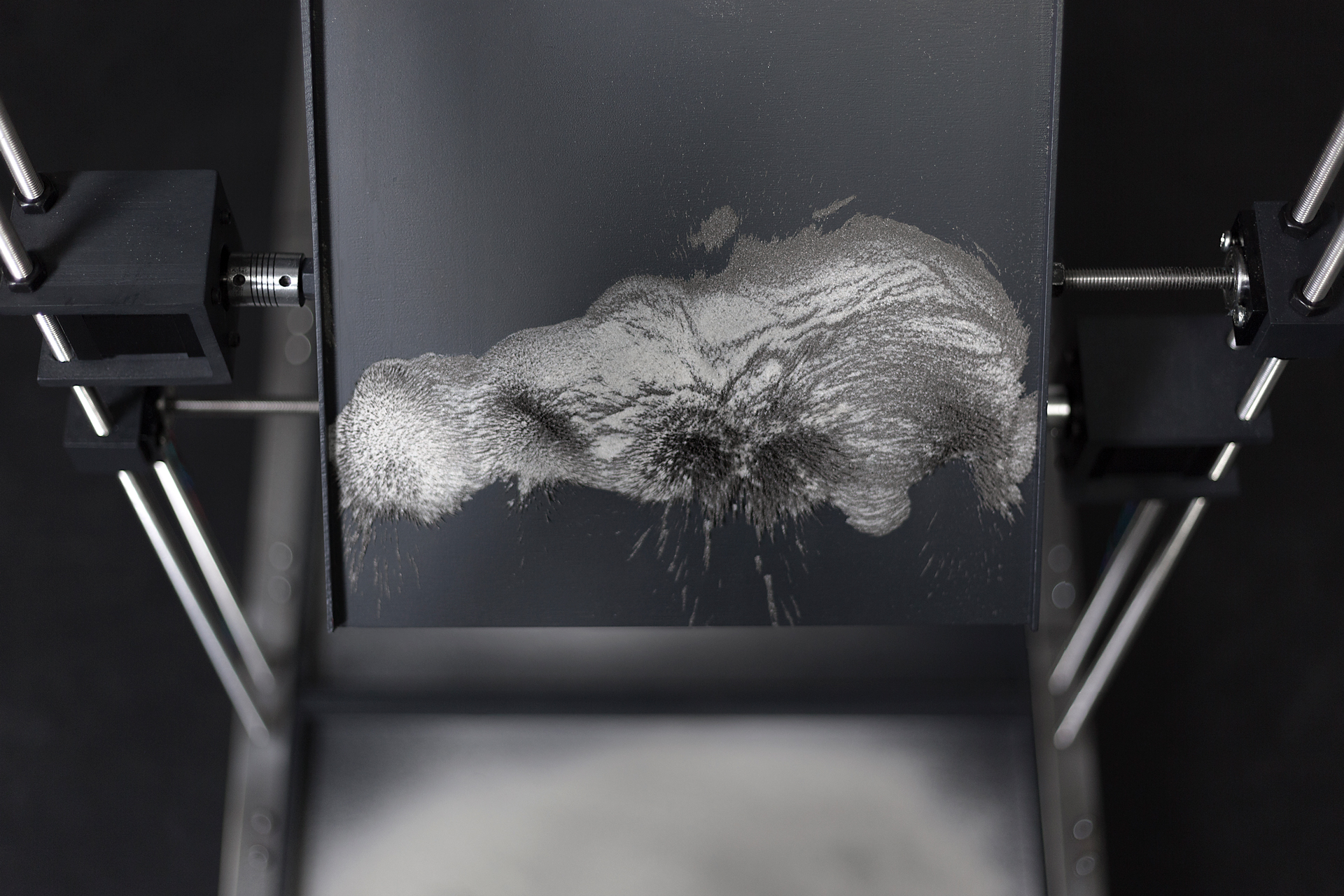

On the one side, predominantly non-magnetic particles (white granules) fall; on the other, mainly magnetic particles (grey granules) remains and eventually is sedimented on another residue composite.
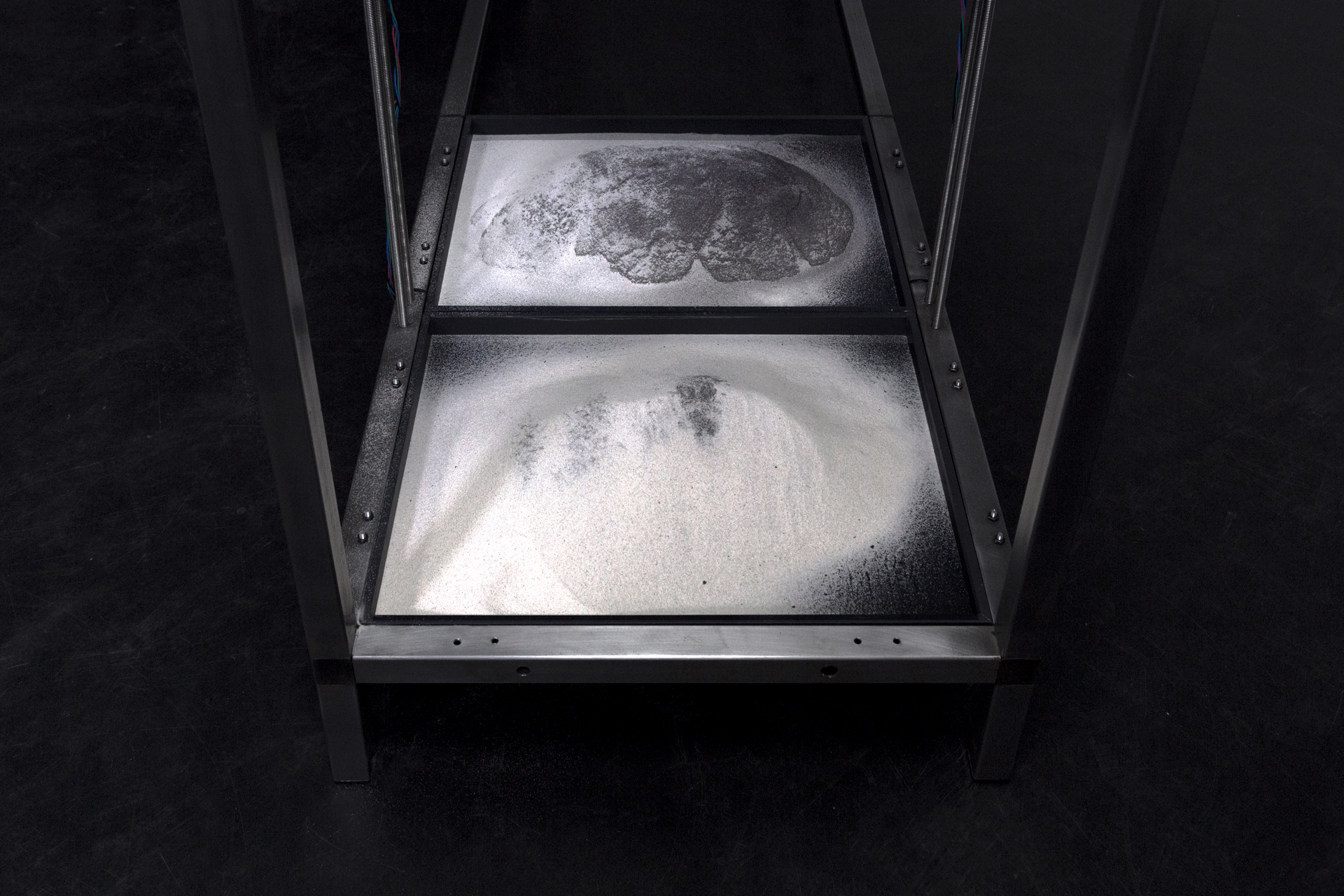
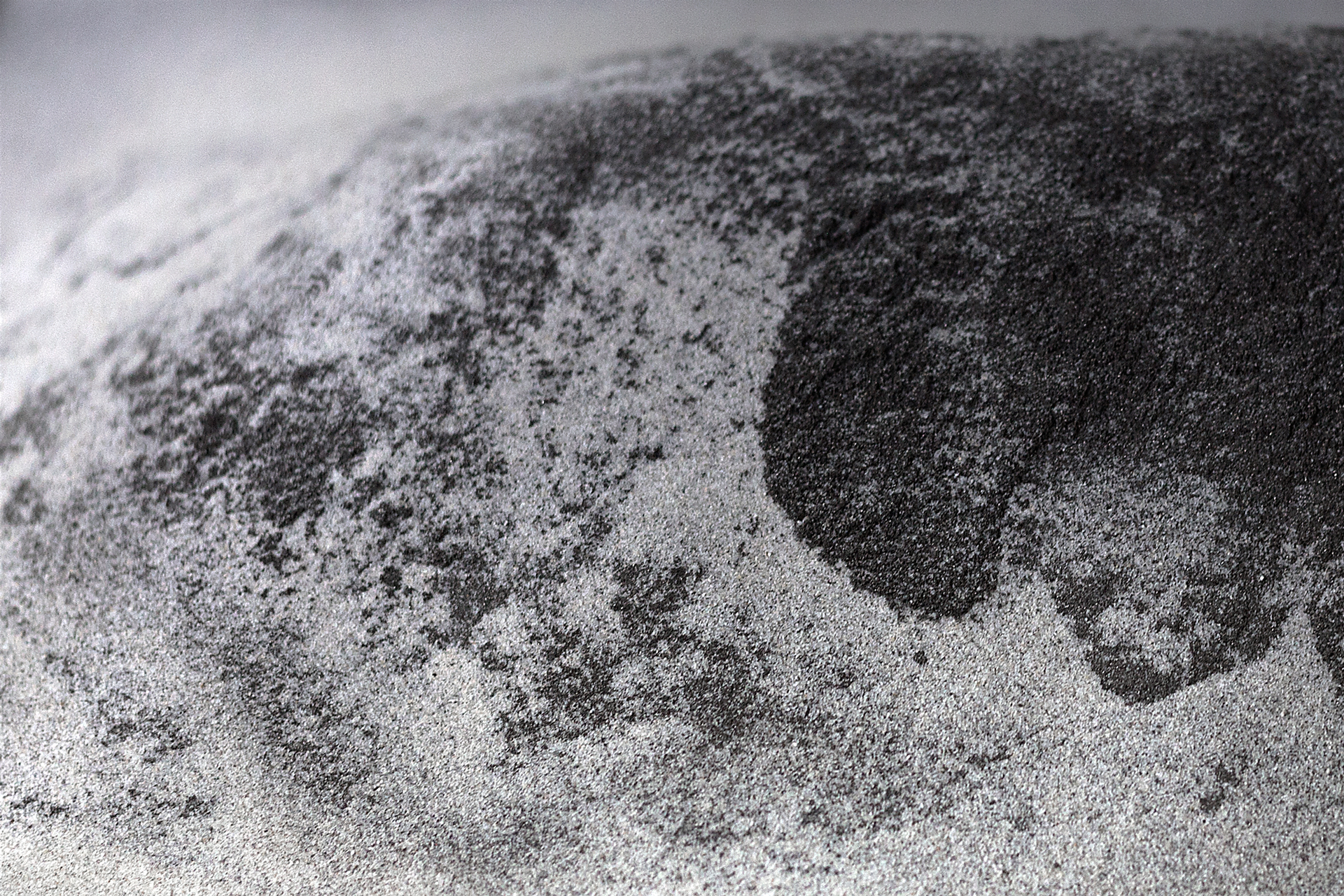
Bellow the residue composites, two scales measure the changes in weight thus creating its digital record which is sent to the Writing mechanism.
Writing mechanism
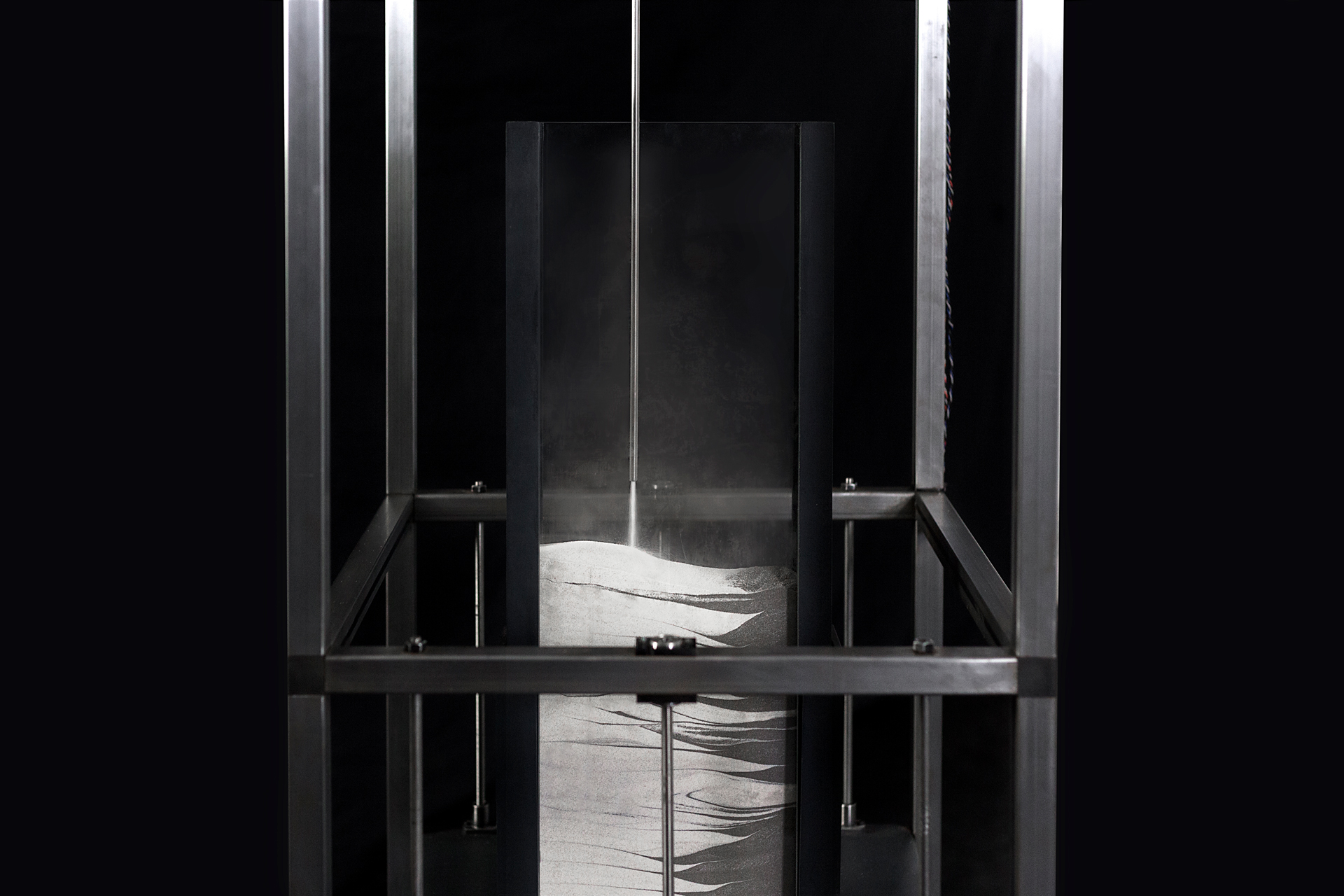
The writing of the ore is achieved by the reading of the record and the sedimenting of its residues. An empty ore is manually assembled on the machine’s center, as well as past residue composites are put on its top.
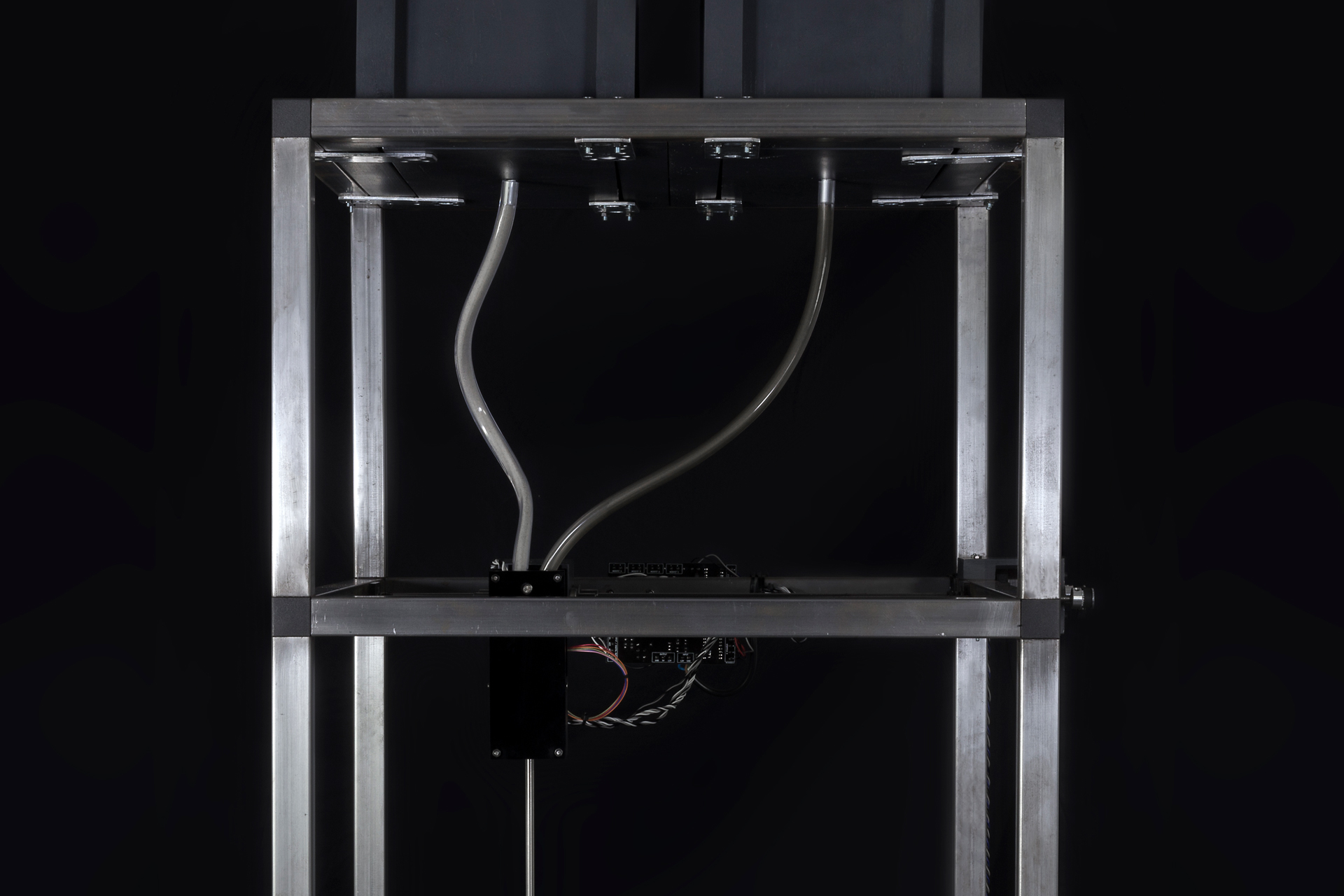
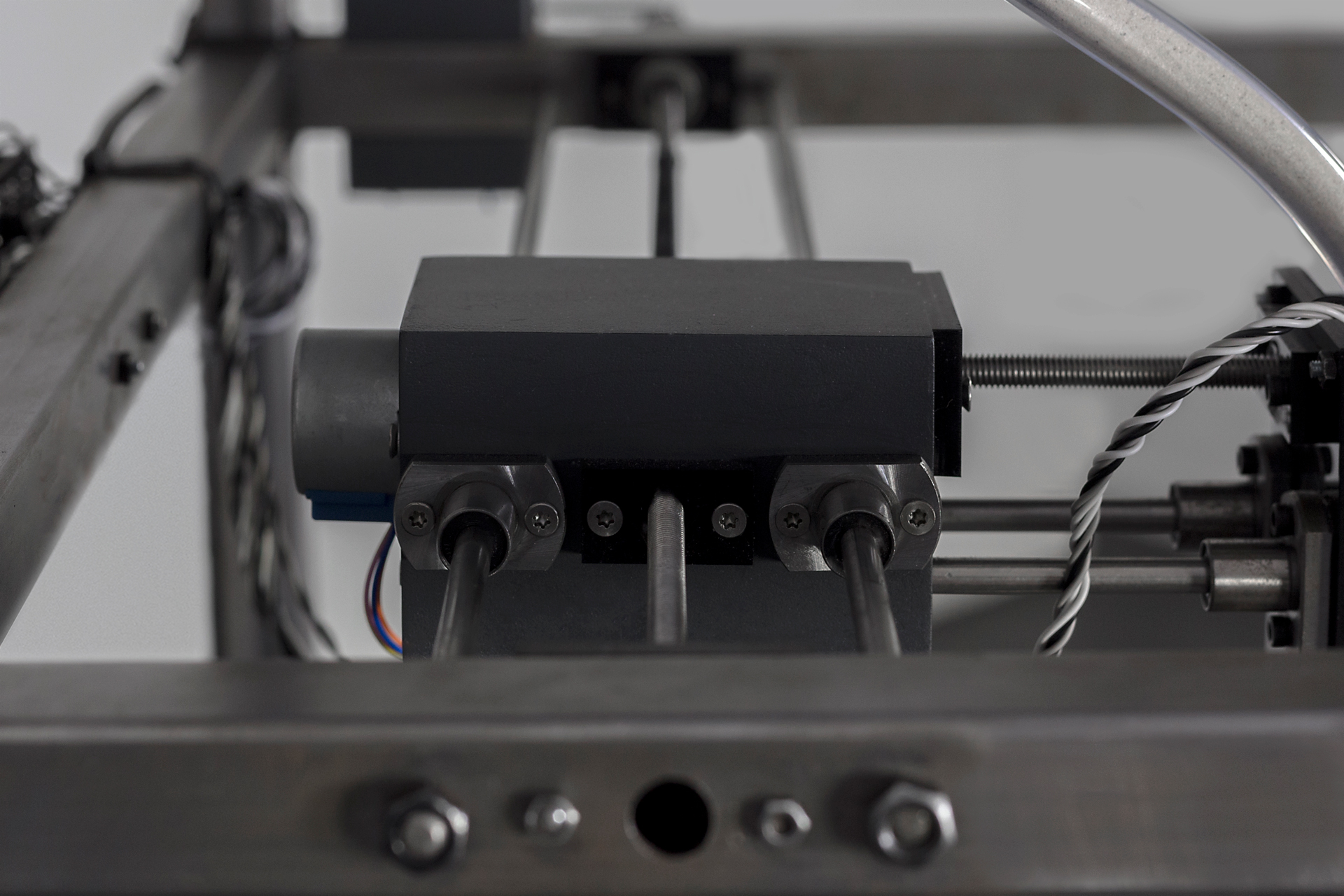
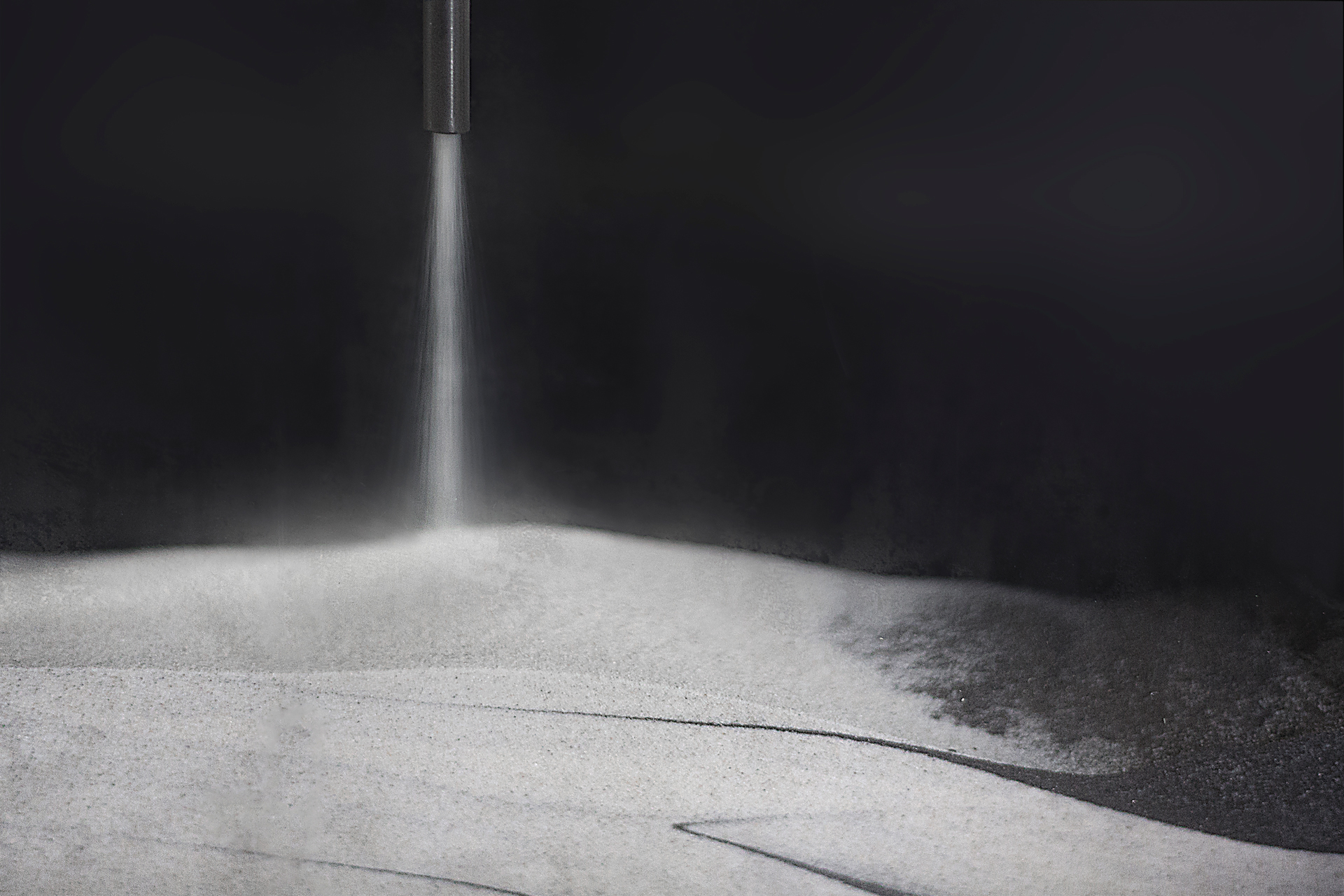
The two types of particle are slowly dropped within it according to the simultaneous reading of the scales at the Reading mechanism. Both mechanisms work simultaneously, and finish at the same time.
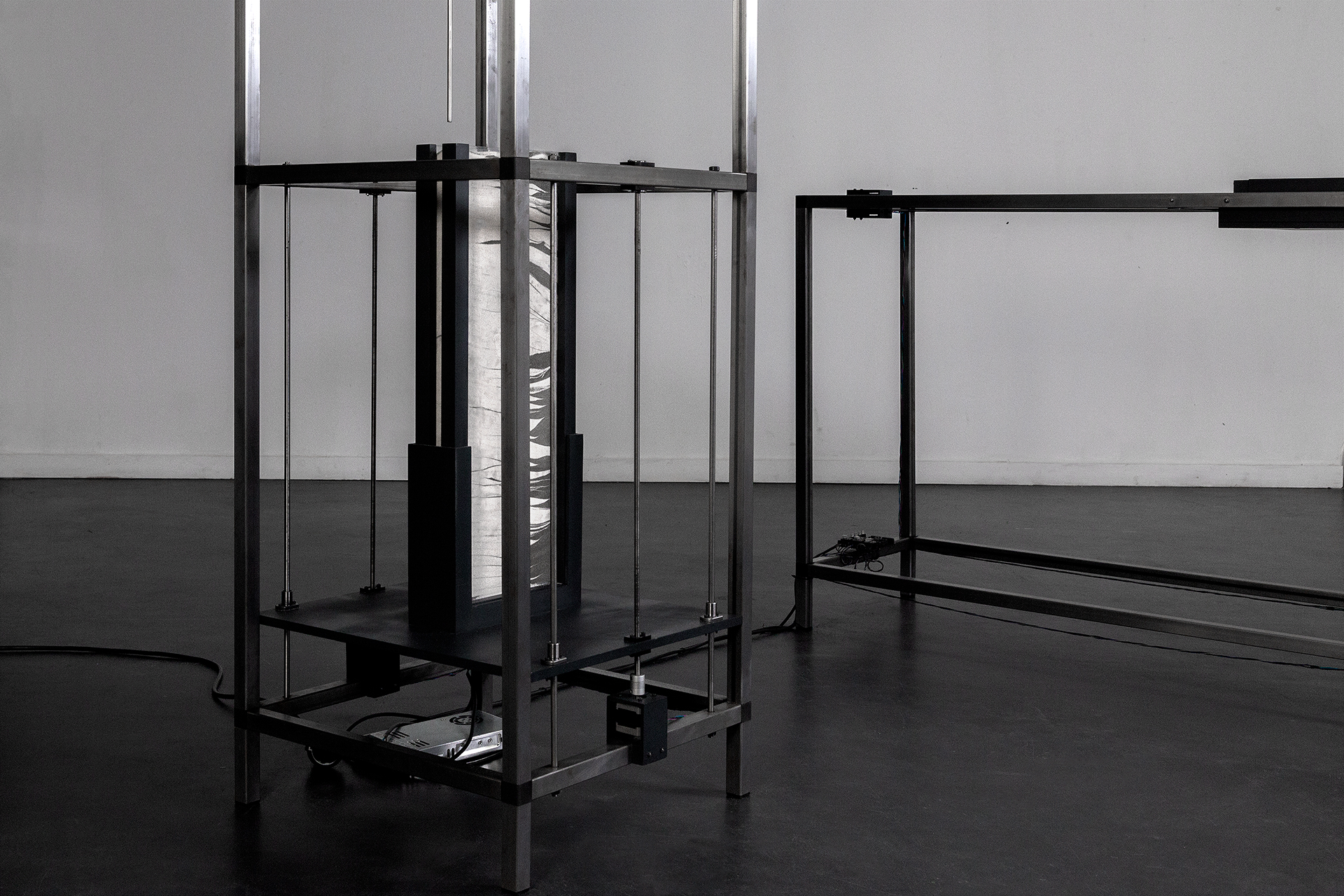


When the processes are complete, the machines require the manual exchange of the empty/filled ores and empty/filled residue plates.
Thesis
The project was conceived as part of a master thesis submitted at the University of the Arts Bremen in 2017, and supervised by Prof. Dr. Andrea Sick, Prof. Dennis P. Paul and Prof. Ralf Baecker. The study consisted of an artistic-based and theory-engaged research on the material dimensions of digital technologies, and aimed to trace a new digital materialism that incorporates infrastructures as core intra-active agencies acting on the tension between distinction and convergence of matter. The research involved a series of experiments that aimed to inquire both technically and conceptually the issues of a new digital materialism from an ontological point of view, and further problematized the tropes of its dichotomous tension between matter and information via tangible enactments.
The full thesis can be seen at: https://issuu.com/lgdzn/docs/a-habitat-of-recognition-thesis
Downloaded at: https://goo.gl/Z4gByc
More info and further projects at: http://luizzanotello.com/a-habitat-of-recognition/
EXPANDED TECHNICAL DETAILS
Interactive Generative Environment
This art-focused project creates a responsive "Living" installation where digital graphics and physical hardware react to human presence.
- Arduino-Processing Bridge: The Arduino acts as the sensor hub, capturing data from PIR motion sensors and ultrasonic distance sensors. This data is streamed to a PC running a custom Processing script.
- Generative Graphics Engine: The Processing script uses the Arduino data to manipulate a complex biological-inspired visual habitat. If a user moves closer, the "digital organisms" might grow or change color in synchronization with a physical LED array.
Immersive Sound
- Ambient Acoustic Feedback: The habitat produces a responsive soundscape;- as the Arduino sensors detect more activity, the audio density increases, creating a complete multi-sensory feedback loop.