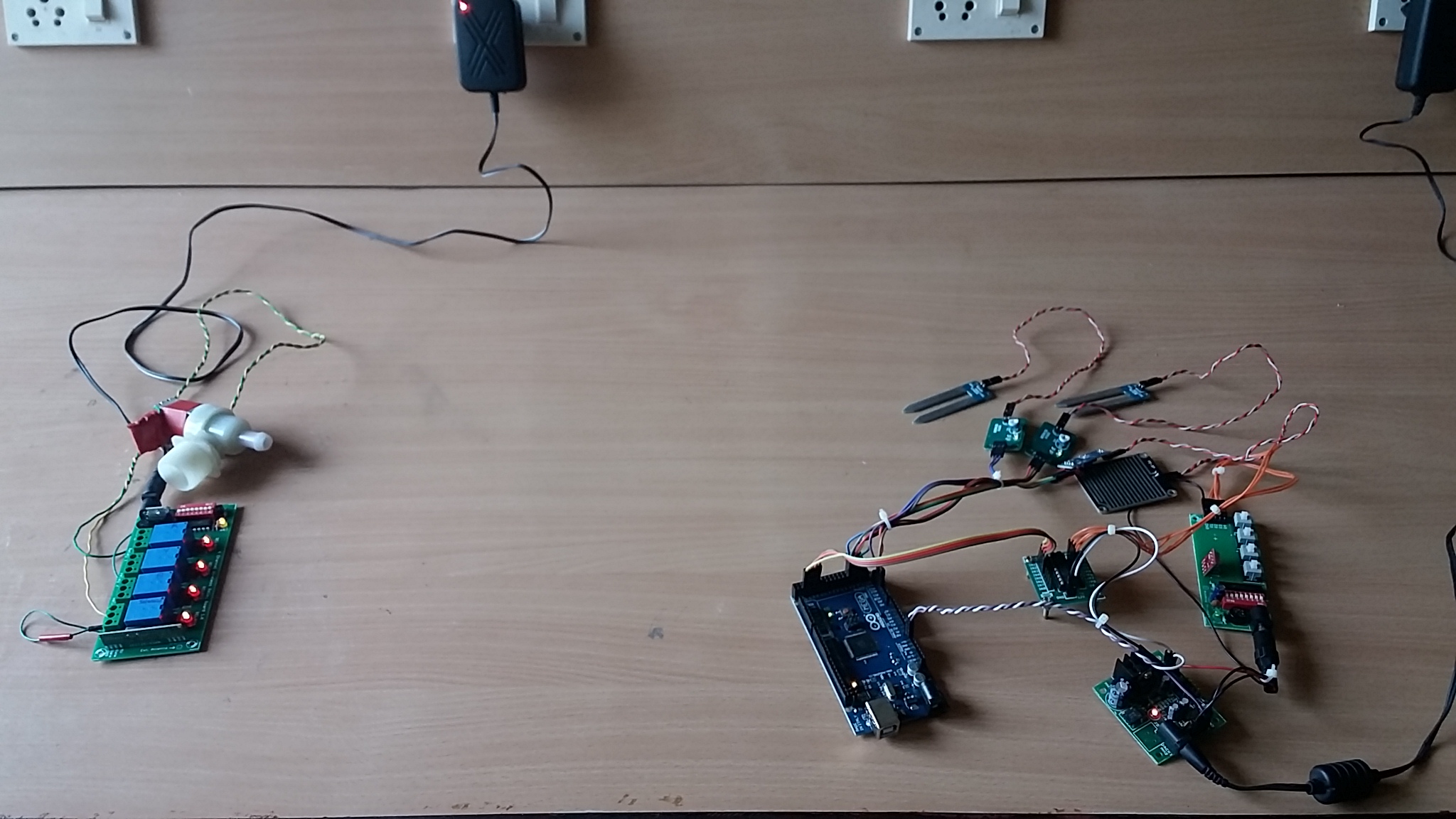
It consists of Arduino Mega 2560 micro controller unit, soil moisture sensor, raindrop sensor, RF wireless module relay unit, and solenoid valve. This system monitors the environment weather and makes a decision about when the solenoid valve should be open and motor goes to ON state. Data is transfered from the sensor to the MCU through wired communication. Motor and solenoid control signals will be transmitted through the wireless module. The MCU periodically checks the weather and soil conditions by the soil moisture sensor and rain drop sensor.
Technical Implementation: Sensors and Actuators
The project reveals the hidden layers of simple gardening automation:
- Identification layer: Using a Soil Moisture Sensor and a Raindrop Sensor, the system can accurately detect and monitor the "reality" of each plant's water needs and current weather conditions.
- Conversion layer: The sensors convert the moisture and rain levels into proportional analog signals (0-1023) for the Arduino.
- Actuation layer: A solenoid valve and AC motor (controlled via a relay unit) act as the physical tools, delivering water only when needed.
- Wireless Interface layer: The RF wireless module provides a robust link between the sensor/control unit and the remote valve/motor actuator for flexible installation.
- Decision layer: The Arduino Mega 2560, as the "brain" of the project, processes all sensor data, runs the irrigation logic, and coordinates wireless commands to the actuators.
Hardware Infrastructure
- Arduino Mega 2560: The central controller, managing sensor inputs and coordinating the wireless activation of the solenoid valve and motor.
- Soil Moisture Sensor: Provides reliable hydration monitoring for the soil.
- Raindrop Sensor: Detects the presence of rain to prevent unnecessary watering.
- Solenoid Valve & AC Motor: Provide the physical control of water flow.
- RF Wireless Module & Relay Unit: Enables wireless communication between the control unit and the actuators, safely handling higher power loads.
- Power Supply: Provides stable power to the microcontroller, sensors, and wireless modules.
Irrigation and Feedback Loop
The intelligent watering process is designed to be very efficient:
- Initialize Sensors: The Arduino sets up communication with the soil moisture and raindrop sensors.
- Poll Conditions: The Arduino constantly reads moisture and rain levels, comparing them to predefined thresholds.
- Decision & Actuation: If the soil is dry and no rain is detected, the Arduino triggers a command. This command is sent wirelessly to the relay unit, which activates the solenoid valve and/or motor for a set duration.
- System State: The system provides visual feedback through its hardware components, as shown in the images below.
Future Expansion
- OLED Status Dashboard Integration: Add a small OLED display to show moisture levels, system status, and watering logs.
- Multi-Zone Synchronization: Connect several soil moisture sensors to independently monitor and water different garden "zones."
- Cloud Interface Support: Add a Wi-Fi module and cloud dashboard to track and log watering trends from a smartphone from anywhere in the world.
- Advanced Scheduling Integration: Use real-time weather data APIs to adjust watering schedules based on forecasted rain and temperature.
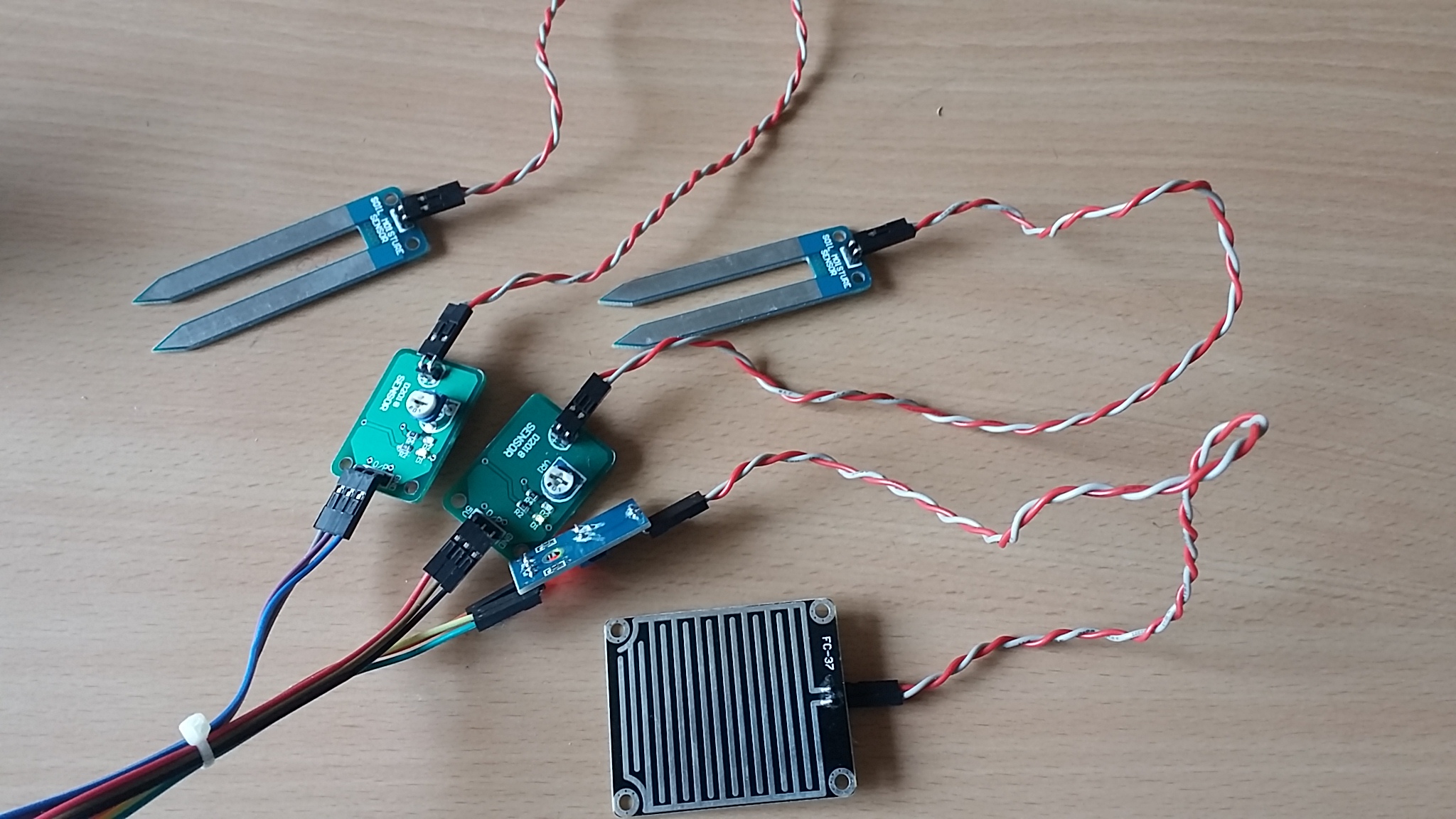 Rain drop Sensor and Soil moisture Sensor
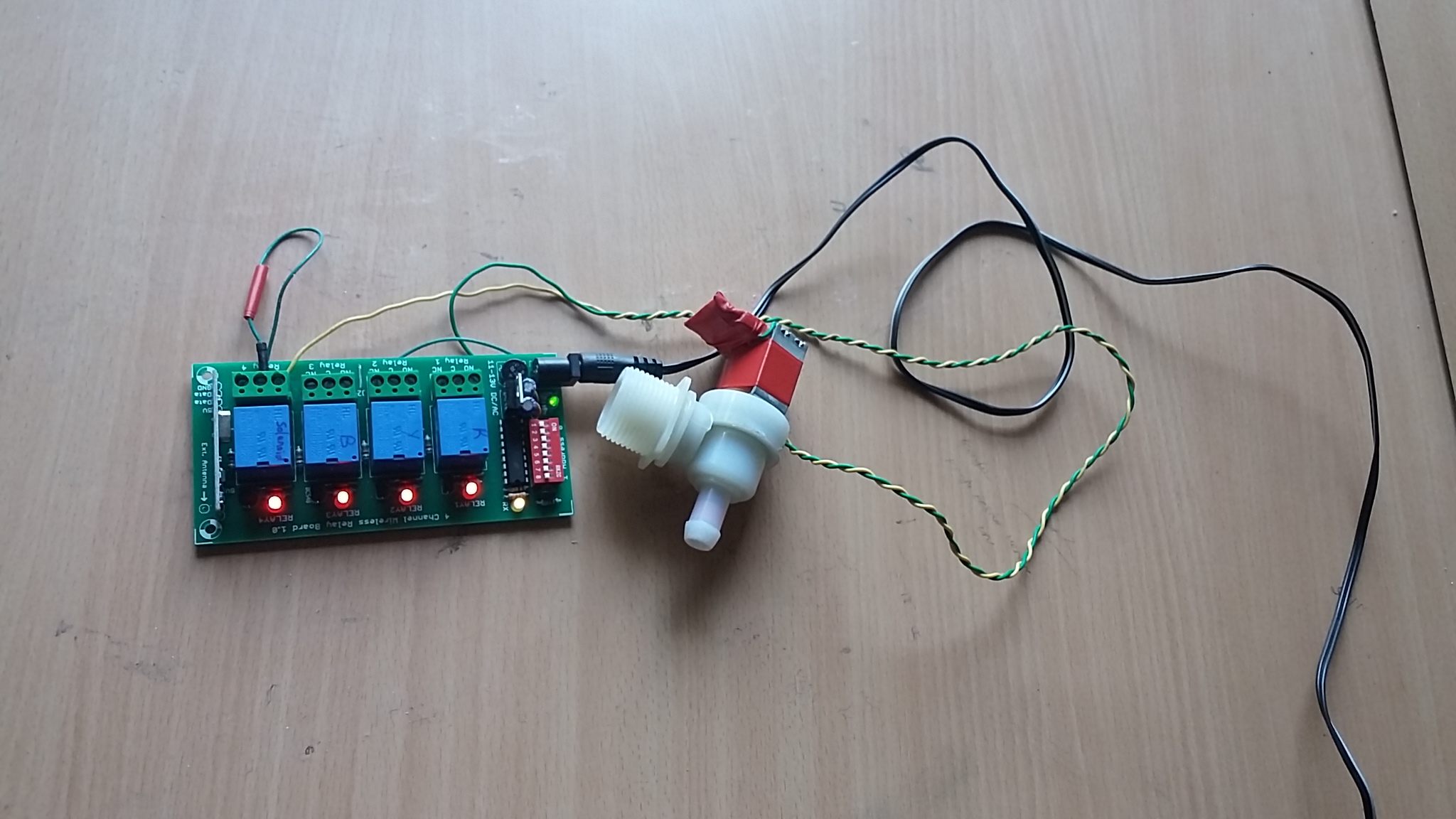 Receiver Side for AC motor and DC solenoid valve
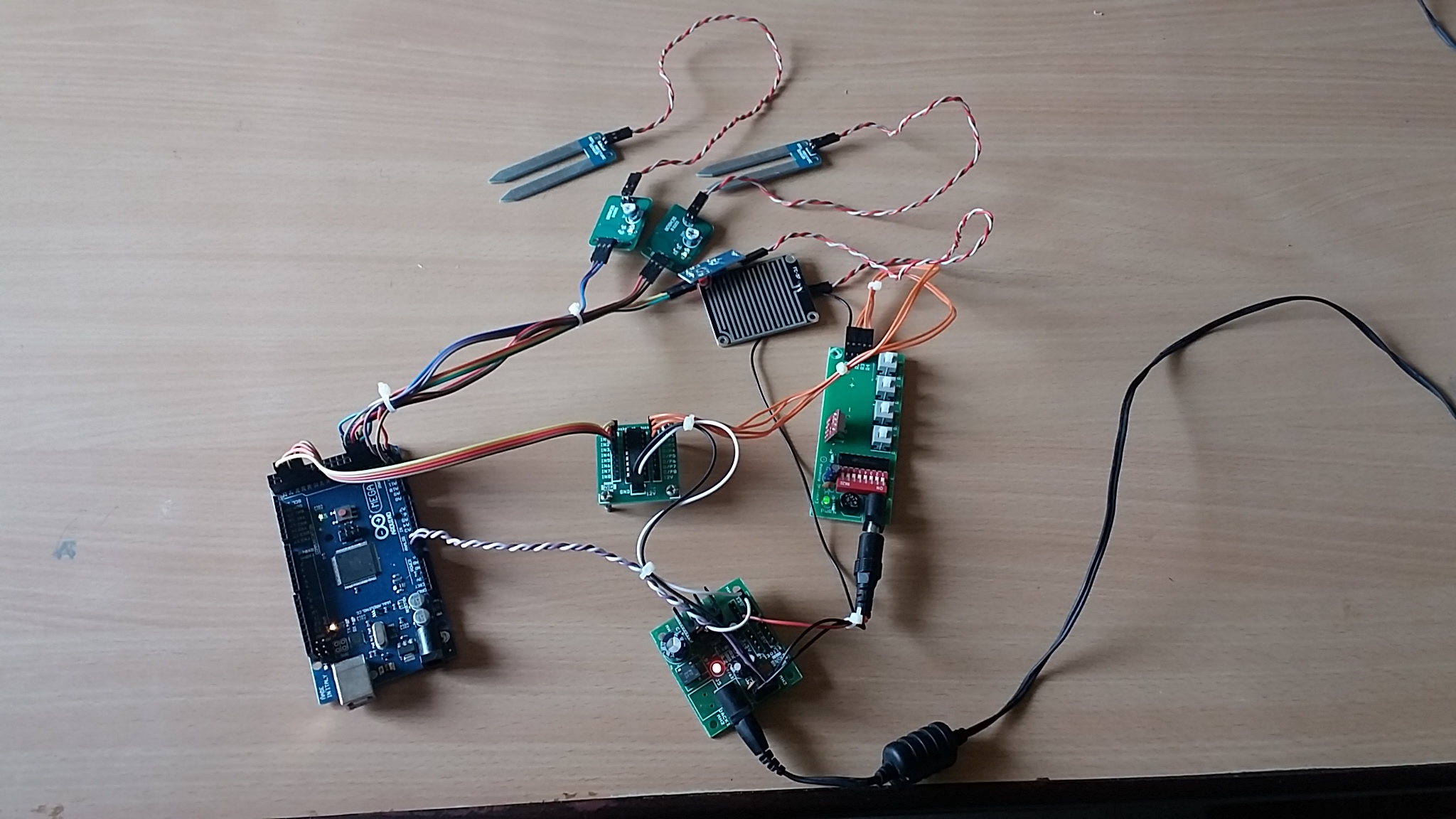 Transmitter Side
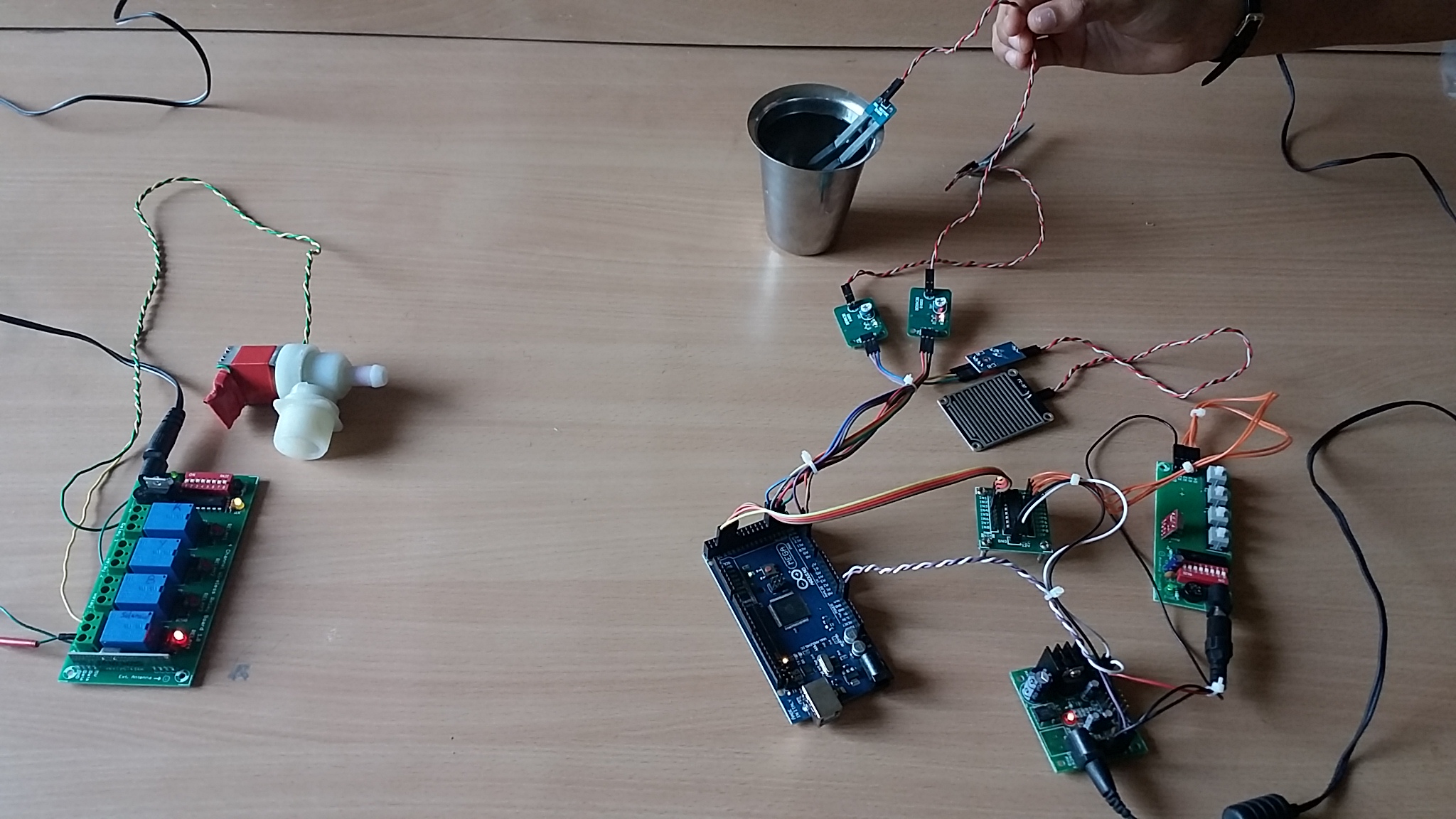 Solenoid is in Open State
Arduino Based Wireless Intelligent Water Irrigation System is a perfect project for any science enthusiast looking for a more interactive and engaging agrotechnology tool!