Introduction
The world around us is getting smarter and smarter, the rapid growth of technology gave a new dimension to the way we perform our everyday activities and made our daily tasks easier, everything is getting automated and can be controlled remotely using your voice.
At home, the kitchen is an important place where activities in the future has a huge space for improvement in the field of home automation, nowadays, Grocery management has become a time-consuming task, we constantly monitor the kitchen grocery to avoid shortage and no matter how hard we try, sometime we have to face empty container at the time of emergency, and to avoid this, we tend to buy more than enough & most of it ends up in the trash.
What is Cuisine Assistant
Cuisine Assistant is a smart IoT based grocery system that helps manage food levels in an efficient and seamless way. By integrating load cell sensors with Alexa, the system creates a conversational interface for your pantry, helping you cook better and waste less.
It can help us to manage grocery in an efficient and seamless way, the level of solid and liquid substances are measured using load cell sensors, the quantity of the ingredient is then calculated using the its characteristics including its density, its state(solid and liquid), its packaging and more.
Sensing Strategy: Beyond Simple Counting
Unlike systems that rely on barcode scanning (which is tedious), the Cuisine Assistant uses Mass-Based Inventory Tracking:
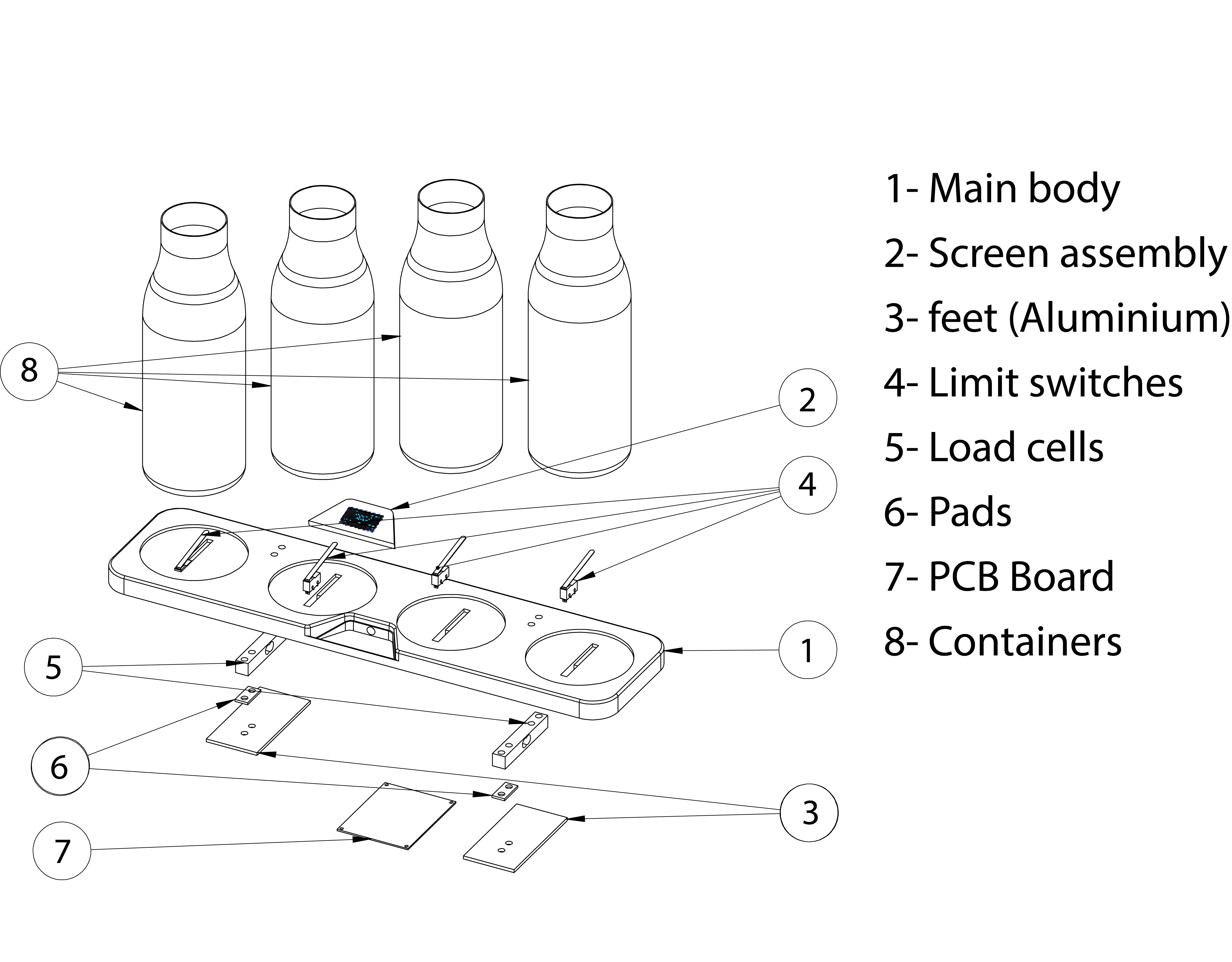
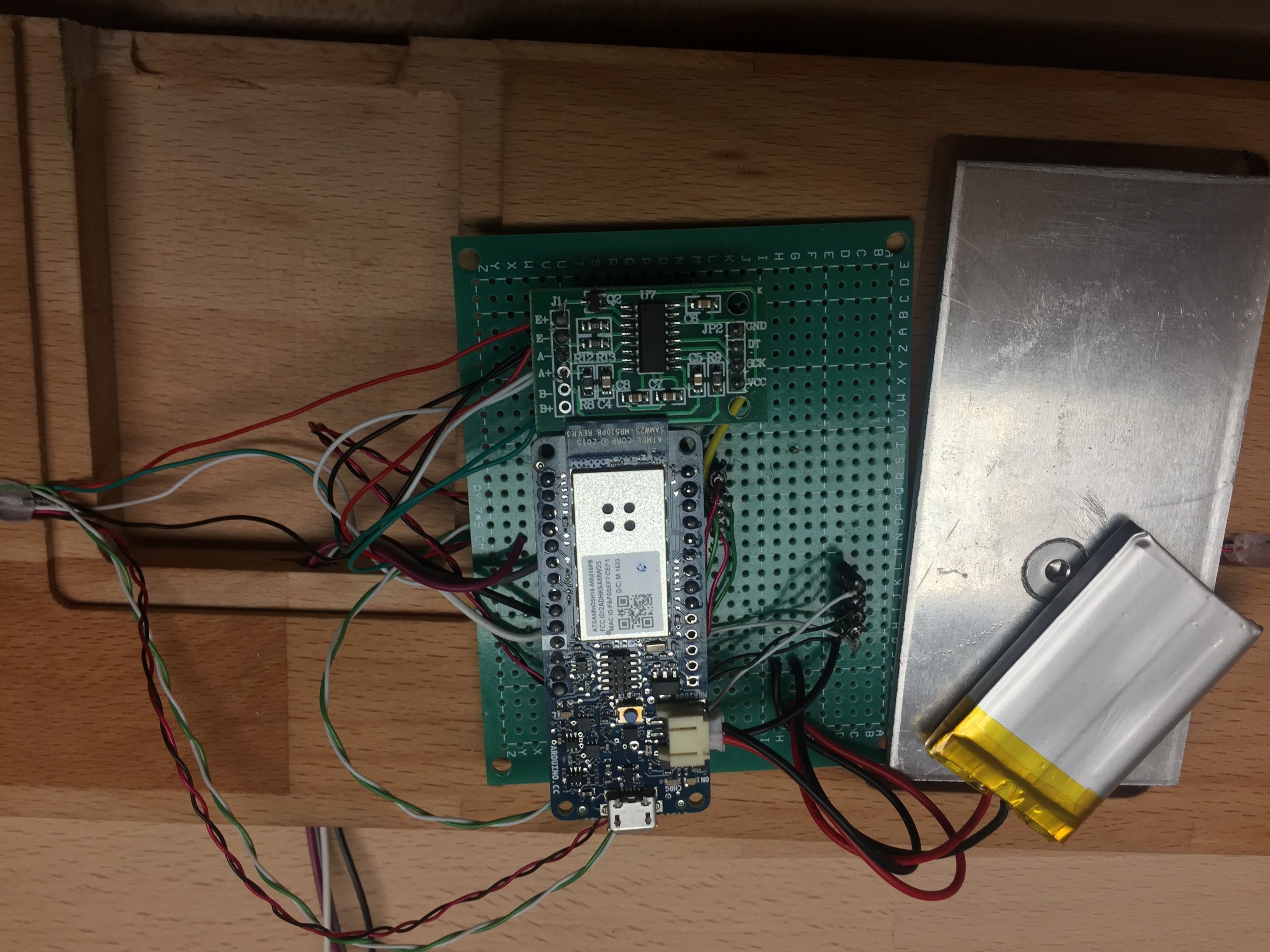
- Precision Load Cells: Using two 5KG Load Cells and HX711 24-bit ADC modules, the system accurately measures the weight of containers (Rice, Sugar, Pasta, or Oil).
- Intelligent Density Logic: The system doesn't just report "grams." It uses pre-programmed density characteristics to report values in relevant units—identifying how many full "packs" of sugar are in the cellar versus how many grams are in the kitchen jar.
Structure
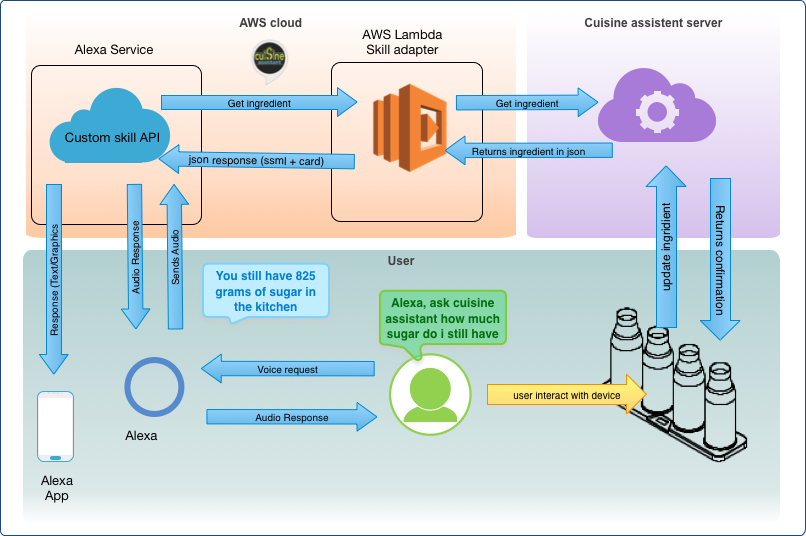
Demo
Objective
My main objective is to make kitchen grocery management an easier task.
- User can ask Alexa what he/she can cook and Alexa will propose a recipe based on the current grocery level and taking into consideration the ingredients expiration date to avoid waste.
- User can ask if it is possible to cook a particular food and if not, the system can generate a shopping list of the missing ingredients.
- User can ask Alexa to plane recipes for the hole week and generate a shopping list.
The Cloud Brain: Alexa + AWS Lambda
The intelligence of the system lives in the AWS Cloud:
- Recipe Planning: You can ask Alexa, "What can I cook with what I have?" The system cross-references your current inventory with its recipe database to propose meals that won't require a trip to the store.
- Waste Prevention: By tracking when a container was "opened" (via weight change patterns), the Cuisine Assistant flags ingredients nearing their shortened expiration dates.
- Automated Shopping Lists: If you're missing an ingredient for a specific dish, Alexa can instantly append the missing item to your digital shopping list.
What is the relationship between ingredients and devices
The relationship between ingredients and devices is many to many relationship, that means an ingredient can be linked to multiple devices and vice versa.
- The reason why one ingredient can be liked to many devices is that some ingredient can be stored in different place, when we buy sugar for instance, we don’t buy only one pack, we store most of it in the storing room and a bit in the kitchen, as you may have had notice in the demo video, when Alexa is asked “how much sugar do I still have”, she responded with “5 packs of 1000 gram each in the cellar and 642 grams in the kitchen” .
- And the reason why a device can be linked to many ingredients is as it is in the demo video, the device is liked to Rice, Sugar, Pasta and Oil.
This Many-to-Many Architecture is a unique feature of this project. It provides a realistic 1:1 map of a busy household's pantry.
What are the main challenges to solve
My main challenge now is to solve the problem of left-over food, let’s say we want to cook something with Tomatoes, we open a tin, use some and leave the rest in the fridge, by opening the tin, the tomatoes expiration date shortens, and there for have to keep track of this ingredient. The idea I am exploring is to create a new type of device which can be placed in the fridge, it has to be linked to an ingredient by the system and not by the user.
Industrial Build Quality
This vision is housed in a beautifully CNC-machined wooden chassis. The build emphasizes structural rigidity, ensuring the load cells remain calibrated even under heavy use. With a sleek OLED display providing local status updates and an Arduino MKR1000 handling the encrypted Wi-Fi handshake, the Cuisine Assistant is a proof-of-concept for the future of the Self-Managed Home.
Exploded View
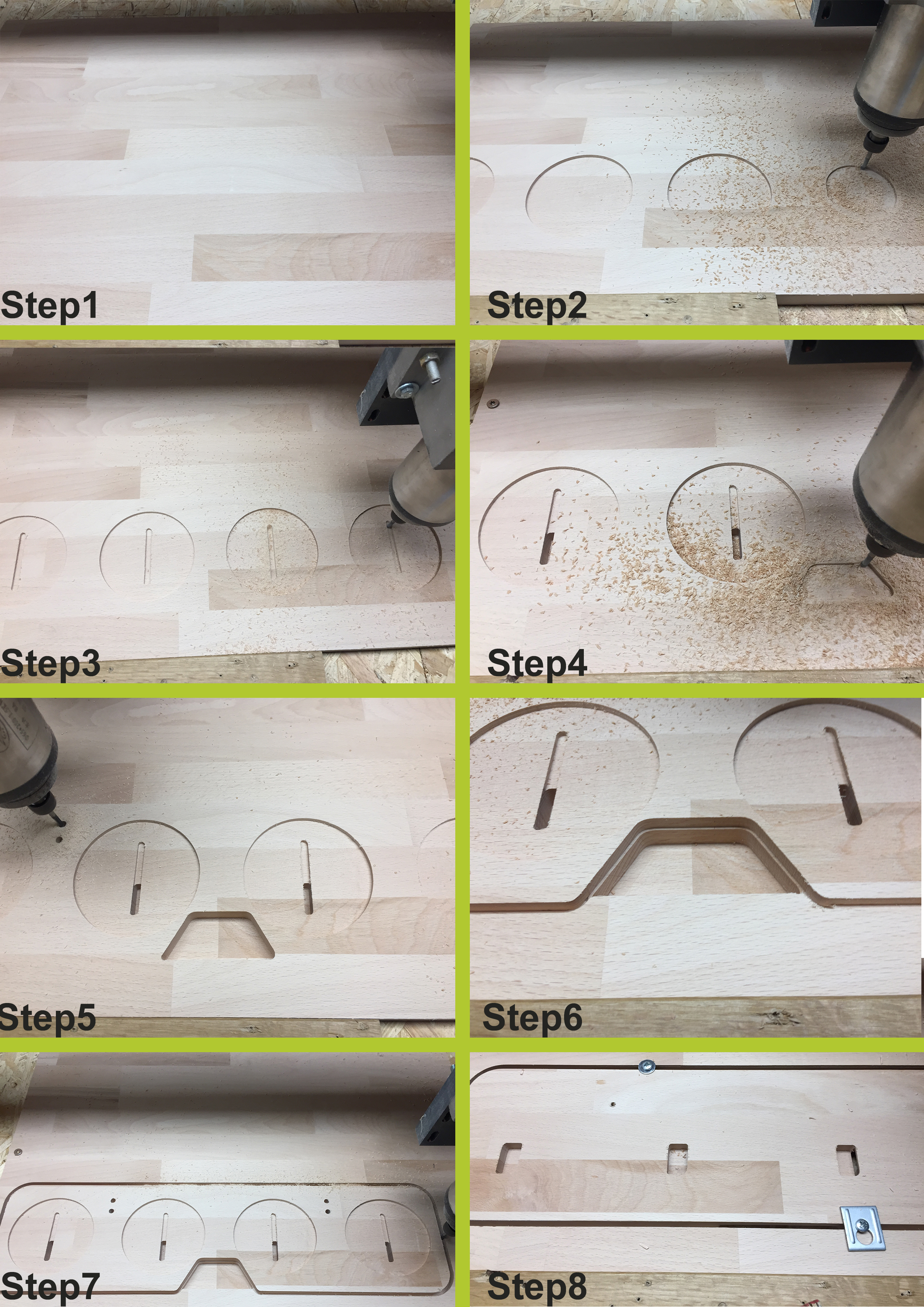
CNC machining steps
Here are the steps i took to machine and build the Board, i would recommand you to start with to top, That way you can be sure the circles would be centred,
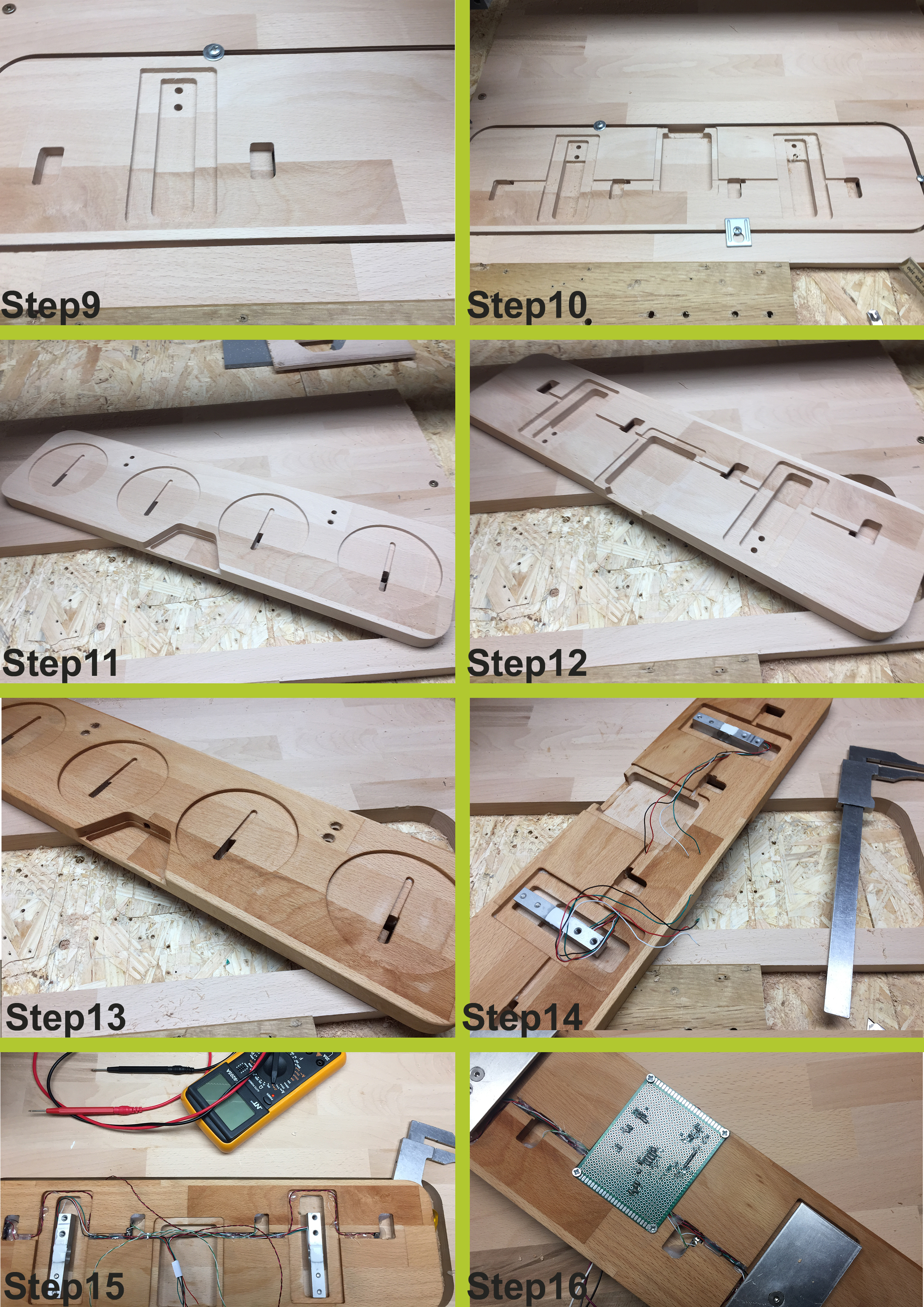
PCB Assembly
Building your own
If you are still intrested in building your own Cuisine Assistant board, you just have to build the hardware part, the rest has been taken care of including:
- The Alexa skill (here is the link the skill)
- Authentication server
- The database
- End points
- The structure (ingredients, devices and recipes)
The only thing I did not take care of is the registration and there for you will have to contact me to get access informations.
This project isn't just about weight; it's about Seamless Human Welfare, reducing food waste, and making our daily tasks significantly more efficient.