
Innovative Smart Traffic Light System based on Vehicle Density (Density-Based Traffic Signal System)
Currently, most traffic light systems still operate in a Time-based or fixed-time manner. This is a significant limitation that leads to chronic traffic congestion, especially when one lane has a massive volume of vehicles while another is empty. The old system would still grant a green light to the empty lane according to the set time, wasting the opportunity to clear traffic from the highly dense side.
This article will present the transition from Manual or Fixed Timer systems to an Automated System with decision-making capabilities, managed using the foundation of Embedded Systems.
Concept and Working Principle of the System
The core of this project is the design of a Dynamic Traffic Signal system that can automatically adjust the green light duration based on the real-time measurement of vehicle density in each lane. If a lane has a high accumulation of vehicles, the system will calculate and increase the Green Time to be longer than usual to clear the traffic volume in accordance with the actual situation.
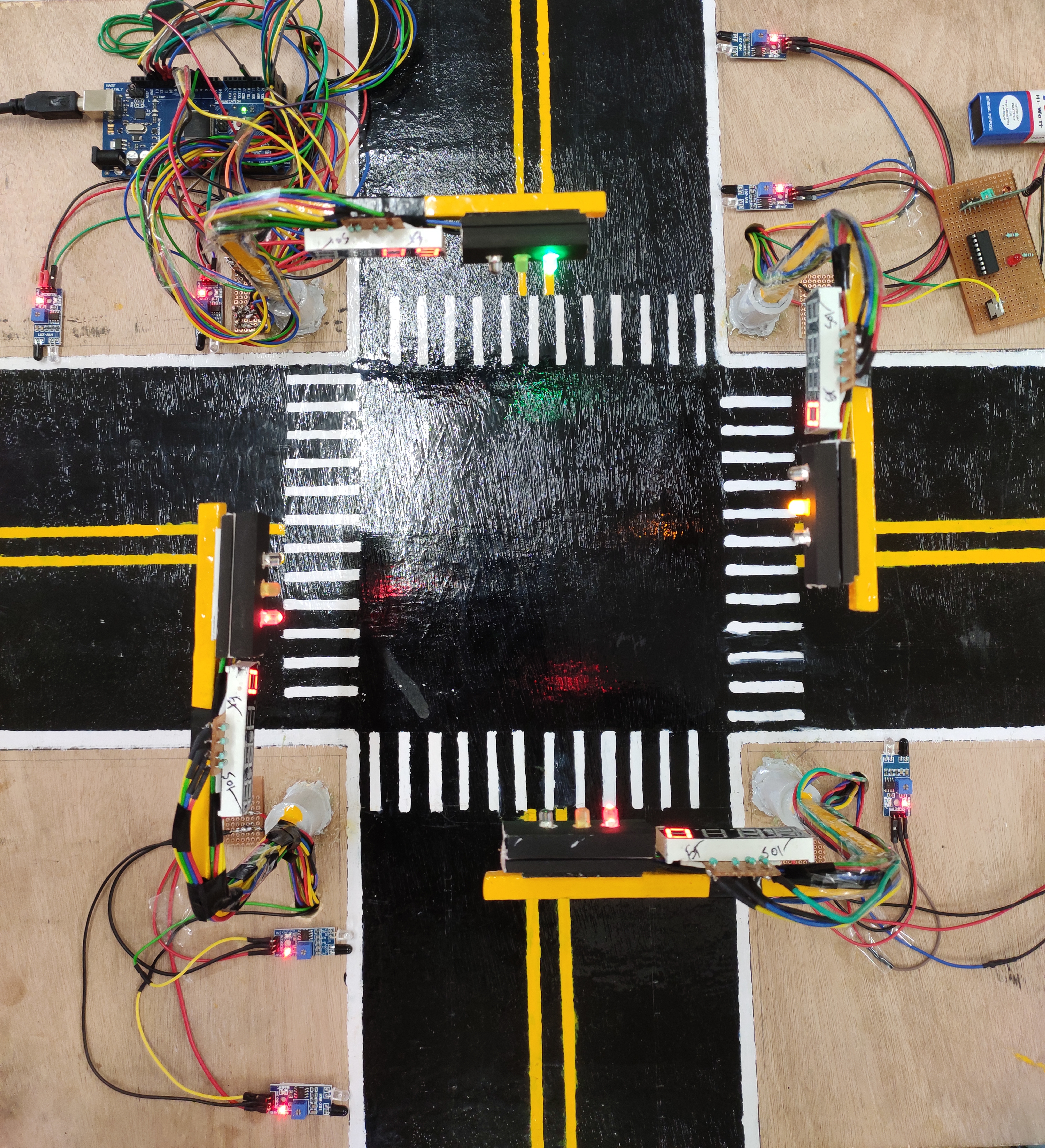
This process relies on object detection sensors such as PIR (Passive Infrared) or IR Proximity Sensors, which will be installed at various distances along the side of the road to categorize density levels. When a sensor detects the reflection of infrared radiation from a vehicle body, the data will be sent to the Arduino microcontroller as a digital signal (High/Low) for priority processing.
In-depth Look at Equipment and Engineering Principles (Technical Deep Dive)
Building a smart traffic system requires the precise collaboration of hardware and complex logical programming, as follows:
1. Sensing Unit
We use motion or proximity sensors (Proximity Sensors) installed in series along the road. The sensors emit IR signals and wait for a reflection. If a vehicle is blocking, the signal reflects back, causing the sensor to send a "Detect" status to the Arduino.
- Low Density: The first sensor detects a vehicle.
- High Density: The second or third sensor (further away) detects vehicles simultaneously.
2. Main Control Unit (The Brain)
Arduino Uno/Nano serves as the central processing unit, receiving input from all sensors installed at each intersection (Flanks). It then uses Conditional Logic to determine which lane should receive the green light first and for how long (e.g., 15 seconds for light traffic and 45 seconds for heavy traffic).
3. Signaling Unit
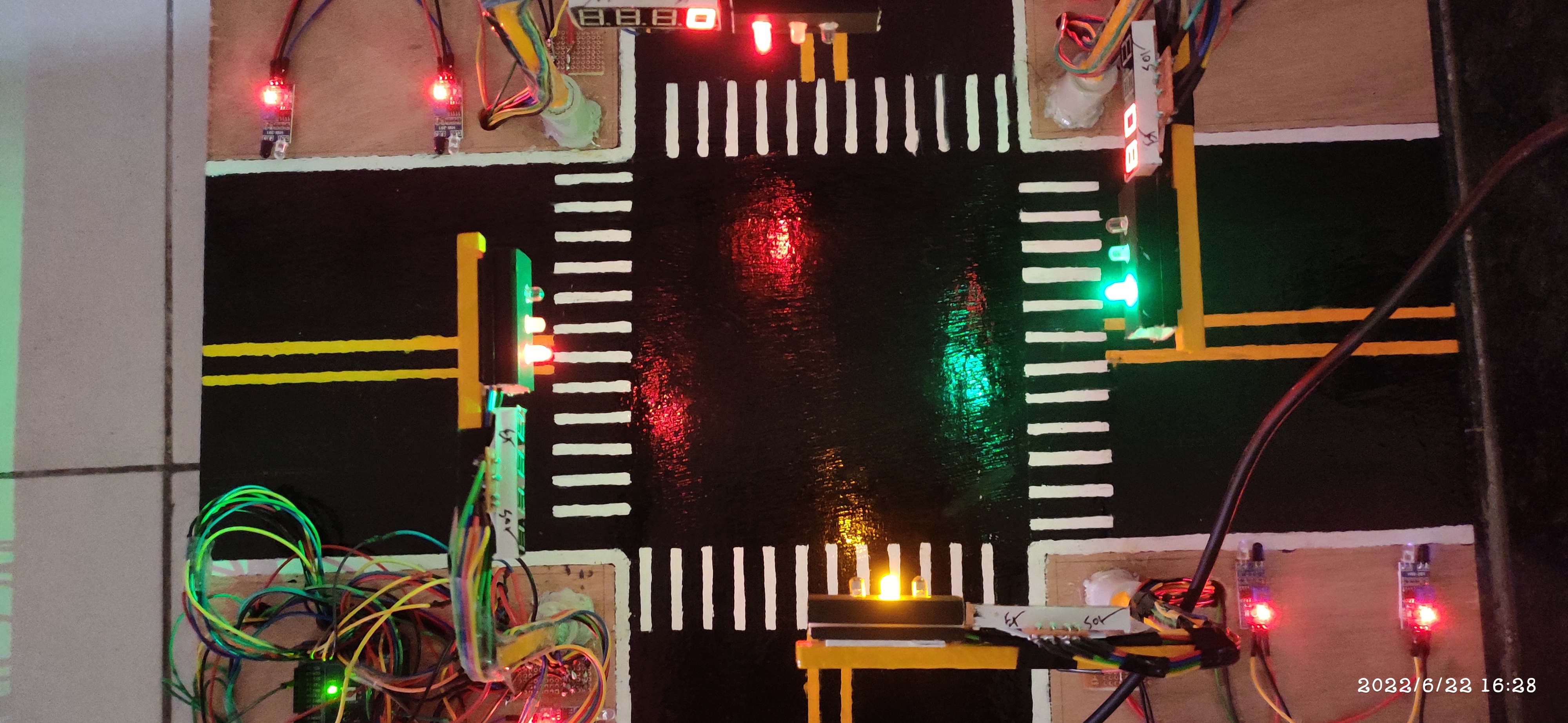
A set of red, yellow, and green LEDs is used to simulate actual traffic light statuses, connected via 220 Ohm Resistors to limit current and prevent LED damage.
Software Logic Analysis (Control Logic & State Machines)
Controlling a complex intersection cannot rely solely on basic delay() commands, as this would cause the system to "wait" and be unable to receive input from other sensors promptly. Engineers therefore commonly use Multi-State Logic or State Machines structures:
- State 1 (NS Green / EW Red): North-South lane is green. Density is checked to determine fixed time.
- State 2 (NS Yellow / EW Red): Transition period for safety (Clearance Interval).
- State 3 (EW Green / NS Red): East-West lane is green, with time adjusted according to sensors on that side.
- State 4 (EW Yellow / NS Red): Prepares to cycle back to the first state.
Using the millis() function instead of delay() allows the Arduino to constantly check sensor states (Non-blocking code) even while the green light is active. This increases the system's flexibility. For example, if vehicles in the currently green-lit lane clear before the allotted time, the system can immediately switch to yellow and then to the next lane for maximum efficiency.
Conclusion and Future Development
This Density-based Dynamic Traffic Signal project concretely addresses traffic bottlenecks, reduces the need for manual traffic light control by personnel, and lowers carbon dioxide emissions from inefficient waiting at red lights.
Advanced Challenge: For further development, we can add a Pedestrian Crossing System by installing push buttons for pedestrians. This would require the use of Interrupts logic to ensure the system safely stops vehicles before allowing pedestrians to cross. Alternatively, Image Processing technology via AI cameras could be integrated with Arduino to analyze vehicle types (e.g., emergency/ambulance vehicles) to grant them Priority Preemption.