Overview:
In this project, I've designed and constructed a minimalist yet feature-rich wristwatch using an Arduino Pro Mini. This wristwatch incorporates essential components such as a DS3231 real-time clock module, a monochrome 0.91-inch OLED display, five tactile push buttons for user interaction, a convenient Type-C charging port, and a voltage sensor to monitor battery levels.
This watch can display time, date, day, month, and battery level.
Additionally, I've personalized the design by crafting a custom 3D-printed watch case, adding to its aesthetic appeal and functionality.
Check out the working video of the watch: https://youtube.com/shorts/LIK88XQOT0c?feature=share
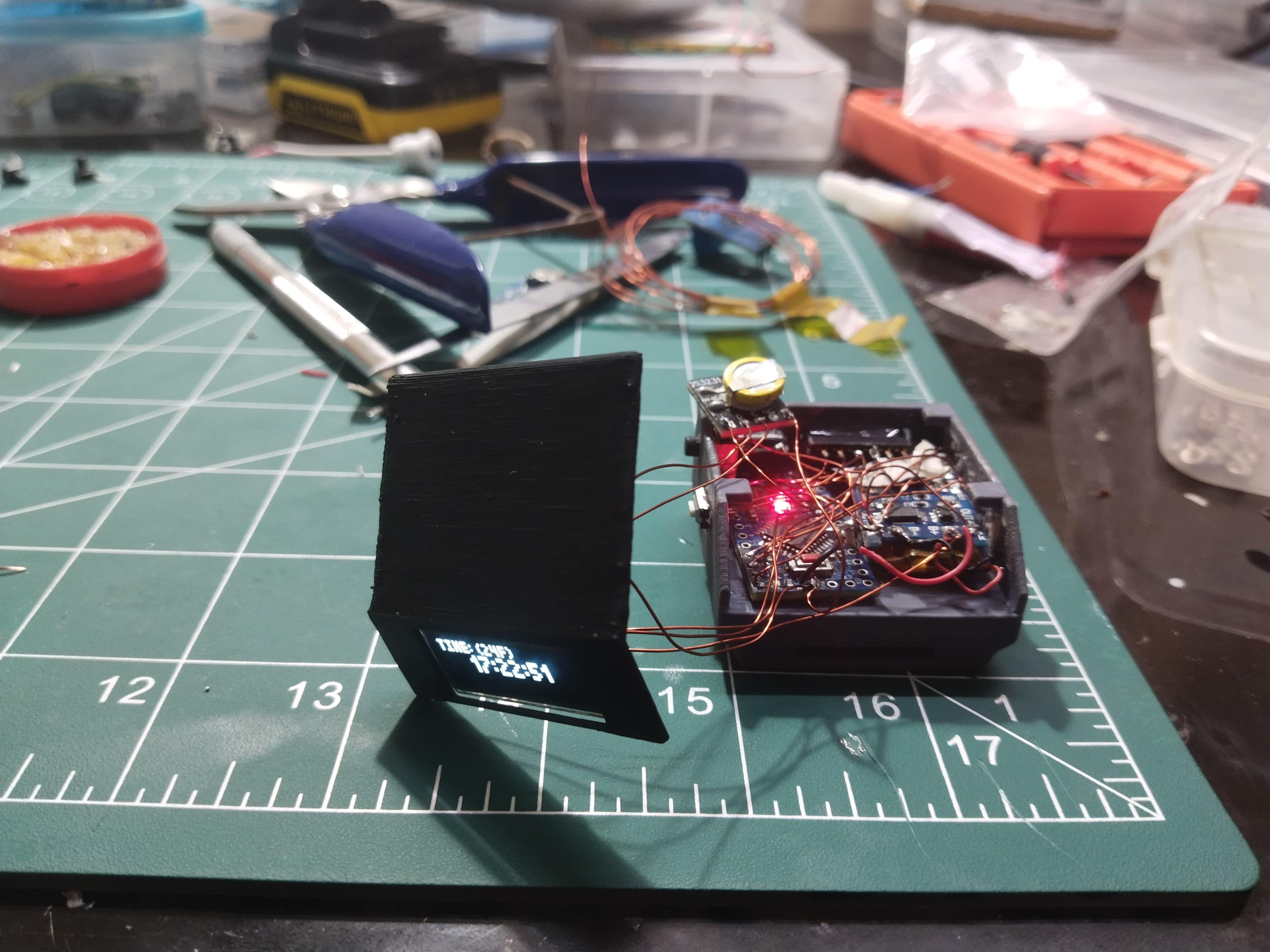
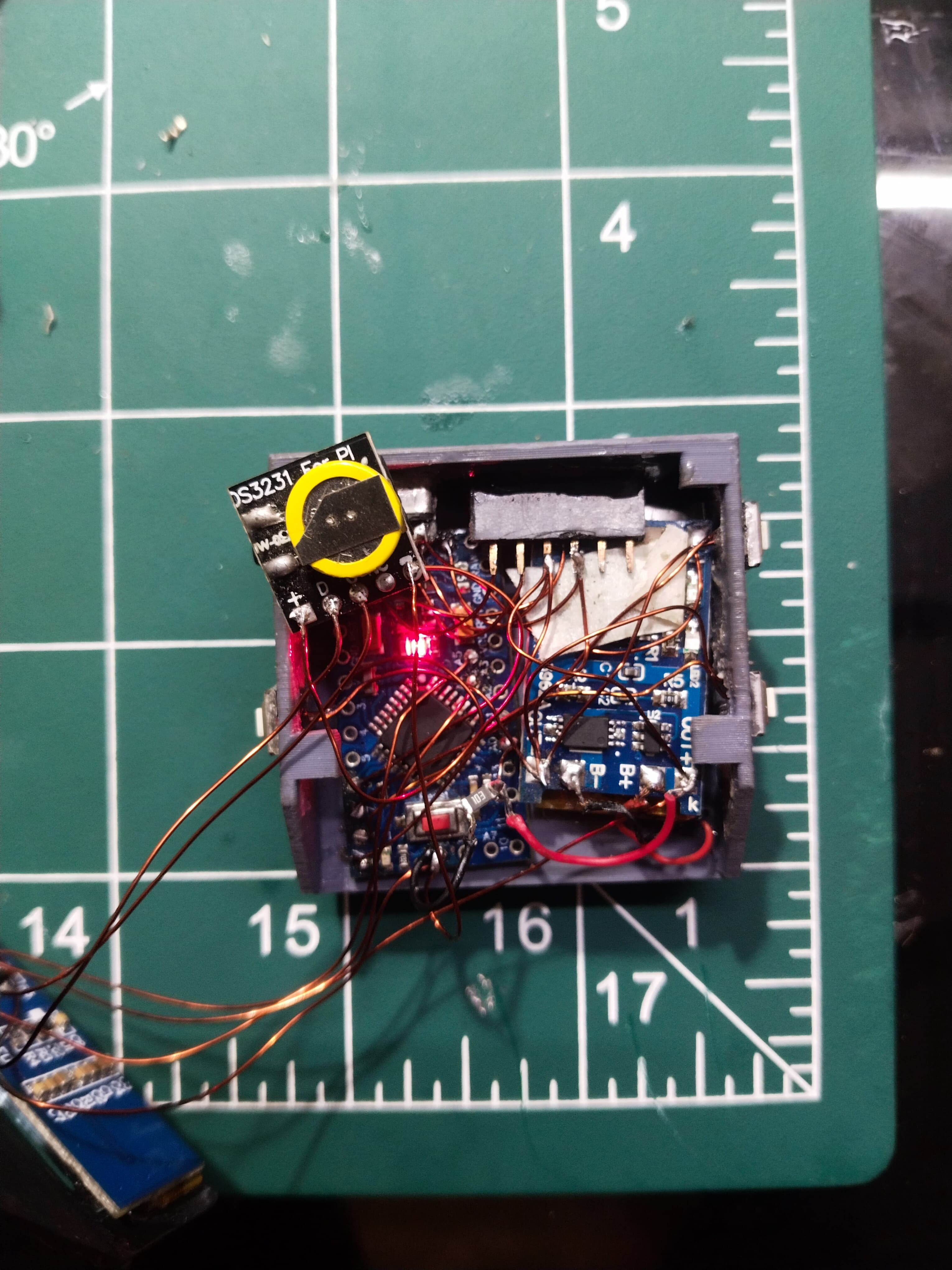
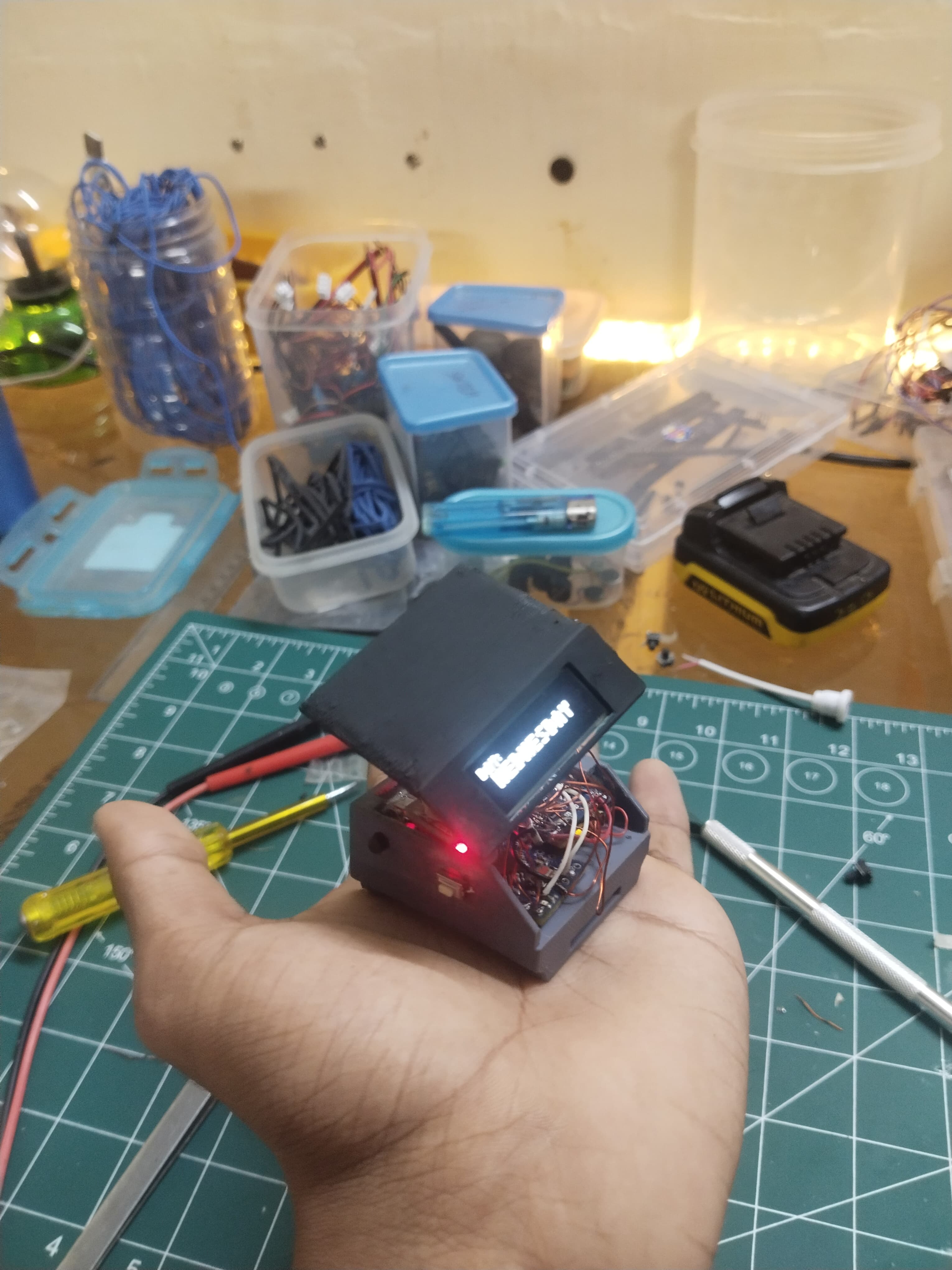
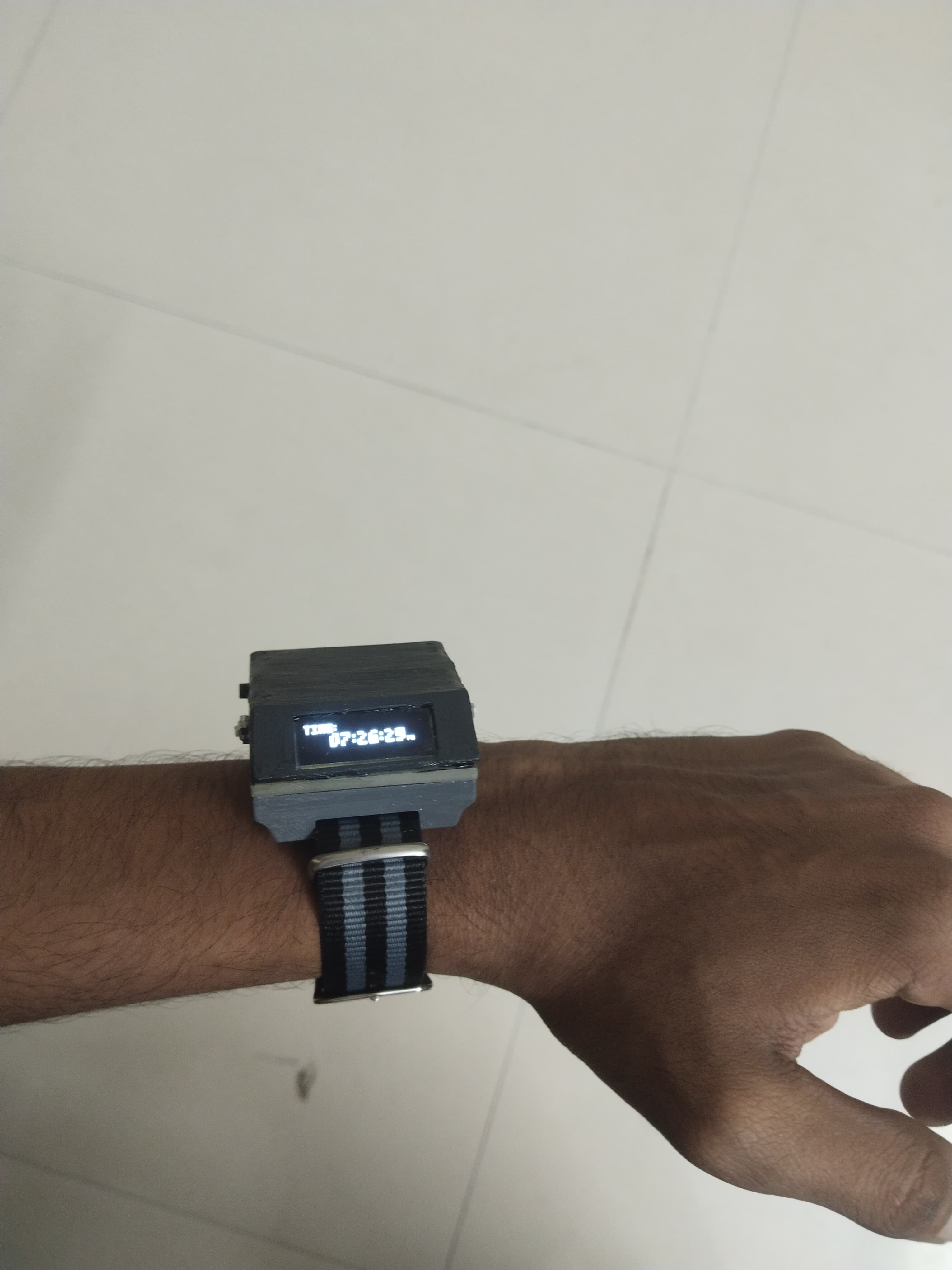
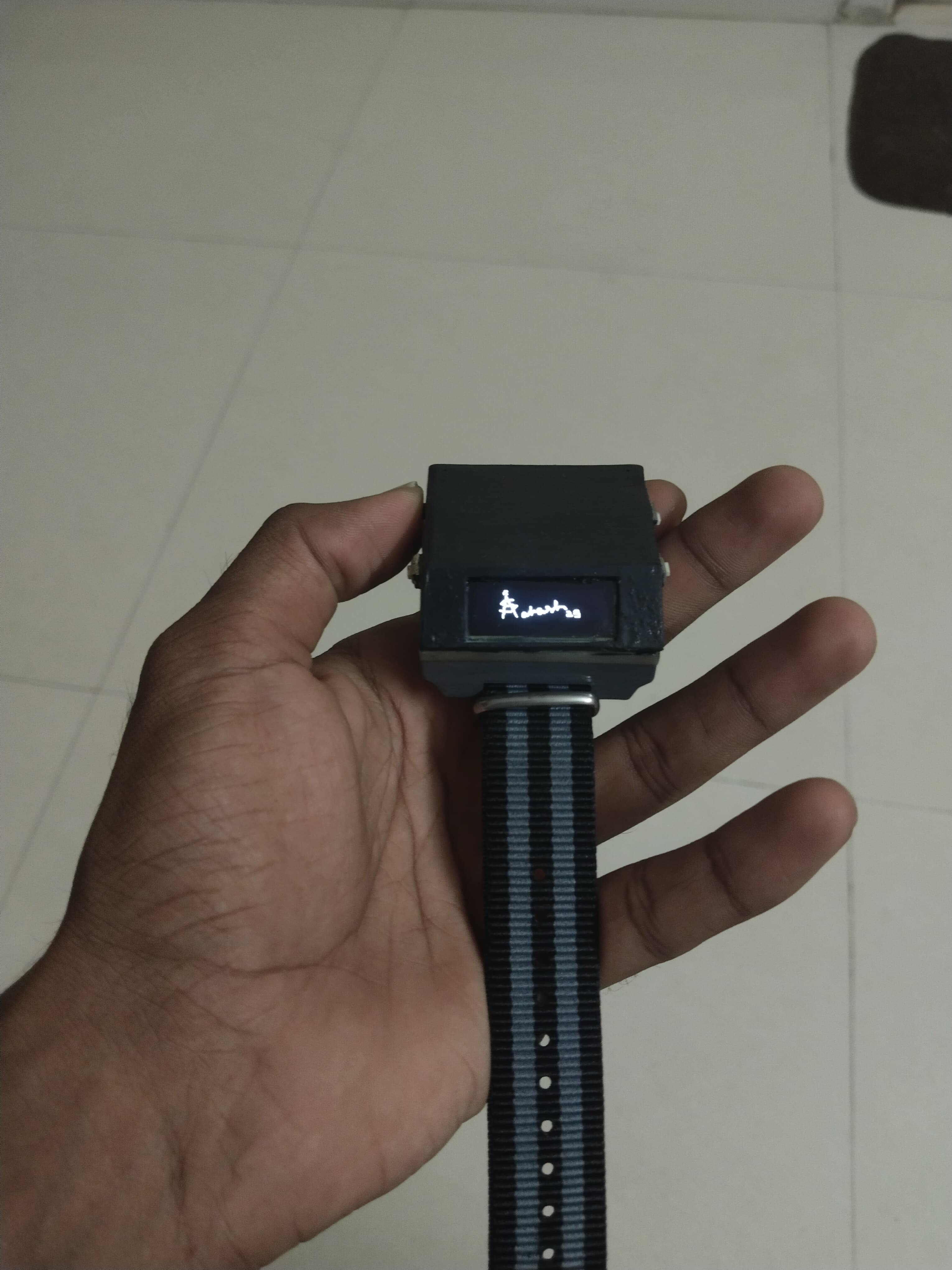
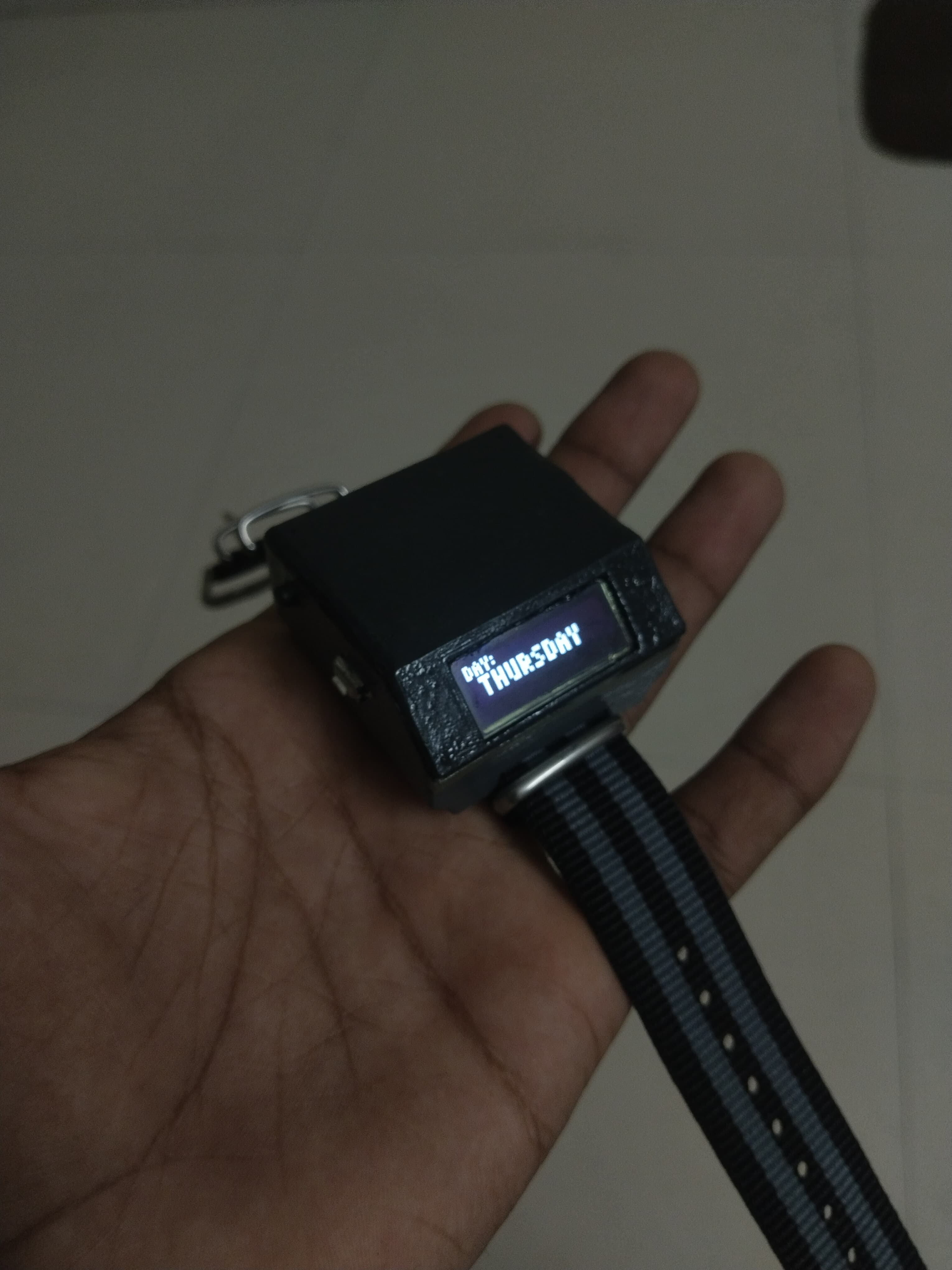
Micro-Engineering: The Arduino Wristwatch
This Minimalistic Wristwatch is the ultimate test of soldering skills and component minimization. It strips away the bulky blue Arduino board entirely, relying on surface-mount (SMD) components or bare DIP chips to fit a fully programmable computer onto your wrist.
The Core Components
- The Brain: The project uses an Arduino Pro Mini, which is based on the ATmega328P chip (the heart of the Uno). For even more extreme miniaturization, a tiny ATtiny85 could be used.
- The Display: A microscopic 0.91" I2C OLED (128x32 pixels) provides a crisp, bright readout of the time while drastically saving power compared to LCDs.
- The Timekeeper: A DS3231 RTC (Real Time Clock) module is essential. Microcontrollers are terrible at keeping long-term time; they drift by minutes a day. The DS3231 has its own crystal and battery to ensure perfect timekeeping.
Extreme Power Saving
A watch that dies in a few hours is useless. Achieving long battery life requires careful design:
- You cannot use standard, inefficient Arduino linear regulators.
- You must program the chip to enter Deep Sleep Mode between interactions.
- In this design, an interrupt is attached to a tactile push button. When pressed, the chip wakes up, powers on the OLED, grabs the time from the RTC, displays it, and then puts itself back to sleep. This allows a small LiPo battery to last for an extended period.
Assembly
- Custom PCB or Protoboard: A compact board is required to keep the profile thin, as seen in the project images.
- Charging Circuit: A module like the TP4056 is used for safely recharging the battery via the integrated Type-C port.
- A 3D Printed Watch Case and Strap: As shown in the gallery, a custom case and a standard watch strap complete the wearable design.