DIY Photogrammetry Turntable
The inspiration for this project came from my brother, Fabio, a biology researcher at Pisa University. He was looking for a simple and efficient way to record data and create 3D Models of monkey bones for his scientific research.

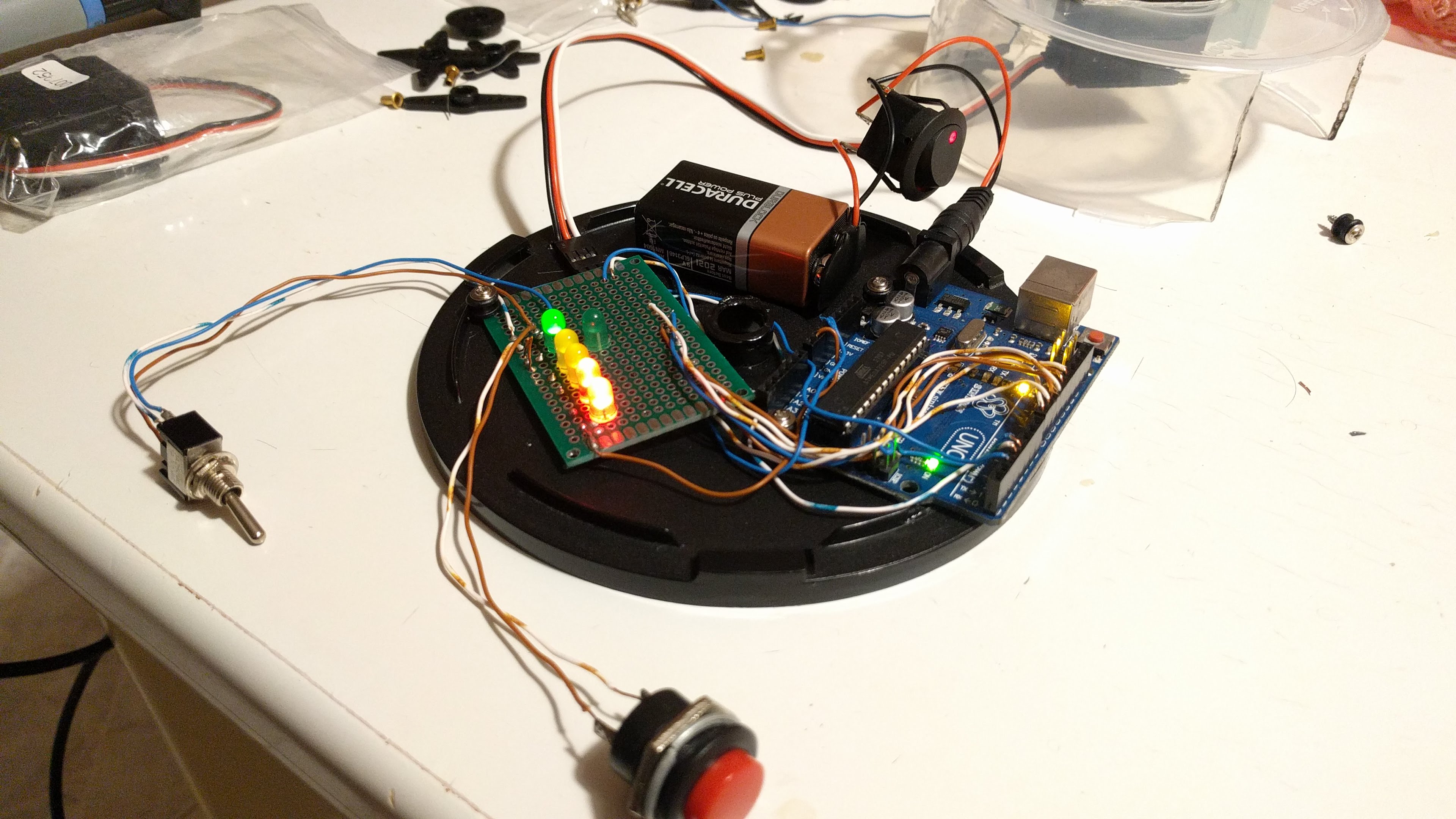
To address the needs of Photogrammetry (creating 3D models from multiple photographs), I designed and built this small automatic Photogrammetry Turntable. It uses an Arduino UNO as the main control board, and an old DVD case was repurposed as the primary structural frame (for rapid prototyping, though in the future I plan to design and 3D print a more aesthetically pleasing and robust case).
Engineering Design Details
The core of this project is its simplicity yet powerful functionality. The structure is designed to be easily opened for upgrades or replacing internal components (Modular Design).

Control and Interface Components:
- ON/OFF Switch: For controlling the main power supply.
- Start and Reset Buttons: To begin operation or immediately restart a cycle.
- 3-way Mode Switch: This is the heart of the control system, allowing users to select from the following modes:
- Pause Mode: Temporarily pauses operation.
- Coarse Mode: Rough rotation (fewer images per revolution), suitable for scanning objects without complex details.
- Fine Mode: Detailed rotation (more images per revolution) to capture more frequent image data for high-resolution model creation.
- 5 LED Status Bar: Functions as a Progress Bar, indicating to the user what percentage of the rotation (0-360 degrees) has been completed.
- Green Status LED: The main operation status light. It "blinks" when in standby mode awaiting commands and "stays lit" when a rotation is in progress.
Motor Control and Program Logic
For this project, I chose the DS04-NFC 360° Continuous Rotation Servo Motor. Unlike typical servo motors, it can rotate continuously. Therefore, controlling the "degree" of rotation isn't done by direct position commands but by adjusting the PWM (Pulse Width Modulation) signal in conjunction with precisely defined rotation durations to simulate stepping motion.
From an engineering perspective, this motor model provides sufficient torque to support objects weighing up to 2 kilograms, which is enough for the animal bone samples or biological objects Fabio intends to scan.
Circuit Assembly and Power Source
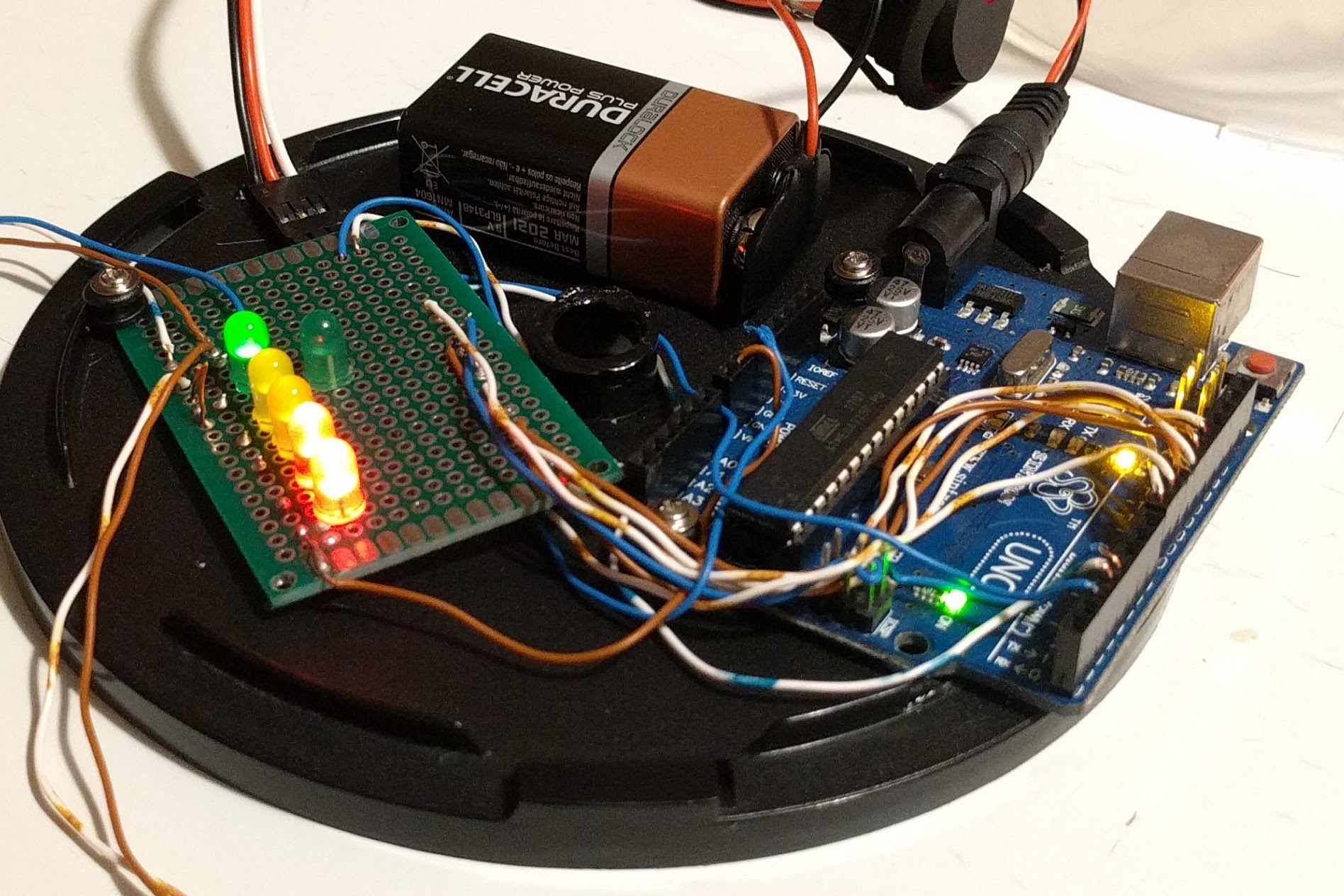
To ensure system stability and durability for real-world use, I soldered the circuit onto a Double-side 40x60 mm PCB. This helps prevent loose wires during rotation.
The power supply system is designed for flexibility:
- Can use a 12V 1A Power Supply for extended lab use.
- Or use a 9V battery (Transistor Battery) for portability when used outdoors.
With a combination of precise motor control programming and user-friendly control panel design, this device has become an essential tool that significantly reduces workload and increases accuracy in creating digital data archives for research into mammalian evolution.