Heart of the Project: The Arduino EKG Monitor
The EKG Monitor (Electrocardiogram) is a sophisticated project that steps into the world of biomedical engineering. It allows you to visualize the electrical signals generated by your heart as it beats, providing a fascinating look at the human body's internal mechanics.
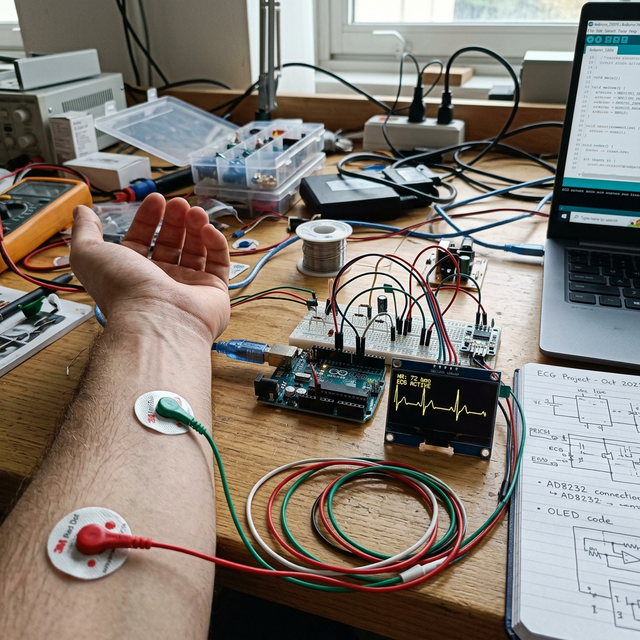
How It Works: Signal Processing
Heart signals are extremely weak (measured in millivolts).
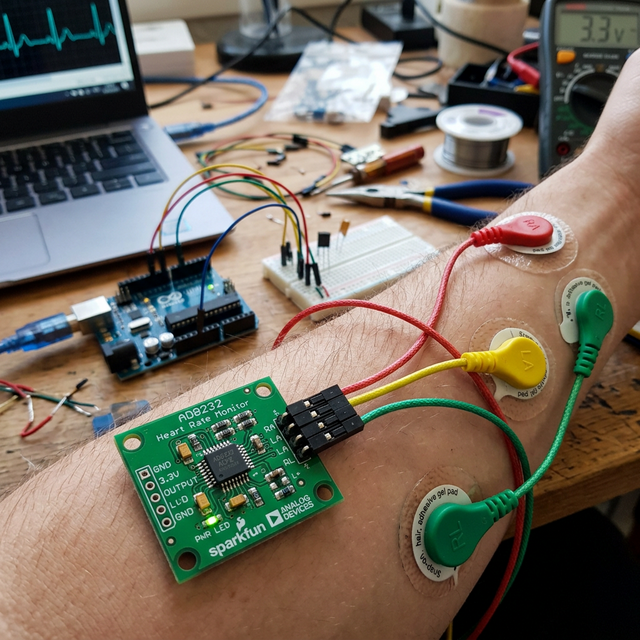
- The Lead System: We use three electrodes (RA, LA, and RL) placed on the chest or limbs to pick up the electrical potentials.
- Amplification: The AD8232 Heart Rate Monitor module acts as an instrumentation amplifier, filtering out muscle noise (EMG) and power line interference.
- Visualization: The Arduino reads the clean analog output and sends it to a computer (using Processing software) or a small OLED/TFT screen to draw the classic P-QRS-T wave pattern.
Essential Hardware
- Arduino Uno/Nano: For data acquisition.
- AD8232 Heart Rate Monitor Module: The core medical sensor interface.
- ECG Lead Electrodes (Disposable): To connect the user to the circuit.
- 0.96" OLED Screen (Optional): For portable heart rhythm monitoring.
Safety Note
Important: This is an educational project only and should never be used for medical diagnosis or clinical purposes. Always ensure the Arduino is powered by a battery (not a wall plug) when a person is connected to the electrodes to provide complete isolation from the mains grid.