Advanced STEM Exploration: The Geiger-Mueller Radiation Detector
Understanding the invisible forces that shape our universe is a cornerstone of modern science education. This project introduces students (ages 12+) to the world of nuclear physics through the construction and operation of a DIY Geiger Counter. By building this device, students move from theoretical concepts of "radiation" to the tangible, numerical measurement of ionizing particles in their own environment.
The Physics of Ionization: How the GM Tube Works
The core of the instrument is the Geiger-Mueller (GM) Tube, a hollow metal cylinder filled with a low-pressure noble gas (like Neon or Argon) and a high-voltage wire running through the center.
- High-Voltage Bias: The Radiation Detector Kit generates a high voltage (~400V) required to sensitive the tube.
- Ionization Event: When a high-energy particle (Beta or Gamma) passes through the tube, it knocks an electron off a gas atom, creating a cascade.
- The "Pulse": This brief moment of conductivity creates a measurable electrical pulse.
- Interrupt Logic: The Arduino Uno Wifi Rev.2 receives this pulse on a Digital Interrupt pin (INT). Every time a pulse is detected, the
void loop()increments a counter.
Data Analytics: CPM and Sieverts
To make the data scientifically relevant, the raw counts are processed through software logic:
- CPM (Counts Per Minute): The Arduino totals the pulses over a 60-second window. This is the standard unit for general radiation monitoring.
- Radiological Conversion: To understand health impacts, CPM must be converted to µSv/h (Microsieverts per hour). For typical tubes used in these kits, an index of 151 CPM = 1 µSv/h is used.
- Environmental Benchmarking: Students learn to compare their readings to natural "Background Radiation" (typically 0.1 to 0.2 µSv/h), discovering that radiation is a natural and ever-present part of life.
Cross-Disciplinary Learning: Health and Environment
This activity provides a platform to discuss broader societal topics:
- Medical Imaging: Understanding the trade-offs of X-rays and CT scans.
- Geology: Detecting natural radiation from granite or minerals.
- Public Safety: Learning about historical events like Chernobyl and the criteria for environmental safety zones.
Mounted with an acrylic cover for safety and durability, this Geiger Counter transforms the Arduino into a professional-grade scientific instrument, bridging the gap between classroom theory and real-world environmental monitoring.
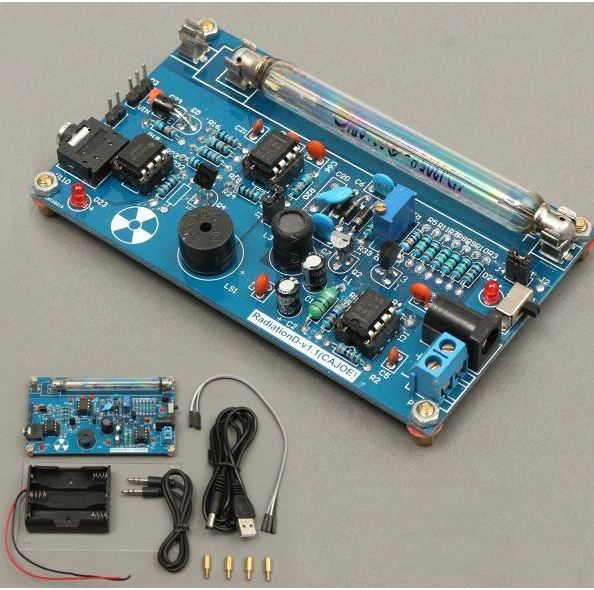
In this tutorial you will learn how to assemble a nuclear radiation detector.
You can purchase the Geiger Counter Kit here.
A Geiger counter is an instrument used for detecting and measuring ionizing radiation. Also known as a Geiger–Mueller counter (or Geiger–Müller counter), it is widely used in applications such as radiation dosimetry, radiological protection, experimental physics, and the nuclear industry.
Geiger counters are used to detect radioactive emissions, most commonly beta particles and gamma rays. The counter consists of a tube filled with an inert gas that becomes conductive of electricity when it is impacted by a high-energy particle.
Supplies:
Package included:
1 x Radiation Detector system Kit
1 x GM Tube
1 x Power supply cable
1 x Battery Holder (without batteries)
3 x Jumper Wires
4 x Nuts
1 x Acrylic cover
Nuclear radiation detector at work (copy the following link to the browser to watch): Http://v.youku.com/v_show/id_XNzI3MTU2NzQ0.html
Customers using our Geiger counter to record the video: Http://v.youku.com/v_show/id_XOTE4ODIyNTIw.html
Compatible with Arduino: (recommended UNO R3 Arduino, or any other arbitrary with 5V and external interrupt INT) Internet can be downloaded: SPI example for Radiation Logger Arduino Logger Radiation can be used as the host computer software to build radiation monitoring station.
Step 1: What Is Radiation?
https://world-nuclear.org/nuclear-basics/what-is-radiation.aspx
Radiation is energy travelling through space. Sunshine is one of the most familiar forms of radiation. It delivers light, heat and suntans. While enjoying and depending on it, we control our exposure to it. Beyond ultraviolet radiation from the sun are higher-energy kinds of radiation which are used in medicine and which we all get in low doses from space, from the air, and from the earth and rocks.
Step 2: Radiation Sources in Daily Life
https://www.euradcom.org/top-5-sources-of-radiatio...
Television
The average American over the age of 2 watches 4.5 hours of TV daily. The electrical conductivity in TV sets and computer monitors gives off a minimal amount of X-rays: 1 mrem per year to the typical consumer. However, there are more urgent health hazards such as obesity if you pass several hours per day immobile in front of a screen.
Radon
A colorless, odorless gas given off by decaying uranium seeps into the foundation of one out of 15 American homes and takes up residency in their basements. Luckily, you can test your house for high levels of radon and take the necessary steps to protect your family from this gas by consulting
Medical Imaging
Obviously one does not undergo medical imaging procedures on a daily basis, but as the most common source of exposure for Americans beyond normal background radiation, medical imaging bodes mentioning. Medical imaging procedures such as dental or chest X-rays send 10 mrem to the patient. Mammograms log in at 138 mrem per image, and CT scans can deliver up to 1, 000. An even higher dosage procedure, the colonography, produces 10, 000 mrem, which increases your risk of cancer by 1%. However, if your doctor recommends any of these procedures, you’re better off taking the radiation risk than declining the procedure.
Cell phones
Cell phones emit radiofrequency waves, a non-ionizing form of radiation, albeit at a low enough dose that there are no established health effects. Here you can find out more about how to avoid radiation from cell phones.
Smoking
It should come as no surprise that cigarettes causes health problems even beyond the carcinogens in the tar component of smoke your body takes in with each inhale. Heavy smokers increase their radiation exposure by 870 mrem per year – more than doubling or even tripling their exposure compared to non-smokers. Keep in mind that most these quotidian objects and personal habits expose you to what, in the end, is a minimal amount of radiation. To learn more about the sources and risks of radiation, consult the International Atomic Energy Agency’s findings on radiation in everyday life.
Step 3: Soldering the Geiger Counter
Step 4: Using the Geiger Counter With an Arduino
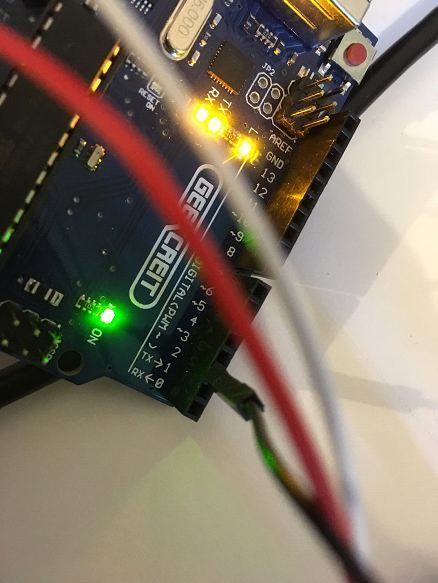
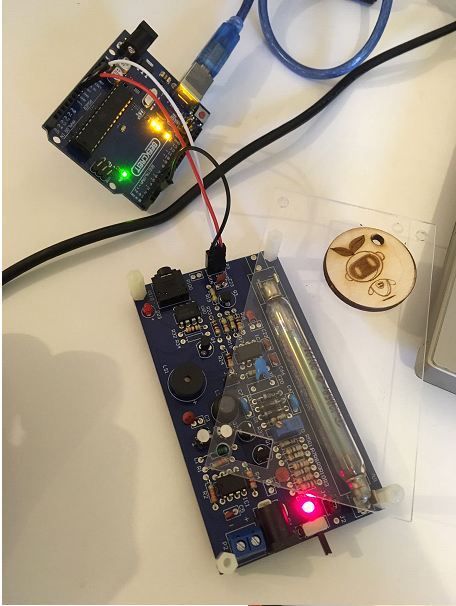
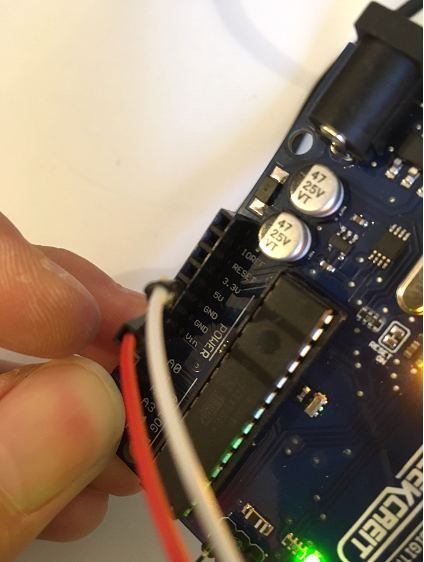
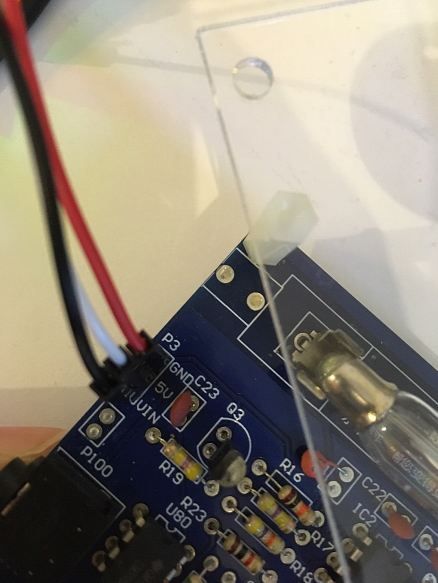
Connect the P3 pin GND, 5V, VIN to arduino GND, 5V, Digital 2 respectively.
Then in the arduino IDE software open the file: spi_rad_logger.ino which you could find here.
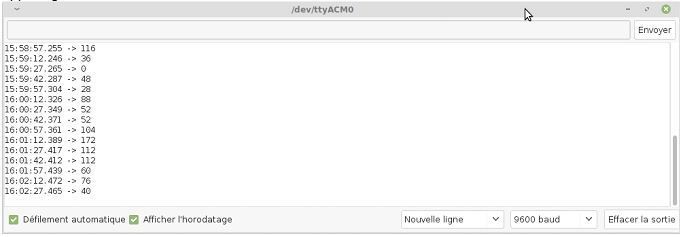
Be sure to change the Serial.print(cpm) command to Serial.println(cpm) in the void loop(){} for better readability.
Download the program onto the Arduino board and open the serial port window by clicking on the scope on the upper right corner.
Then we’ll get the radiation value displayed in CPM, counter per minutes which could be converted to uSv/h with the index 151(151CPM=1uSv/h).
Step 5: Risk of Radiation
https://fr.search.yahoo.com/yhs/search?hspart=ddc&...
https://www.reuters.com/article/us-how-much-radia...
People are exposed to natural radiation of 2-3 mSv a year.
In a CT scan, the organ being studied typically receives a radiation dose of 15 mSv in an adult to 30 mSv in a newborn infant. Advertisement A typical chest X-ray involves exposure of about 0.02 mSv, while a dental one can be 0.01 mSv. * Exposure to 100 mSv a year is the lowest level at which any increase in cancer risk is clearly evident. A cumulative 1, 000 mSv (1 sievert) would probably cause a fatal cancer many years later in five out of every 100 persons exposed to it. * There is documented evidence associating an accumulated dose of 90 mSv from two or three CT scans with an increased risk of cancer. The evidence is reasonably convincing for adults and very convincing for children. * Large doses of radiation or acute radiation exposure destroys the central nervous system, red and white blood cells, which compromises the immune system, leaving the victim unable to fight off infections. For example, a single one sievert (1, 000 mSv) dose causes radiation sickness such as nausea, vomiting, hemorrhaging, but not death. A single dose of 5 sieverts would kill about half of those exposed to it within a month. * Exposure to 350 mSv was the criterion for relocating people after the Chernobyl accident, according to the World Nuclear Association.

This tutorial has been produced as part of the DEEDU project, co-financed by the Erasmus + Programme of the European commission. Project n°: 2018-1-FR02-KA205-014144.The content of this publication does not reflect the official opinion of the European Union. Responsibility for the information and views expressed therein lies entirely with the authors. For more information, email us at info@digijeunes.com.