Asynchronous API Telemetry Mapping
This prototype structure re-engineers a basic consumer toy framework, converting its analog shell into a smart Data-Visualization Node mapping embedded ESP8266 logic natively towards environmental parameters (Specifically: Air Quality Index or AQI vectors).
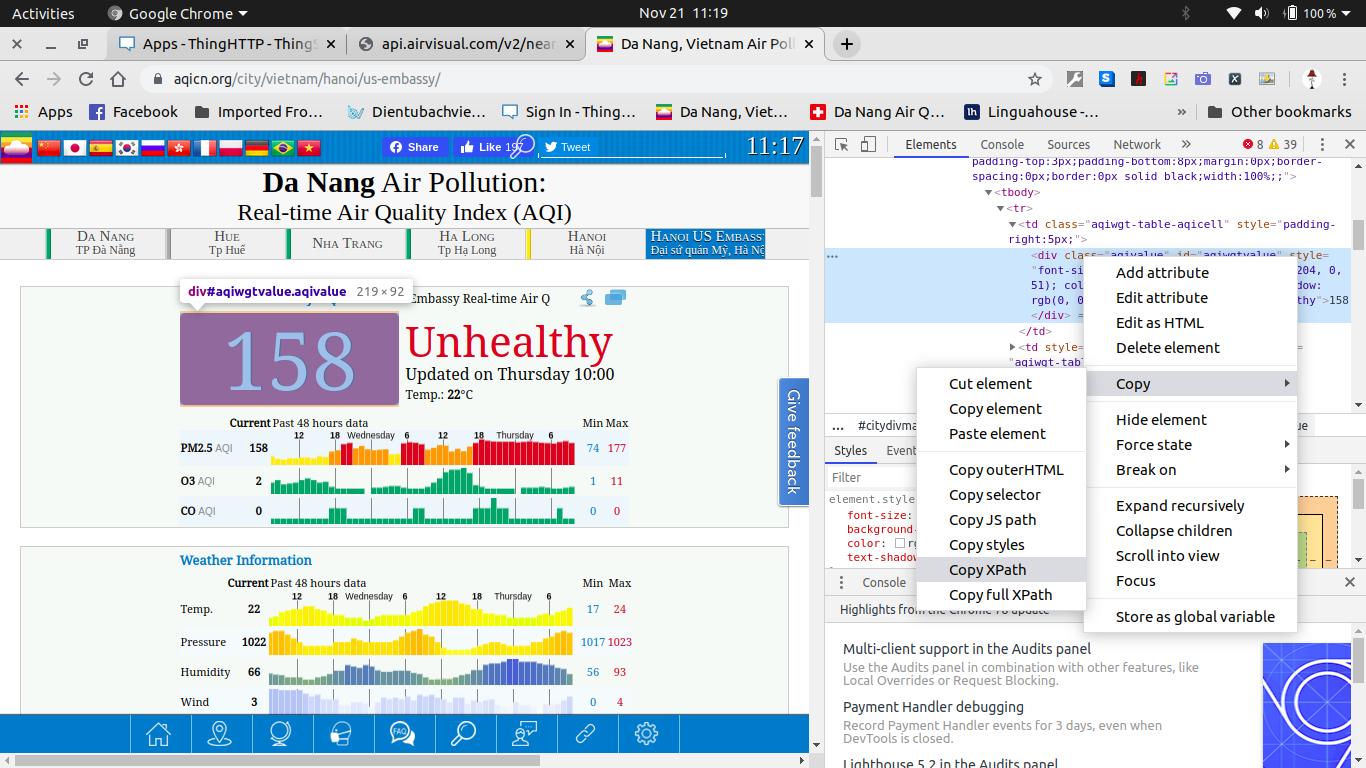
Primarily, the underlying firmware relies entirely on asynchronous Wi-Fi capabilities executing complex HTML/JSON parsing strings. Using the Air Visual API arrays (or dynamically tunneling direct structural HTML via explicitly targeted XPath coordinates via ThingSpeak if an active API key denies regional access), the processor extracts a massive serialized data string. The subsequent execution loop demands advanced algorithmic String indexing matrices to isolate the precise two-digit AQI integer prior to mapping its bounds towards physical hardware.
Network Handling and NeoPixel Integration
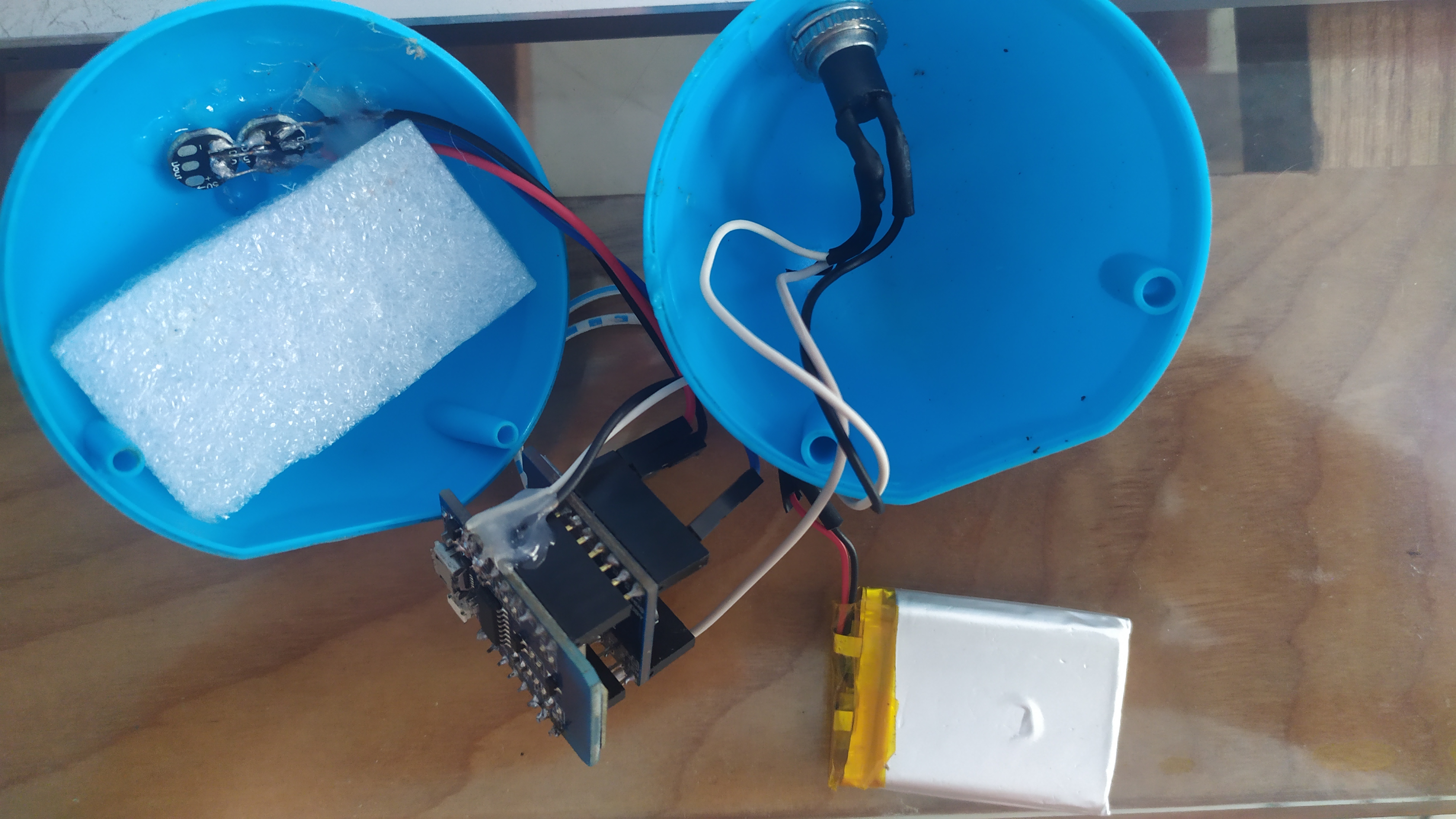
The hardware limit forces integration between standard 3.3V GPIO boundaries intrinsic to the WeMos D1 Mini architecture and the ubiquitous WS2812 addressable LED matrices embedded within the chassis.
WiFiManager Library:Circumventing static credential arrays hard-coded directly into ROM, this methodology injects a dynamic Captive Portal into the boot sequence. If the system fails a primary handshake, it immediately shifts into an active Access Point (AP), serving a localized HTML vector allowing dynamic remote credential configuration without IDE re-compilation limits.Deep Sleep Cycling:Because localized 1000mAh Li-Ion architectures rapidly decay processing complex HTTP loops, the fundamental C++ code executes sleep logic instantly following successful 10-second data visualization windows until physical interrupts force a hard reset toggle against theRSTpin (via a 10K Pull-Down mechanical button array).
Implementation and Dependency Management
The architectural core specifically avoids native Adafruit WS2812 drivers, intentionally linking towards the NeoPixelBus by Makuna—specifically to eliminate memory DMA (Direct Memory Access) contention constraints against active ESP WiFi transmission stacks (which notoriously drop active frames due to strict timing collision limits).