Healthcare Skin Pressure Detector
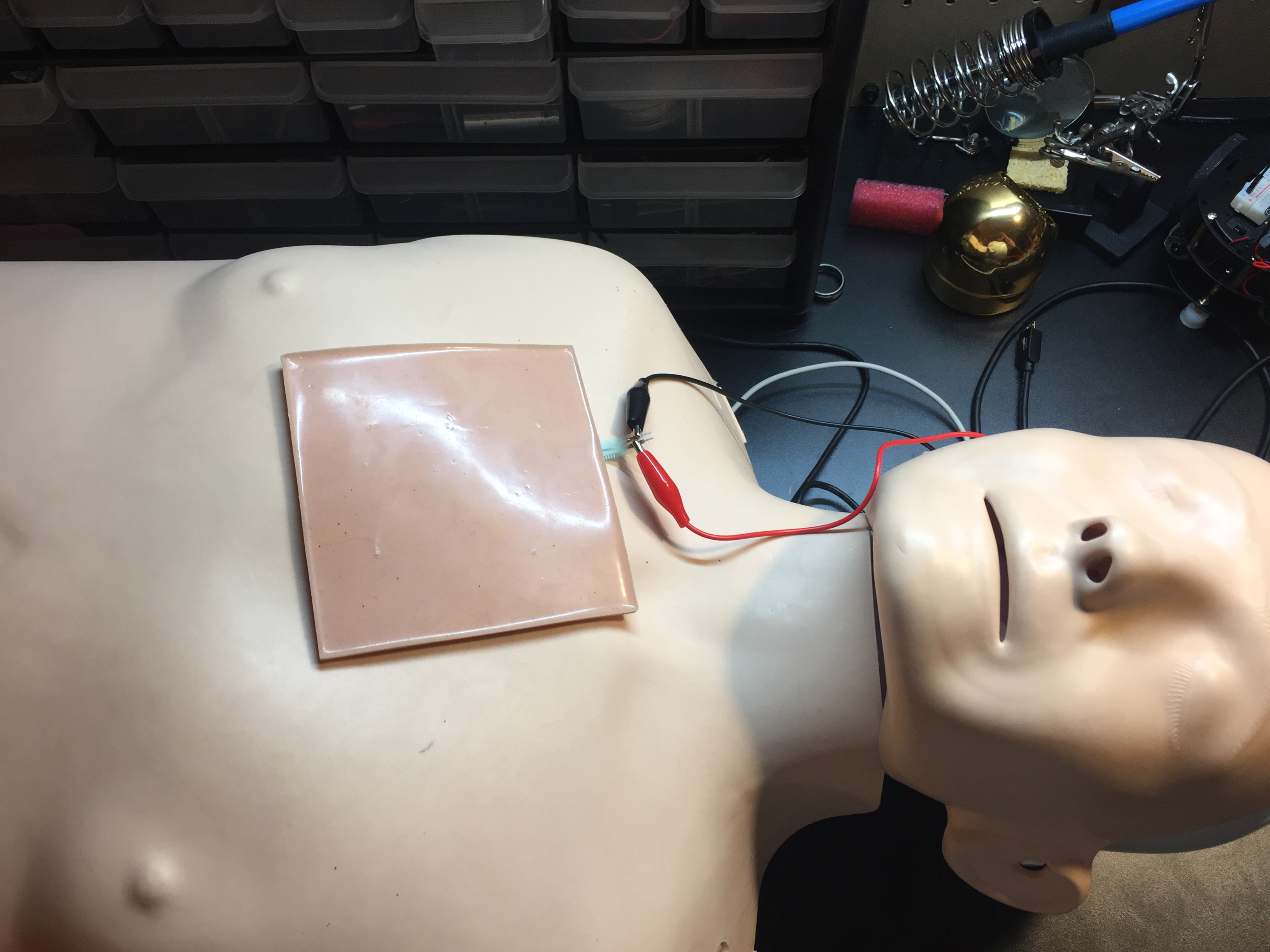
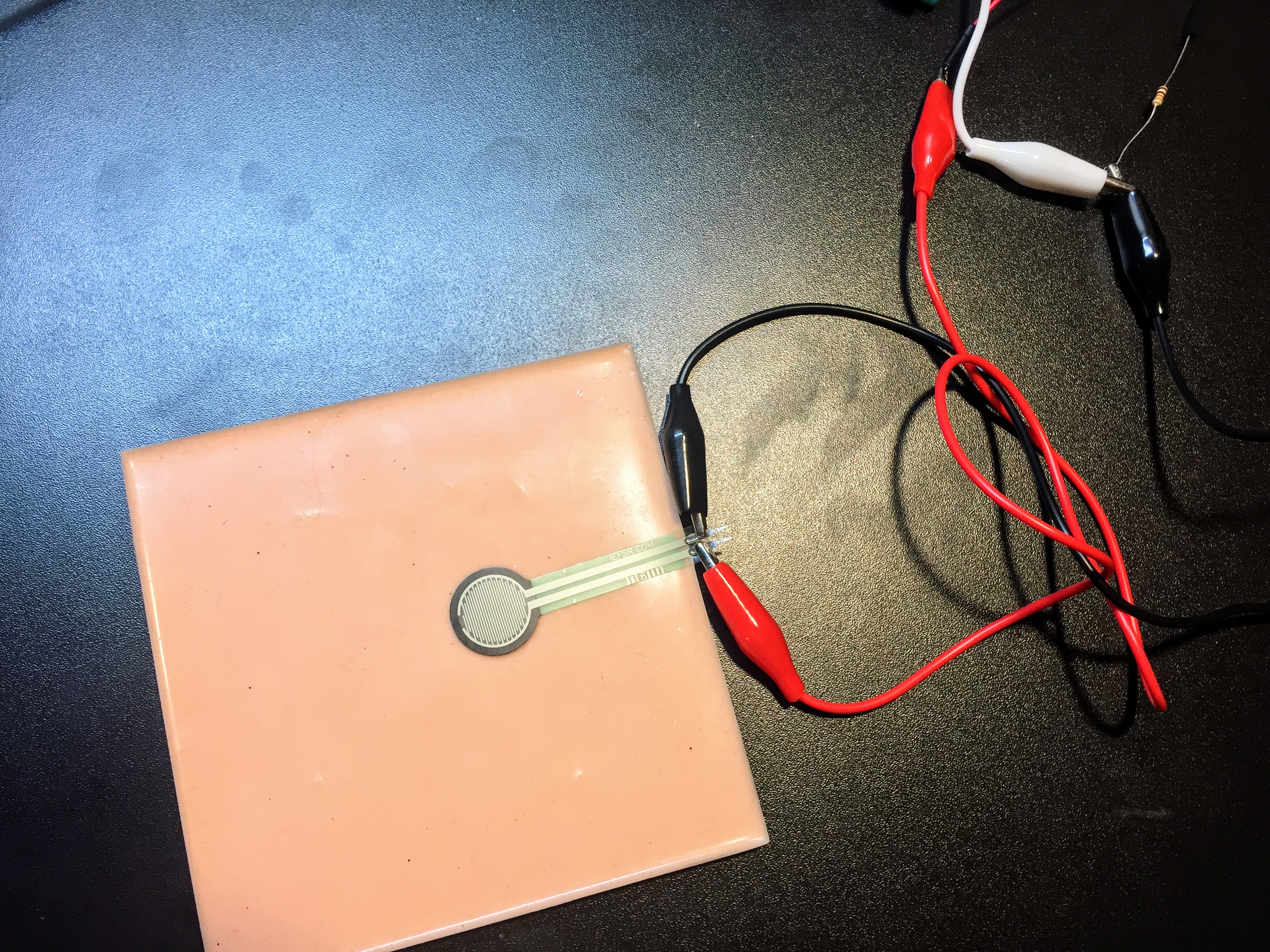
Concept Project for measuring the amount of pressure applied to a site. For use in Healthcare Simulation Training. Using a Force Sensitive Resistor (FSR) placed under fake skin created with "Smooth-On", we are able to estimate the pounds of pressure applied.
Although the sensor can only detect pressure to approximately 20 lbs which isn't high enough when detecting pressure applied for artery bleeding stoppage. This concept testing showcases how Arduino boards can create new healthcare simulation trainers.
Instructions
- Gather all equipment and supplies.
- Assemble according to diagram.
- Use alligator clips to connect the FSR to the Arduino board (do not attempt to solder connections).
- Download and upload code to Arduino board.
Skin Instructions
- Purchase Smooth-On Ecoflex 00-20, trial size is enough for multiple projects.
- Purchase Silc-Pigment Color Sampler, this project uses "Fleshtone".
- Mix according to directions (equal parts of A & B).
- Pour into 3D printed skin mold ( pour to 1st line).
- Allow to sit for 4 hours.
- Remove and ready to use in your project.
EXPANDED TECHNICAL DETAILS
Medical-Grade Pressure Sensing
This wearable or bed-based diagnostic tool is designed to prevent pressure sores or monitor skin contact in healthcare environments.
- Force Sensing Resistor (FSR): Uses a thin-film FSR sensor whose resistance drops significantly when physical pressure is applied.
- Detection Algorithm: The Arduino reads the analog voltage across the FSR using a voltage divider. The firmware implements a threshold-based alert system; if the pressure remains consistently high for too long, it triggers an alert.
Health Monitoring Interface
- Feedback Mechanism: A buzzer or a vibration motor provides tactile feedback to the patient or caregiver.
- Data Connectivity: Using the Arduino IoT Cloud, the pressure levels are logged in real-time, allowing doctors to review the historical "Pressure Profile" of a patient over a long duration.