Multi-Input Integration: Scale Home Automation
Flipping an LED on and off is easy. Managing an interconnected environment using four entirely different communication protocols simultaneously is hard. The Arduino Home Automation Prototype creates a centralized switchboard, demonstrating how a single microcontroller can aggregate IR, Bluetooth, physical matrix keypads, and serial inputs into unified mechanical relay actions.
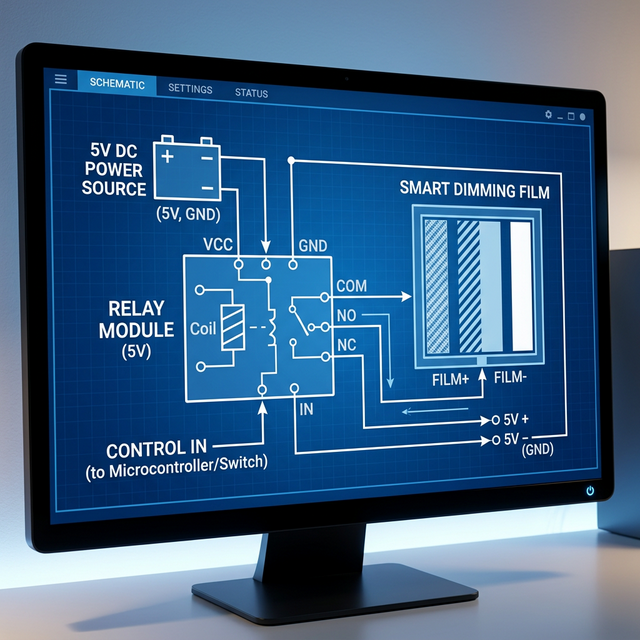
The 4-Channel Relay Actuation
The "Output" of the entire system focuses strictly on a 4-Channel 5V Relay Board.
- The Wiring Logic: The relays act strictly as physical electrical breaks. The 220V Live wire from the wall is cut and screwed into the
Common (COM)andNormally Open (NO)ports. The Arduino never sees the 220V AC. - The relay board has opto-isolators to protect the Arduino from the massive electromagnetic spikes produced by turning on ceiling fans and washing machines!
The Aggregation Logic Loop
The Arduino loop() runs an incredibly fast cyclical checklist through four different input methods.
void loop() {
  readBluetooth(); // Is the Android App requesting a change?
  readKeypad();    // Did someone punch a code in the wall panel?
  readIRRemote();  // Did the couch remote hit a button?
  verifySensors(); // Is the PIR sensor detecting a burglar?
}
If ANY of these functions return a true condition for "Turn on the Kitchen Light," the logic writes: digitalWrite(Relay1, LOW); (Relays usually use LOW-level triggers). The physical switch clicks, and the heavy AC light bulb explodes into brilliance.
Component Integrations
- Arduino Mega 2560: (Required because a 4x4 matrix, IR sensor, Bluetooth module, and 4 relays will consume almost every digital pin on an Uno!).
- 4-Channel 5V Relay Module (Must be optically isolated!).
- HC-06 Bluetooth Receiver.
- TSOP38238 Infrared Receiver Diode (For an old TV Remote).
- Physical 110V/220V Lightbulbs, Fans, and thick Extension Cords for the test load setup.