Project Overview
The "Cloud-Connected Infrastructure Guardian" is a critical safety project that applies IoT principles to civil engineering. By deploying a network of sensors across a bridge structure, this system provides real-time monitoring of three primary safety vectors: structural vibrations, ambient temperature (which affects thermal expansion), and water levels (crucial for flood and scour detection). Utilizing a GSM/GPRS module, the system eliminates dependency on local Wi-Fi, transmitting high-frequency sensor data to the ThingSpeak cloud platform. This allows authorities to receive instant alerts before structural integrity is compromised, potentially saving lives and reducing maintenance costs.
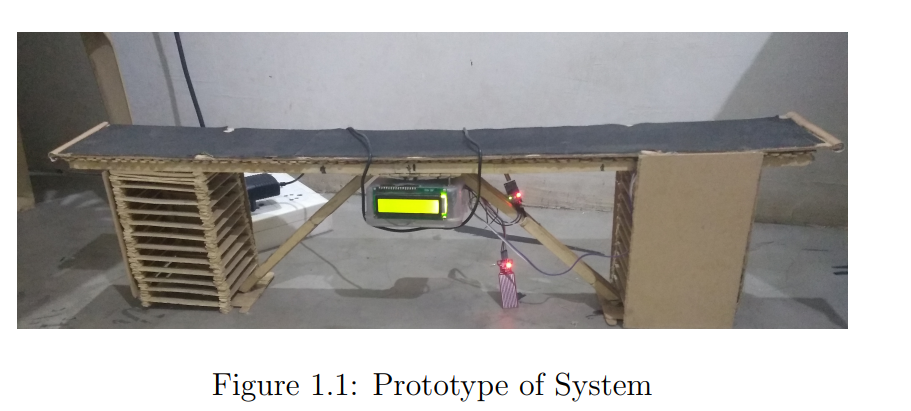
The aim of this project is to support the construction of an efficient HealthMonitoring System for ensuring the safety, using-life of bridges, preventing the collapse affairs, protecting people lives, environment, and reducing unnecessary finance expenses.This report presents an effective method for application on vibration, temperature, and water level signal analysis in Bridge Health Monitoring.The data collected from sensors can be transported through GSM Module to the cloud storage which is the Thingspeak cloud. The various signals from sensors are collected through a wireless sensor network. These signals are very important in Bridge HealthMonitoring System because the variation of bridge signals indicates the changing of bridge structure state.The system working principle, hardware and software development of cloud storage has been carried in this report
Technical Architecture & Sensor Integration
- Vibration Signal Analysis: The SPST-NC Vibration Sensor detects micro-oscillations in the bridge surface. For an engineering-grade system, the Arduino code calculates the frequency and amplitude of these vibrations. Significant deviations from the baseline "healthy" vibration frequency indicate structural softening or support failure.
- GSM/GPRS Telemetry (SIM800): Unlike laboratory IoT projects, bridge monitors are often in remote areas. The SIM800 module allows the system to remain autonomous. It uses AT Commands to establish a GPRS data connection and sends HTTP POST requests to the ThingSpeak API. This architecture provides global accessibility to local hardware data.
- Environmental & Water Sensing:
- LM35 Temperature Sensor: Monitors thermal conditions. Large temperature swings can cause mechanical stress in expansion joints.
- Water Level Indicator: Models flood surge risks. If the water level reaches a "Critical High" state, the system triggers an emergency interrupt to send an SMS alert to emergency responders.
- Localized Alerting (16x2 LCD): Aside from cloud transmission, the system provides on-site readouts for maintenance workers. The LCD displays the current health status and any active fault codes retrieved from the internal state machine.
Engineering & Reliability
- PCB Design for Durability: Given the outdoor deployment environment, the project utilizes a custom PCB. This reduces the risk of vibration-induced loose connections prevalent in breadboard-based designs.
- Cloud Data Visualization: ThingSpeak acts as the remote "Command Center." It tools allow for the creation of time-series graphs, enabling engineers to identify long-term trends in structural degradation rather than just reacting to immediate spikes.
- Power Management: To ensure 24/7 operation, the system can be integrated with a solar charge controller and a LiPo battery. The GSM module's high peak currents (up to 2A during transmission) are managed by decoupling capacitors to prevent Arduino resets.
- Threshold-Based SMS Logic: The firmware includes intelligent logic that prevents "Alert Fatigue." It only sends high-priority SMS notifications when a sensor value remains in the "Danger Zone" for a sustained period, filtering out momentary noise or sensor glitches.