Remote Diagnostics: IoT Patient Monitoring System
The classic Arduino heart rate projects display output locally. The IoT Patient Monitoring System drastically scales up the stakes. Utilizing massive ESP8266 or ESP32 Wi-Fi architecture, the project acts as an intensive-care telemetry array, calculating complex biometrics using the physical Beer-Lambert optical law and violently routing those life-saving numbers to a doctor's dashboard in a different city.
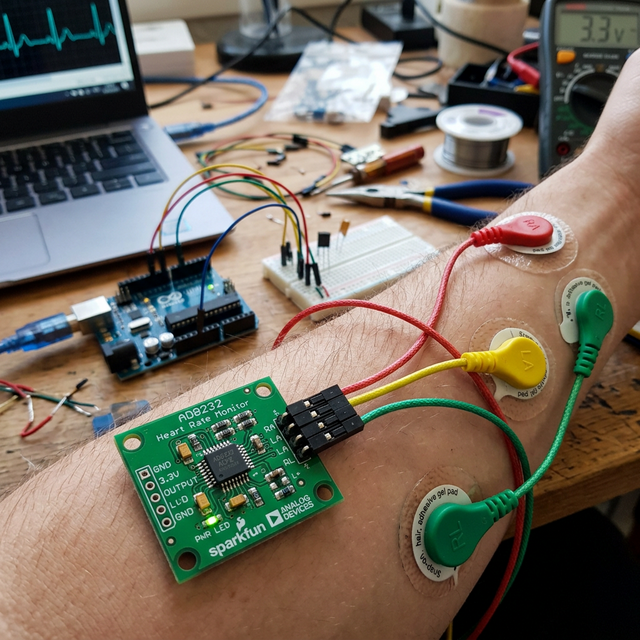
The Biometric Array Matrix
Unlike a simple temperature sensor, patient monitoring requires multiple, hyper-complex math libraries running simultaneously without blocking the Wi-Fi connection loop.
- The Core Engine (MAX30102): The I2C optical sensor calculates the Blood-Oxygen saturation (
SpO2) and Beats Per Minute (BPM) by flashing deep Red and Infrared LEDs into the capillary beds 100 times a second. - The Thermal Vector (DS18B20): A stainless steel, waterproof digital thermometer is taped tightly to the patient's arm to measure the human core temperature curve accurately without analog noise.
The Asynchronous IoT Pipeline
If the C++ algorithm running the BPM calculation uses a generic delay(), the ESP32 will instantly drop its TCP/IP Wi-Fi socket, and the Cloud Dashboard will wildly flag the patient as "Offline."
- The Execution: You must use Blynk IoT, ThingSpeak, or the Arduino IoT Cloud.
- The main
loop()usesmillis()counters. Every 5,000 milliseconds (5 seconds), an execution function fires!
if (millis() - lastUpload > 5000) {
  Blynk.virtualWrite(V1, patientBPM);
  Blynk.virtualWrite(V2, patientSPO2);
  Blynk.virtualWrite(V3, patientTemp);
}
- The Alarm Actuator: If the
patientBPMvariable plummets below 40 (severe bradycardia), the ESP32 violently blasts a high-priority "Push Notification Webhook" directly to the physician's iPhone!
Medical Maker Hardware
- NodeMCU ESP8266 or ESP32 (Absolutely mandatory for native Wi-Fi JSON extraction!).
- MAX30102 Pulse Oximetry and Heart Rate Sensor Module.
- DS18B20 1-Wire Digital Temperature Sensor (Do not use an analog LM35 for human thermoregulation, logic-level digital probes are required).
- A generic Active Piezo Buzzer (To act as a frightening local bedside alarm if biometrics crash before internet help arrives).