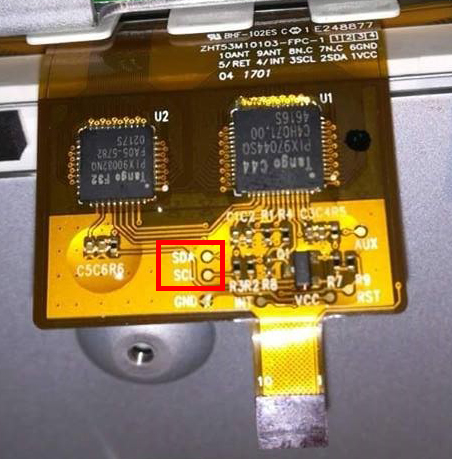
I had a salvaged Konica Minolta MFP display from a non-functional unit. I was curious how to recycle the touch panel, and this project is the result. The idea was triggered by the markings found on the touch panel itself, allowing for a successful integration with a modern Arduino environment.
Sustainable Tinkering: Recycling Industrial Hardware
Modern e-waste is filled with high-resolution, perfectly functional components that are often discarded because their protocols appear proprietary. The Konica Minolta MFP Touch Screen project proves that with a bit of curiosity and basic I2C/SPI knowledge, you can salvage professional-grade interface panels from office hardware like the Bizhub C224. This not only saves money but also provides a more durable and sensitive touch surface than generic hobbyist resistive panels.
Reverse Engineering the Digitizer
Most industrial printers use Capacitive Touch Panels that communicate over the I2C bus. The "secret" to unlocking this panel was found right on the hardware itself—the developer utilized the inscriptions on the flexible flat cable (FFC) and the panel controller chip to identify the pinout:
- Bus Identification: Using the SDA and SCL pins, the Arduino Uno can scan the I2C address of the digitizer.
- Resolution Mapping: Once communication is established, the raw X and Y coordinates from the large industrial panel are mapped to the coordinate space of the smaller display, allowing for precise fingertip tracking across the entire surface.
The Display Hybrid: I2C and SPI in Concert
To provide visual feedback for the salvaged touch panel, the project incorporates a 1.44" SPI TFT LCD (ST7735):
- Dual Communication: This build is an excellent lesson in managing multiple data buses. The Arduino simultaneously manages the I2C bus for touch input and a high-speed SPI bus for display rendering.
- Logic Level Management: Since industrial panels occasionally use 3.3V logic, the project uses 10k Ohm resistors to ensure the Arduino Uno's 5V signals don't damage the sensitive controller on the touch panel or the TFT screen.
- Drawing Calibration: In the demonstration video above, the user can see real-time "ink" appearing on the TFT screen wherever the industrial panel is touched—proving the accuracy of the recycled sensor.
Why This Project is Important
Upcycling industrial parts like this teaches makers how to hunt for Hardware Data Sheets and how to repurpose sensors that were built to last for thousands of hours of office use. It’s a perfect bridge between basic electronics and Reverse Engineering, turning "junk" into a premium input device for your next home automation console or custom gaming machine.