Marcopolo is a route history saver by Arduino Mega saved to MicroSD Card and directed by GPS.
Project Perspective
Marco Polo || Mega Route Logger is a sophisticated exploration of positioning technology and GPS-to-database interaction. By focusing on the essential building blocks—the NEO-6M GPS module and MicroSD storage—you'll learn how to communicate and monitor your travel history using a specialized software logic and a robust hardware setup.
Technical Implementation: GPS Streams and SD Logging
The project reveals the hidden layers of simple position-to-motion interaction:
- Identification layer: The NEO-6M GPS Module acts as your high-resolution acoustic and optical eye, measuring "Latitude," "Longitude," and "Altitude" from satellites.
- Conversion layer: The Arduino Mega uses its Serial pins and high-speed I/O to receive the NMEA data sentences and coordinate data parsing tasks.
- Processing Logic layer: The Arduino code follows a "sequential decoding" (or GPX-step) strategy: it interprets your current coordinates and matches every path to provide a safe data record on the SD card.
- Actuation layer: A MicroSD Card Module provides high-definition visual feedback for every data storage and CSV check.
- Visual Interface layer: A 128x64 OLED Display provides high-definition visual feedback for every point of your travel's status check (e.g., "Fix: 3D").
Hardware Infrastructure
- Arduino Mega 2560: The "brain" of the project, managing high-speed Serial GPS parsing and coordinating SPI SD-card data.
- NEO-6M GPS Module: Providing contactless and reliable hydration and position monitoring for every trip.
- MicroSD Module: Providing high-speed and reliable data monitoring for every wireless record update.
- OLED Display (128x64): Providing high-definition visual feedback for your course status and total distance check.
- Li-Po Battery (3.7V): Essential for providing high-power and energy-efficient energy for the portable logger.
- Micro-USB Cable: Used to program the Arduino and provide the primary power source for the initial setup.
Route Logging and Interaction Step-by-Step
The Marco Polo logging process is designed to be very efficient:
- Initialize Hardware: Correctly seat the GPS and SD modules on the breadboard (or inside the case) and connect to the Arduino Mega.
- Setup Output Sync: In the
setup()function, initialize the GPS Serial port and the SD SPI port and specify the log filename. - Execution Loop: The Arduino constantly performs high-performance GPS-sentence checks and updates the SD card data in real-time as
route.csvorroute.kml. - Visual Feedback Integration: Watch as your OLED dashboard automatically becomes a rhythmic visual signal, pulsing and following your destination settings on the screen.
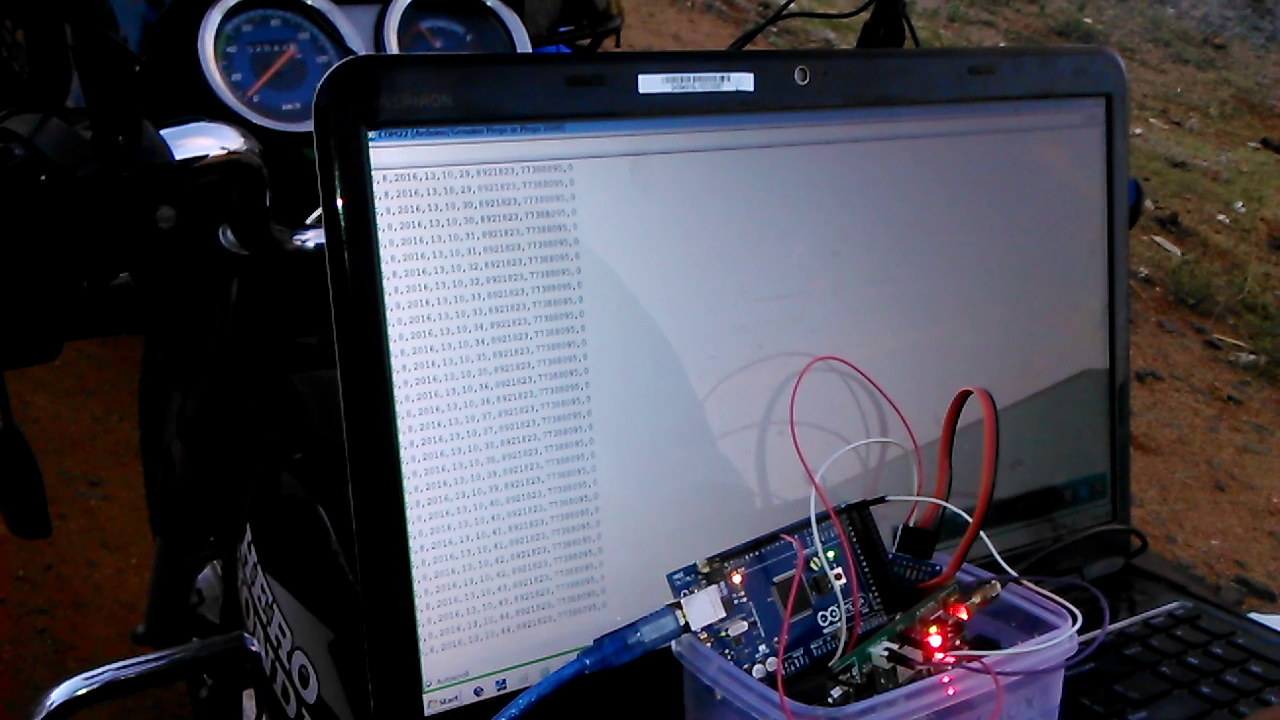
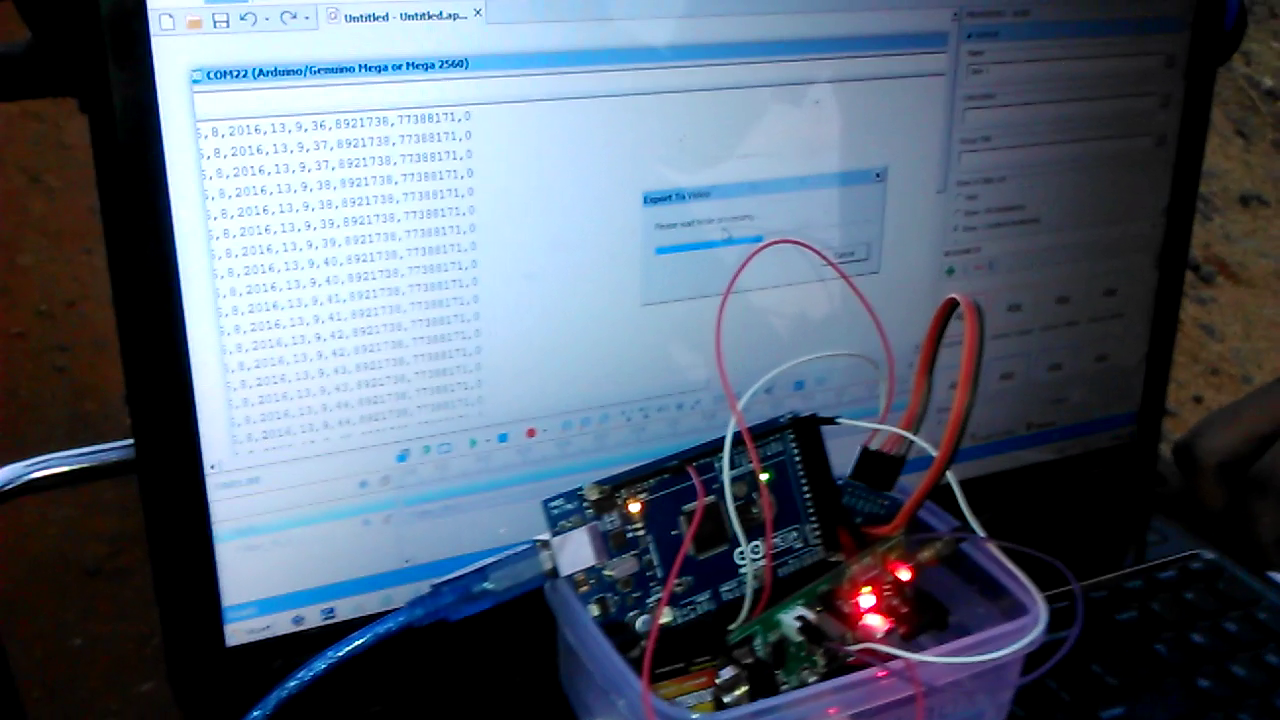
In the first video I got the travel time, latitude, Longitude and velocity from GPS Module.
Future Expansion
- OLED Identity Dashboard Integration: Add a small OLED display on the logger base to show "Satellite Count" (%) and the "Estimated Arrival."
- Multi-sensor Climate Sync Synchronization: Connect a specialized "Accelerometer" (MPU-6050) to perform higher-precision "Movement Detection" to save power.
- Cloud Interface Registration Support Synchronization: Add a specialized web-dashboard to precisely track and log the travel history from a smartphone anywhere in the world over WiFi.
- Advanced Velocity Profile Customization Support: Add specialized "Google Maps Integration" to the code to automatically upload logs whenever WiFi is detected.
Marco Polo || Mega Route Logger is a perfect project for any electronics enthusiast looking for a more interactive and engaging positioning tool!
[!IMPORTANT] Always ensure a clear sky view for the GPS antenna to avoid "No Signal" errors during the route-logging process!