This a very simple project to find the distance between objects. While going through the internet I got an idea to make something using an ultrasonic sensor and Arduino Uno.
In this project I will use the HC-SR04 ultrasonic sensor.
And you will also need the NewPing library. You can find it on the internet.
Project Perspective
Measuring Distance using an Ultrasonic sensor is the fundamental and innovative "Hello World" of non-contact detection. By focusing on the essential building blocks—the HC-SR04 and an Arduino—you'll learn how to orient yourself and monitor your target distances using a specialized software logic and a robust hardware setup.
Technical Implementation: Acoustic Pulses and Math
The project reveals the hidden layers of simple pulse-to-digital interaction:
- Identification layer: The Ultrasonic Sensor (HC-SR04) acts as a high-resolution acoustic eye, measuring your target's distance by emitting 40kHz sonic waves and listening for the echo.
- Conversion layer: The Arduino uses digital Pins (Trigger and Echo) to send and receive high-speed pulses and coordinate the measurement task.
- Processing Logic layer: The Arduino code follows a specialized "sequential decoding" strategy: it only displays the result after the echo is received.
- Communication layer: Data is sent rhythmically to the Serial monitor and your PC to coordinate the measurement status in real-time.
- Information Logic Loop: The Arduino performs the math (Distance = Time x 0.034 / 2) to calculate the final result.
Hardware Infrastructure
- Arduino Uno: The "brain" of the project, managing the high-speed timing and coordinating the Serial output tasks.
- Ultrasonic Sensor: Providing contactless and reliable distance monitoring for your target.
- Breadboard: A convenient way to prototype your first ultrasonic circuit and connect all components without soldering.
- Micro-USB Cable: Used to program your Arduino and provides the primary power source for the sensor controller.
Wiring...
Connect the SR04 VCC pin to the Arduino 5v Connect the SR04 GND pin to the Arduino GND Connect the SR04 TRG pin to the Arduino Digital pin 12 Connect the SR04 ECHO pin to the Arduino Digital pin 11
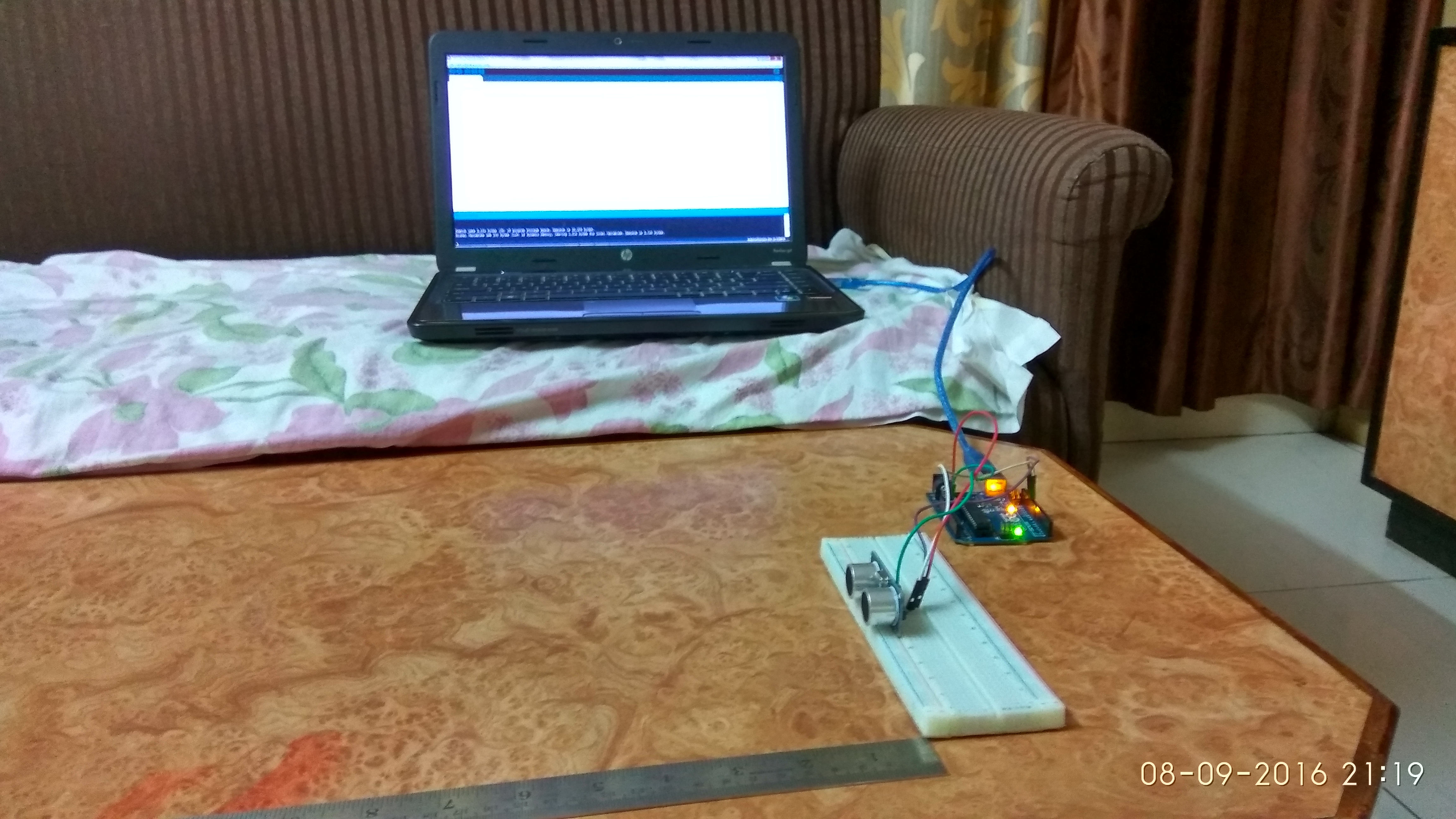
Distance Monitoring and Interaction Step-by-Step
The distance sensing process is designed to be very user-friendly:
- Initialize Hardware: Correctly seat the ultrasonic sensor on the breadboard following the provided wiring instructions.
- Setup High-Power Sync: In the
setup()function, define the Trigger/Echo pins and initialize the Serial port. - Execution Loop: The Arduino waits for the echo signal and updates your distance records on the screen in real-time.
- Visual Feedback Integration: Watch your custom values automatically become a rhythmic visual signal, pulsing and following your target's movement in the room.
Code for making this...
#include <NewPing.h>

#define TRIGGER_PIN  12
#define ECHO_PIN     11
#define MAX_DISTANCE 200

NewPing sonar(TRIGGER_PIN, ECHO_PIN, MAX_DISTANCE);

void setup() {
  Serial.begin(115200);
}

void loop() {
  delay(50);
  Serial.print("Ping: ");
  Serial.print(sonar.ping_cm());
  Serial.println("cm");
}
Future Expansion
- OLED Identity Dashboard Integration: Add a small OLED display to the sensor station to show "Distance (cm)" and a "Life Bar" (%).
- Multi-sensor Climate Sync Synchronization: Connect a Piezo Buzzer to sound an alert melody each time the target is "Too Close" (e.g., < 10cm).
- Cloud Interface Registration Support Synchronization: Add a WiFi module (ESP8266/ESP32) and link to a specialized web-dashboard to precisely track and log the measurement history.
- Advanced Velocity Profile Customization Support: Add specialized "Auto-Calibration" to the code to ensure the sensor is always accurate at every temperature.
Measuring Distance using an Ultrasonic sensor is a perfect project for any electronics enthusiast looking for a more interactive and engaging measurement tool!