Digital to Analog: The Multi-Stream Morse Gateway
Morse code may be a vintage communication standard, but the Morse Code Transmitter project brings it into the 21st century by utilizing modern computer vision and wireless tech. This college-level project demonstrates the translation of digital text and visual images into physical light and sound pulses, providing a bridge between advanced AI processing (OCR) and low-level microcontroller execution.
The AI Engine: OpenCV and Tesseract OCR
One of the project's most impressive features is its ability to "See" text and convert it to Morse:
- Optical Character Recognition (OCR): Using the Tesseract OCR engine integrated with Python, the system can capture frames from a webcam. OpenCV processes these frames—converting them to grayscale and applying thresholding—to help Tesseract identify English words clearly.
- Real-time Recognition: Once a word is identified in an image or video stream, the Python script instantly translates the letters into dots and dashes, sending the data to the Arduino via a Serial connection.
Hardware Execution: Laser and Sound
The Arduino Uno serves as the "Physical layer" of the communication breakdown:
- Optical Transmission: A high-frequency Laser Module is used for light-path communication. This allows for long-distance Morse transmission where the signal can be received by a photoresistor at the other end of a room or yard.
- Audio Feedback: Simultaneously, a Piezo Buzzer creates audible chirps. The timings for the "Dot" (short) and "Dash" (long) are carefully calibrated in the Arduino code to match standard International Morse Code speeds.
Cross-Platform Control Suite
The developer created a comprehensive software ecosystem to drive the transmitter:
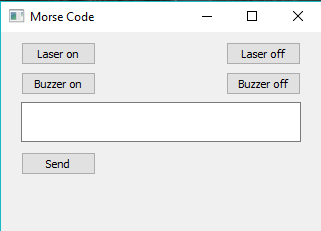
- Desktop App: Built with PyQt4, the desktop GUI allows for manual text entry and real-time serial monitoring across Windows 10.
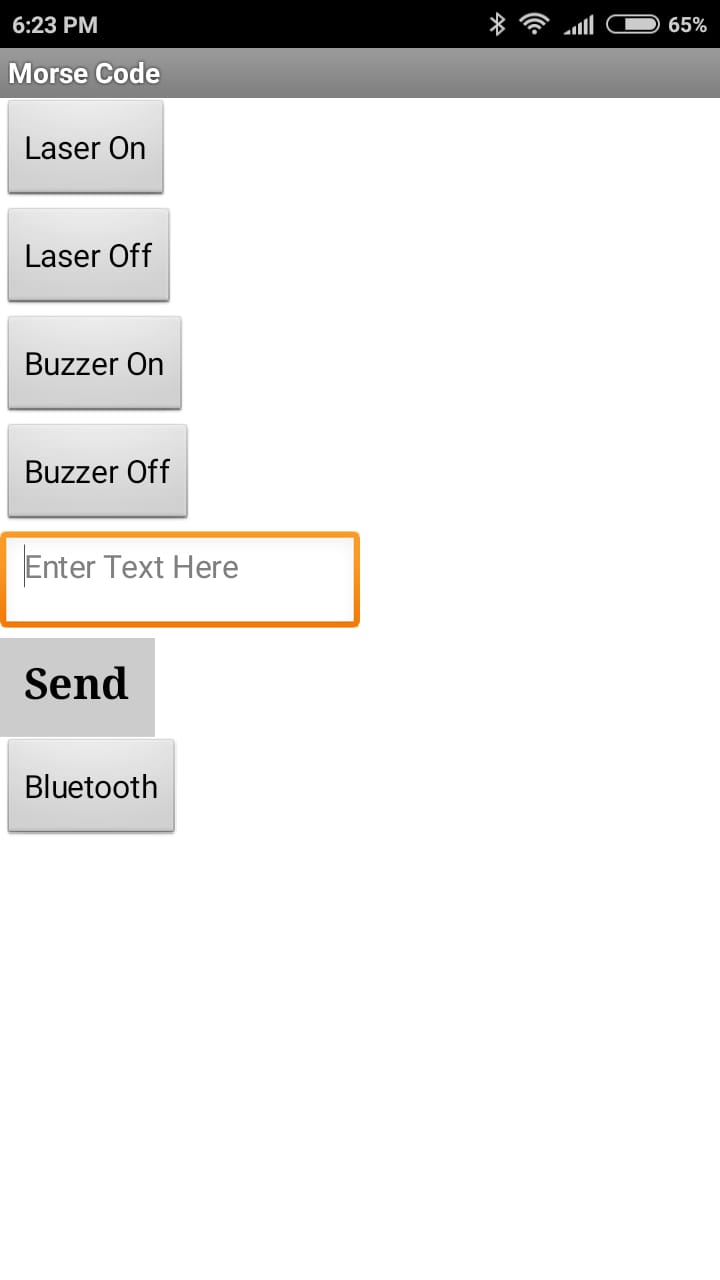
- Android App: Created using MIT App Inventor, this app connects to the HC-05 Bluetooth module, enabling the user to transmit "Secret Messages" directly from their smartphone.
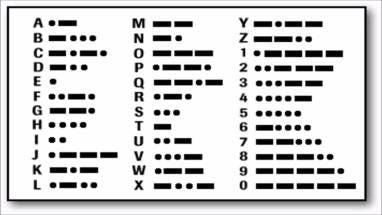
- ASCII-to-Morse Logic: The project involves complex mapping of ASCII character codes to specific timing arrays, ensuring that every letter from A to Z (and numbers 0-9) is represented accurately in both light and sound.
This project is a perfect example of System Integration, following a message's journey from a camera's image, through an AI processor, over a Bluetooth link, and finally into a physical beam of light.
It's a college project for Logic Gates Subject. I chose this project to apply coding system in real life so I tried to transform ASCII code into Morse code and to begin dealing with microcontrollers.
Arduino transmitter which convert English words into Morse code then represent it in light and sound with laser and buzzer. Arduino receives words through serial bluetooth communication. I build Android application and desktop application using "MIT app inventor, Python 3.7, PyQt4, Serial package". I also used Image Processing to recognize text through image or video through cam and then send it to the arduino using "Python 3.7, OpenCV, Tesseract OCR, Serial package".