Plastic Reflectic is an interactive installation that reflects on the problem of the “plastic soup” in our oceans. Enormous amounts of plastic waste end up in the ocean, where it slowly degrades into tiny particles. These microplastics find their way into all parts of the food chain and eventually, for example through the eating of fish, also into our own bodies.
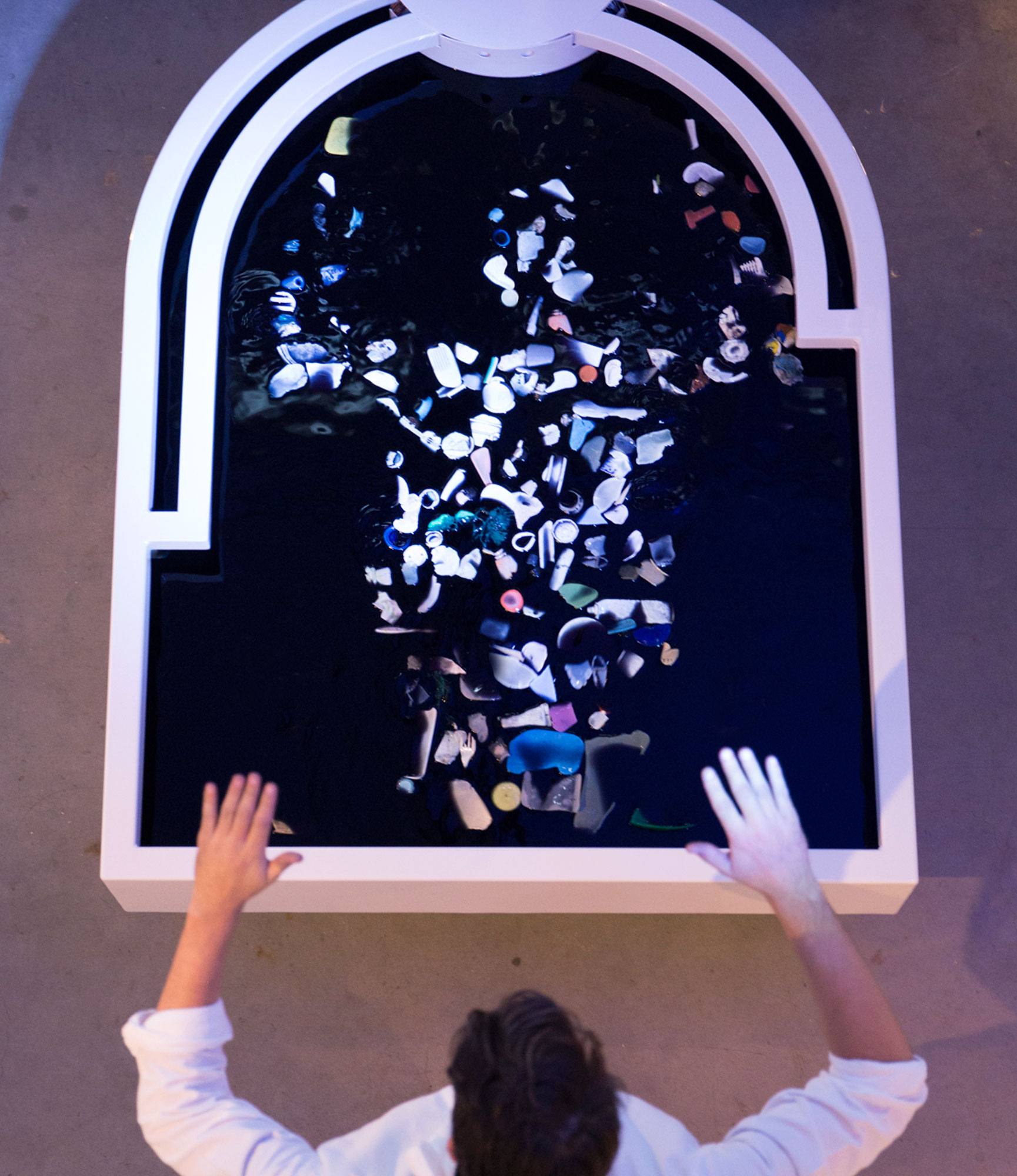
The installation consists of what appears to be a large empty white pool filled with black water. When you step in front of it, hundreds of pieces of actual ocean plastic come floating to the surface, forming your silhouette. As you move your body or wave your arms, pieces of plastic submerge again while others float to the surface showing your own real-time reflection moving along with you, made of plastic waste fished from the oceans. Plastic Reflectic warns us by showing us our own bodies made out of plastic ocean trash, but also shows that everyone has a personal influence on this growing problem.
Plastic Reflectic is a project made by FRONT404 and artist Thijs Biersteker together with Better Future Factory, for the Plastic Soup Foundation and Dutch newspaper de Volkskrant.
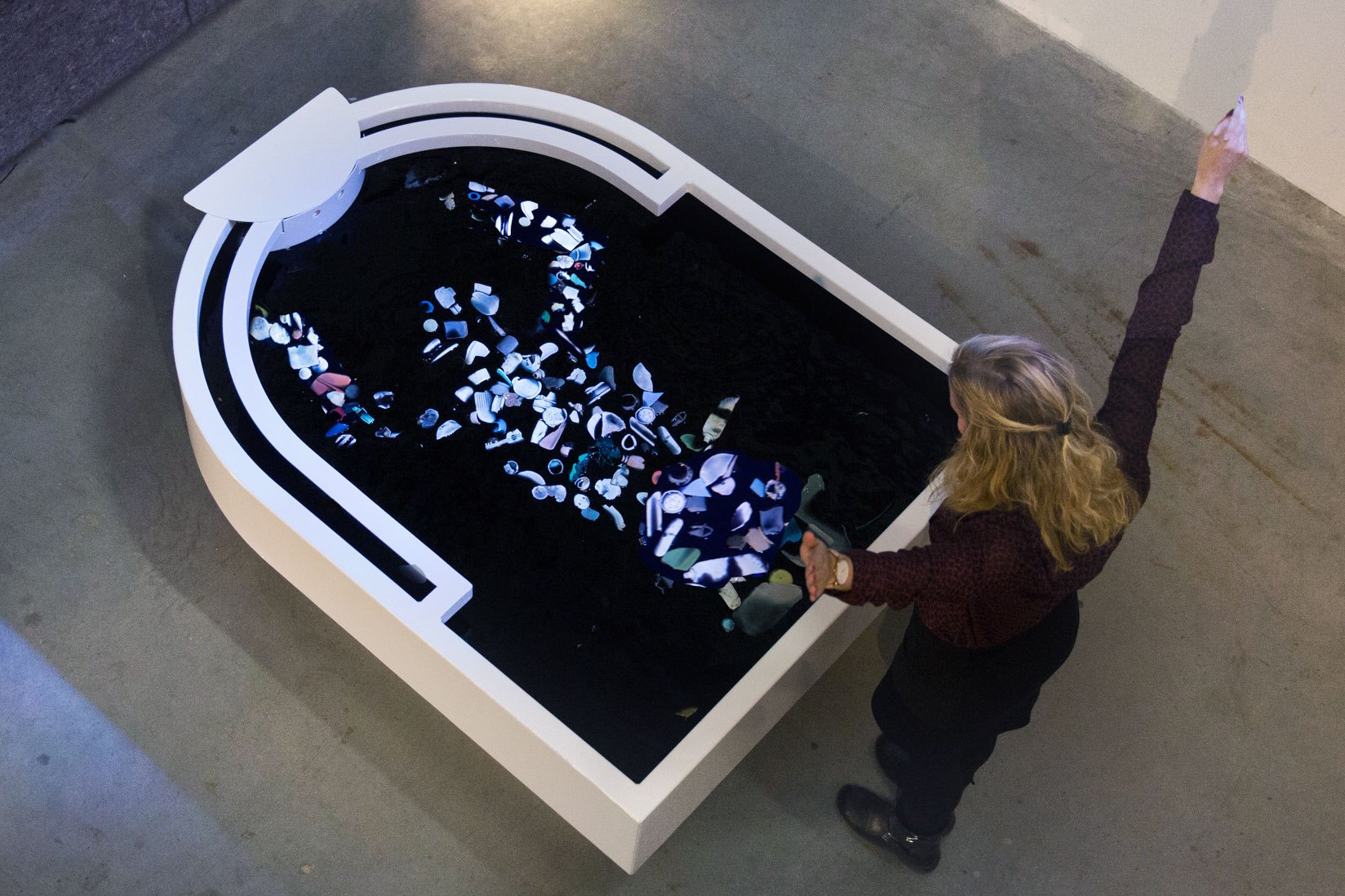
Technical Implementation: Silhouette Pixels and Servo Arrays
The installation works using a Kinect depth-camera, a PC running a Max/MSP program, and an Arduino controlling around 600 servo motors. The project reveals the hidden layers of simple sensing-to-motion interaction:
- Identification Layer: The Kinect Sensor acts as a high-resolution spatial eye, measuring every point of the visitor's silhouette to coordinate the motion-dispatch.
- Conversion & Processing Layer: The depth camera of the Kinect is used to get a clean image of a visitor’s silhouette, without noise from the background. This image is manipulated in Max/MSP into a 600 pixel (basically 30*20) black and white image. The silhouette is shown as white, while the background is black. Each pixel represents a waterproofed servo hidden beneath the surface of the water, with a floater attached to which a piece of ocean plastic is glued.
- Communication & Control Layer: This grid of black or white pixels is sent over serial to an Arduino which is connected to a daisy-chained line of 38 Adafruit 16-channel servo control boards (PCA9685 PWM drivers). The system uses a high-speed digital protocol to receive the pixel data and dispatch high-speed PWM signals to the servo array.
- Kinetic Interface Layer: An array of 600 Servos provides the high-definition visual and mechanical feedback. Every servo that is linked to a white pixel will turn 180 degrees one way, allowing the piece of plastic to float to the surface and become visible. When this pixel becomes black again the servo turns 180 degrees back again, pulling the floater back under the black water. By doing this multiple times a second the installation is turned into a smoothly reacting mirror made of 600 floating pieces of plastic.
Hardware-Installation Infrastructure
- Arduino Uno: The "brains" of the project, managing the multi-directional servo sampling and coordinating the PCA9685 drivers and Kinect sync.
- PCA9685 PWM Drivers: Providing clear and reliable PWM control for each of the 600 servos.
- Servo Motor Array: Providing the high-capacity and reliable physical interface for the kinetic mission.
- Industrial Power System: Essential for providing clear and energy-efficient current for every point of the massive array. An accurate current load mapping (e.g., for 600 servos) in the setup is required to avoid power system failure.
- Frame Structure: Essential for providing a clear and energy-efficient structural platform for the data-sensing installation.
- Micro-USB Cable: Used to program the Arduino and provides the primary interface for the system controller.
Interaction Hub Automation
The proximity-driven artistic process is designed to be very efficient:
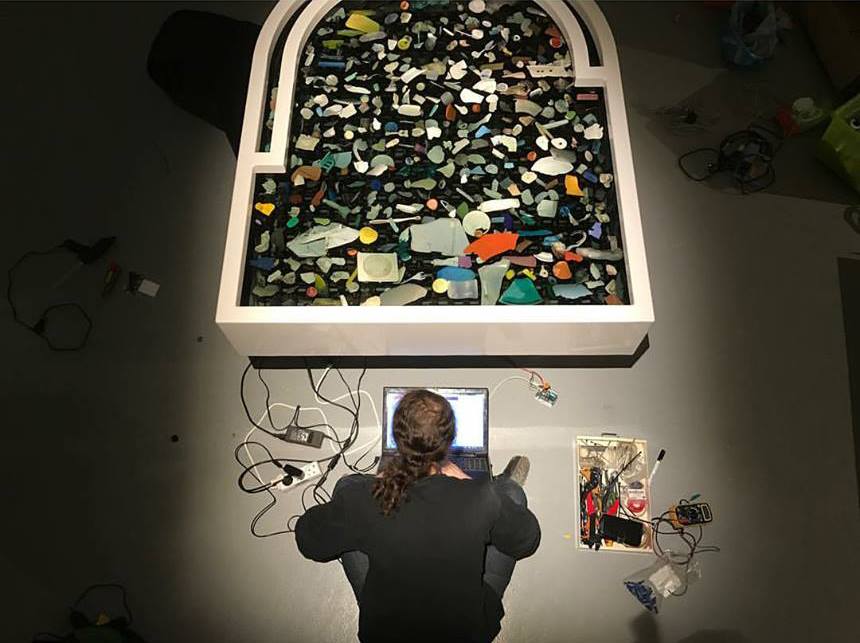
- Initialize Workspace: Correctly seat the 600 plastic pieces on the servo array inside the installation frame and connect them properly to the PCA9685 drivers.
- Setup High-Speed Sync: In the MAX/MSP environment, initialize the
serial-handshakeand define the servo angle limits. - Internal Dialogue Loop: The system constantly performs high-performance periodic data checks and updates the reflection status in real-time based on the visitor's location. Always ensure you have an appropriate fail-safe flag in the loop if the serial bus overloads!
- Visual Feedback Integration: Watch the plastic wall automatically become a rhythmic status signal, pulsing and following the visitor's movements.
Future Expansion
- OLED Identity Dashboard Integration: Add a small OLED display on the back to show "Daily Visitor Count" or "System Status."
- Multi-sensor Climate Sync: Connect a specialized "Synchronized Light Module" to perform higher-precision "Light Reflection" wirelessly.
- Cloud Interface Registration Support: Add a specialized web-dashboard accessible via smartphone over WiFi/BT to precisely track and log the total interaction history.
- Advanced Velocity Profile Customization: Add specialized machine learning to the code to allow triggers to be changed automatically based on user behavior like height or movement speed.
Plastic Reflectic is a perfect project for any science enthusiast looking for a more interactive and engaging artistic tool!