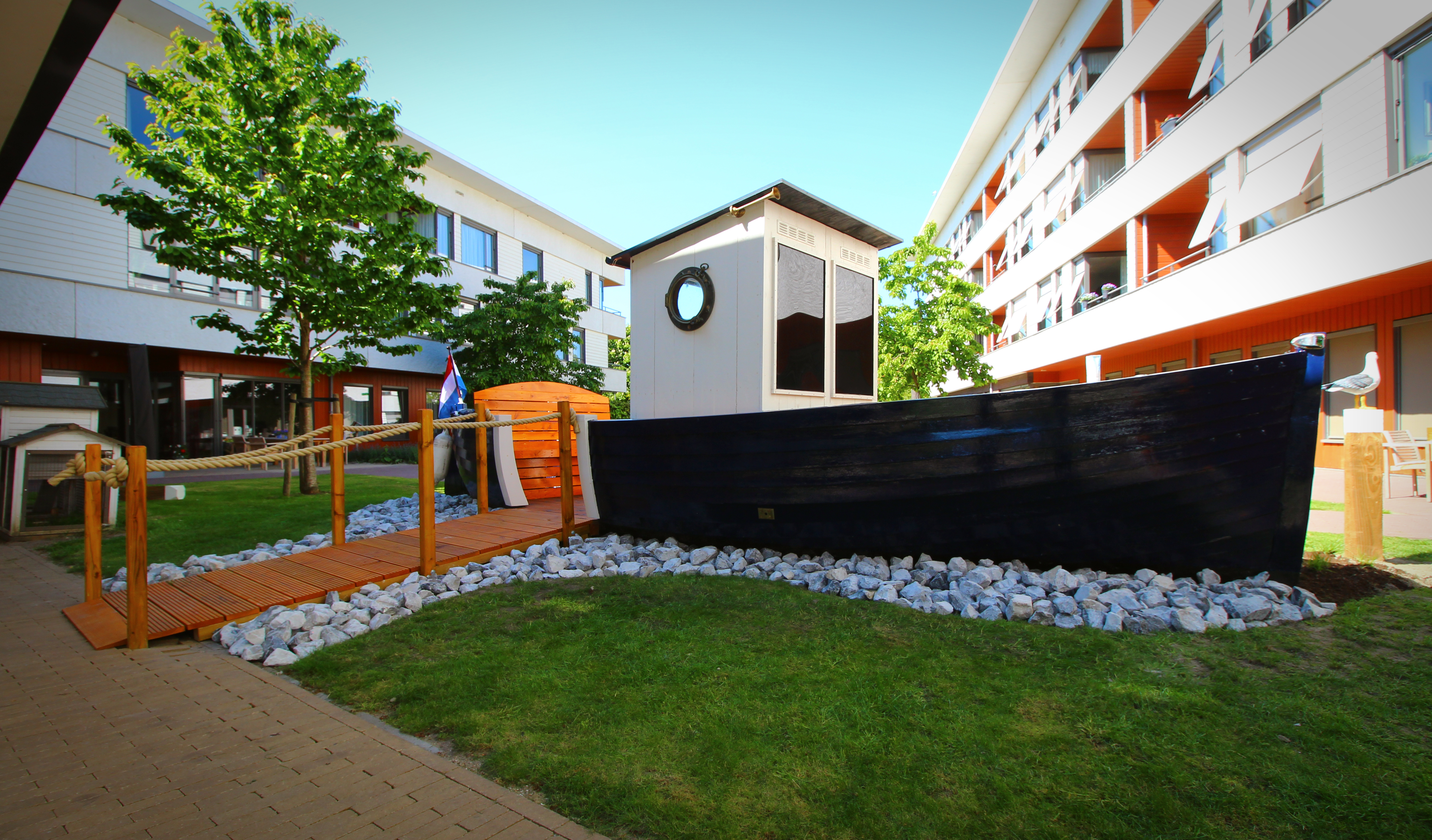
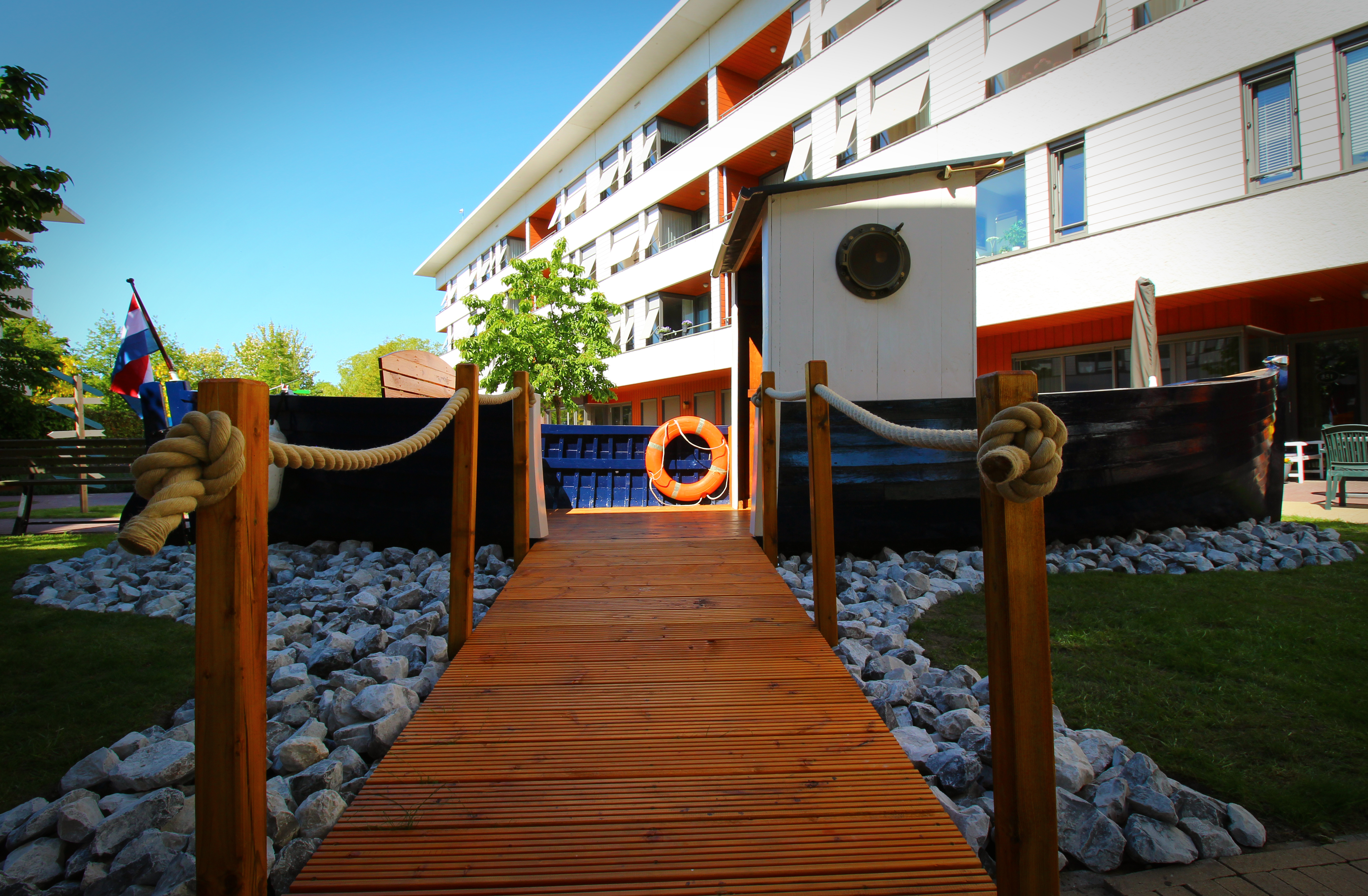
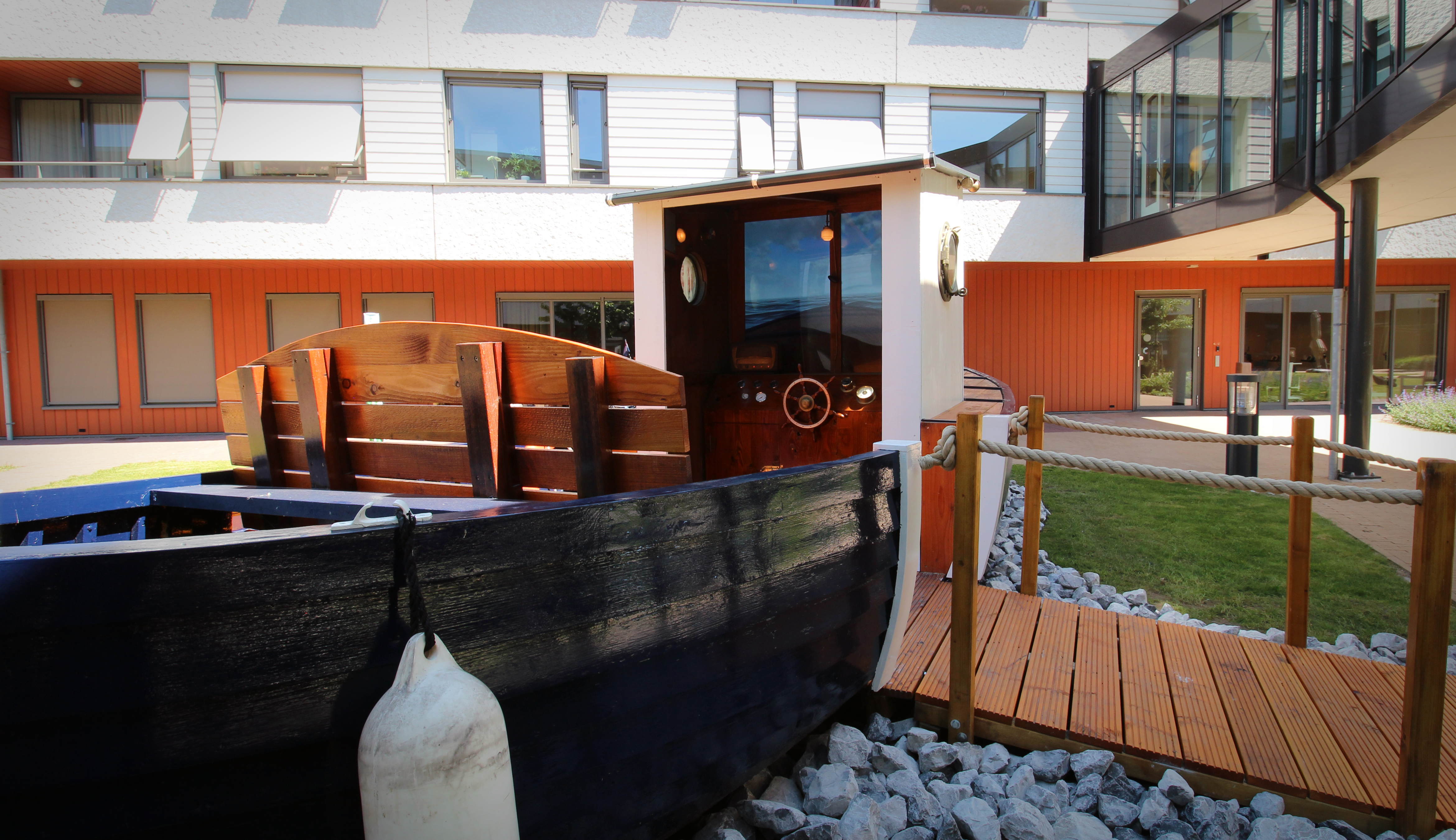
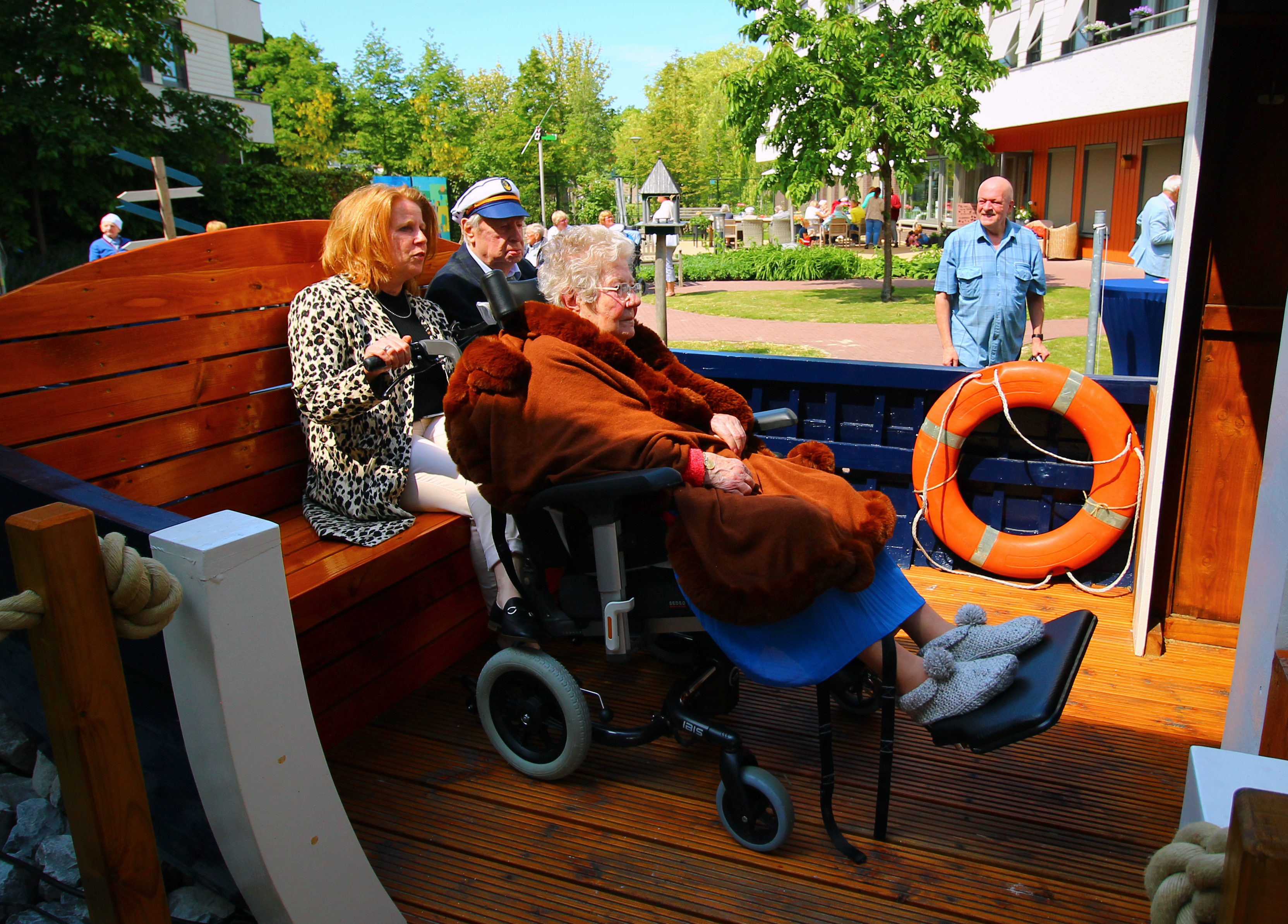
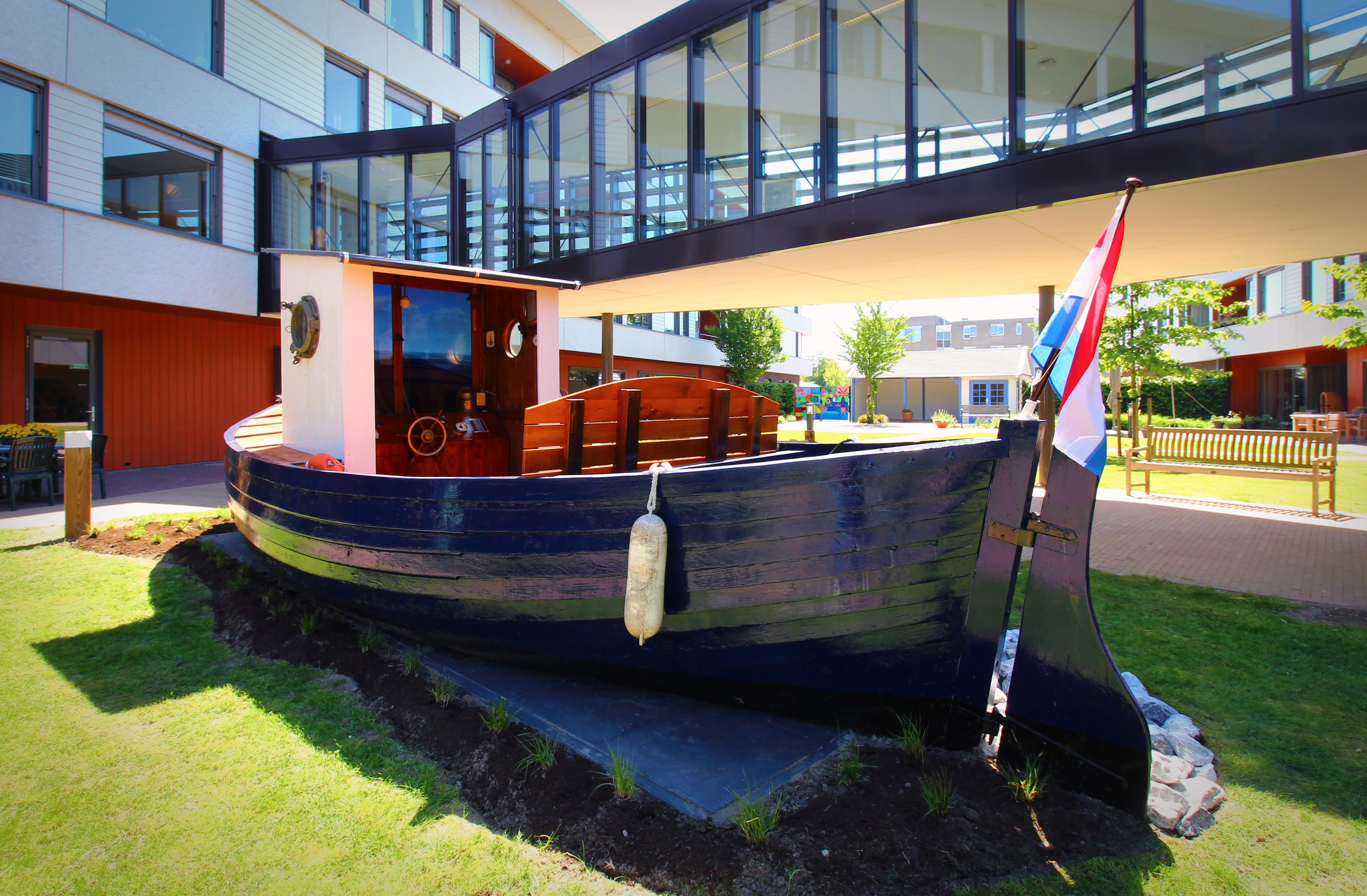
Quo Vadis by FRONT404 is an interactive boat that serves as the centerpiece of the inner garden of the Nieuw Rijsenburgh retirement home. Quo Vadis provides a multi-sensory interactive experience for residents of the home, many of whom suffer from dementia. We created the interactive boat because Nieuw Rijsenburgh is located on the island of Goeree-Overflakkee, and many of its residents spent their younger years working on the water or in the harbour, and we wanted to create familiar sensory experiences for the residents.
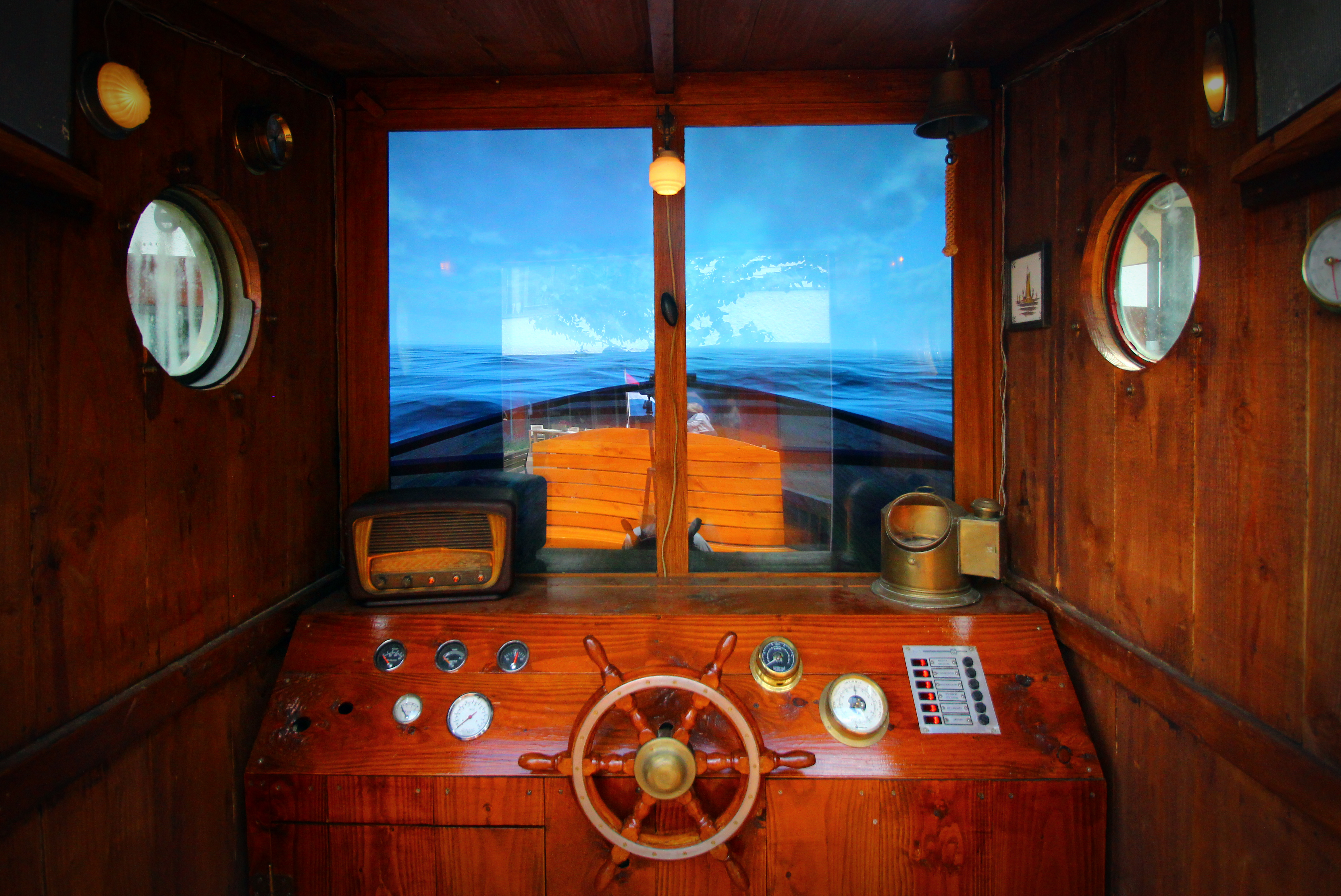
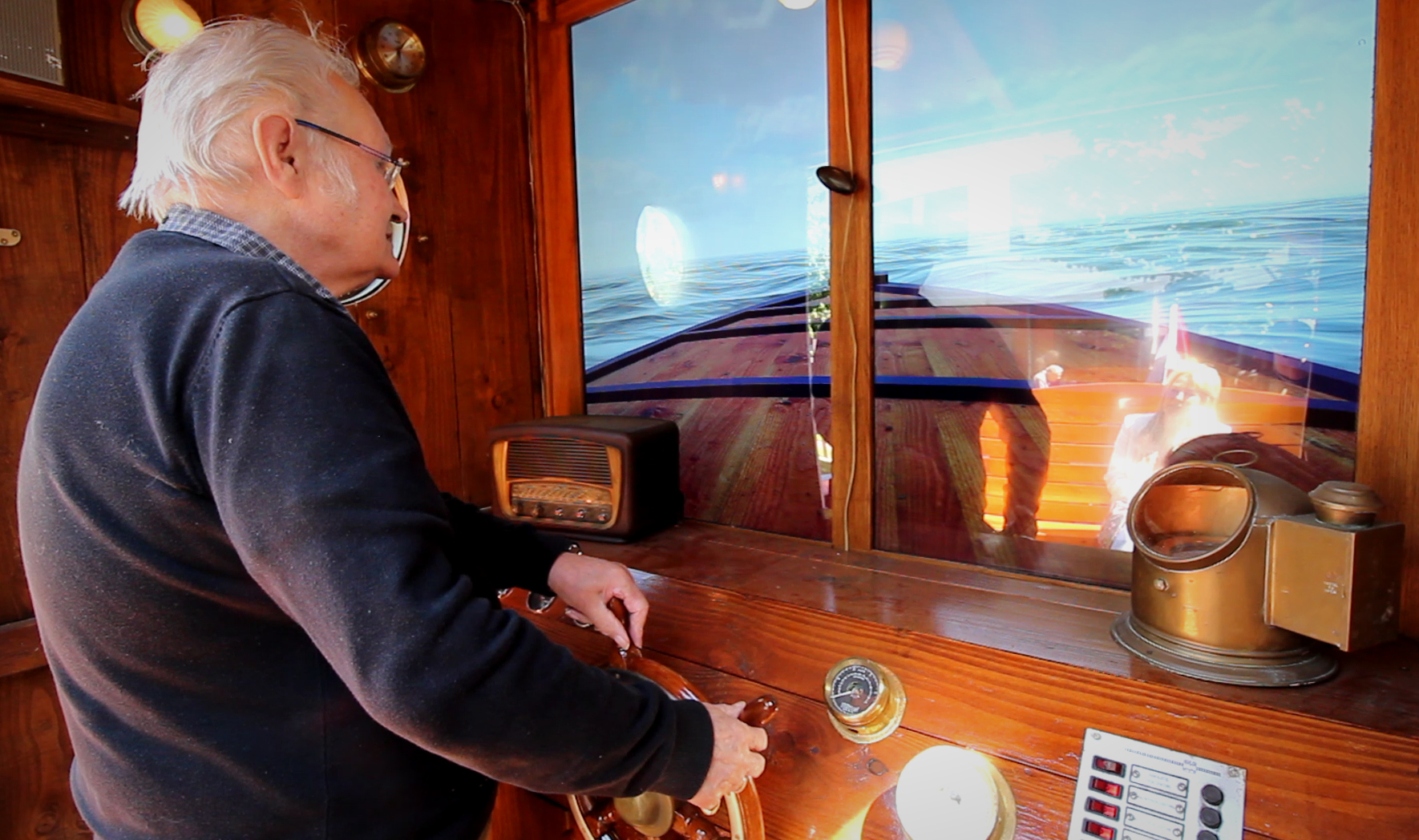
In the wheelhouse of the boat residents look out over a calm sea with seagulls flying through the air. They can use the wheel to steer the boat and watch the physical compass match the new course. The wheelhouse is filled with the familiar sounds of the wooden boat creaking, the engine chugging along, the waves lapping against the boat and the seagulls calling. A vintage radio provides multiple channels of well-known Dutch fisherman’s songs and sea shanties from residents’ youths to stir their memories. Research has shown that engaging dementia patients with familiar sensory experiences can reconnect them to old memories and activate parts of the brain not affected by their disease. Music therapy for example, using familiar old songs, has shown to greatly increase quality of life for many patients, making them more active and engaged, and decreasing behavioural problems.
On the deck of the boat there is also a large comfy place to sit for less mobile residents or for when they just want to sit and enjoy the sun and listen to the music and sounds from the wheelhouse.
Project Perspective
Quo Vadis is a sophisticated exploration of health technology and therapeutic interaction. By focusing on the essential building blocks—an interactive boat and a multi-sensory Arduino system—you'll learn how to communicate and improve patients' quality of life using specialized software logic and a robust artistic setup.
Technical Implementation: Multi-Sensory Therapy and Unity
The project reveals the hidden layers of simple art-to-health interaction:
- Identification layer: A Rotary Encoder mounted on the steering wheel acts as a high-resolution interaction point, measuring the exact angle for every patient's turn.
- Visual Interface layer: A Unity-based Simulation on a large screen provides high-definition 3D feedback for the nautical journey.
- Conversion layer: The Arduino uses digital pins and a Motor Shield to receive high-speed pulses and coordinate the compass and lighting tasks.
- Thermal and Optical Interface layer: NeoPixel LEDs provide warm and energy-efficient mood lighting for the boat's cabin.
- Processing Logic layer: The Arduino code follows a "state machine" or therapeutic-loop strategy: it interprets course changes and matches the physical compass rotation and soundscapes to provide a safe and calming environment.
Hardware-Simulation Infrastructure
- Arduino Uno: The "brain" of the project, managing high-speed encoder sampling and coordinating NeoPixel and Servo tasks.
- NeoPixel LEDs: Providing high-quality and reliable mood-lighting.
- Rotary Encoder: Providing high-precision and flexible input for the boat's navigation.
- Sound Module: Essential for providing clear and playful audio feedback (waves, gulls, shanties).
- Unity 3D: Providing high-definition visual feedback for the nautical world.
- USB Cable: Used to program the Arduino and provide the primary interface for the system controller.
Therapy and Interaction Step-by-Step
The Quo Vadis boat process is designed to be very efficient:
- Initialize Hardware: Correctly seat the encoder and NeoPixels inside the boat's cabin and prepare the large simulation screen.
- Setup High-Power Sync: In the
setup()function, define the encoder pins and initialize the NeoPixel library and the Serial port for Unity. - Execution Loop: The station constantly performs high-performance rotation checks and updates the 3D sea status in real-time.
- Visual and Audio Feedback Integration: Watch the patient's interaction automatically become a rhythmic visual signal, pulsing and following the therapeutic settings.
Future Expansion
- OLED Identity Dashboard Integration: Add a small OLED display on the deck station to show "Nautical Speed" or "Active Song Title."
- Multi-sensor Climate Sync Synchronization: Connect a specialized "Mist Generator" to perform higher-precision "Sea Breeze" effects during navigation.
- Cloud Interface Registration Support Synchronization: Add a specialized web-dashboard on a smartphone over WiFi/BT to precisely track and log total therapy usage history.
- Advanced Velocity Profile Customization Support: Add specialized "Bio-Haptic Feedback" (vibrating floor) to the code to allow the boat to rumble based on the engine sound.
Quo Vadis is a perfect project for any science enthusiast looking for a more interactive and engaging health-care tool!
[!IMPORTANT] Always verify the robust wiring for the NeoPixel strips to avoid "Flicker" or a "Power Surge" during long-term therapy sessions!