Dual-Compute Sensory Architecture
Professional localized intrusion metrics heavily rely on independent hardware streams funneling to a centralized compute layer. This prototype methodology mirrors commercial architecture by splitting computational loads between a High-Compute optical Linux base (Raspberry Pi 3 B+) acting as the primary master, communicating serially through an isolated Low-Compute peripheral mapping structure (Arduino Mega 2560).
The Mega handles native structural delays and real-time boolean HC-SR04 acoustic ultrasonic ping timing without suffering Thread blocking interference, while the Pi executes complex asynchronous Python execution scripts managing HTTP transmission stacks and parsing High-Bandwidth Camera Serial Interface (CSI) optical data.
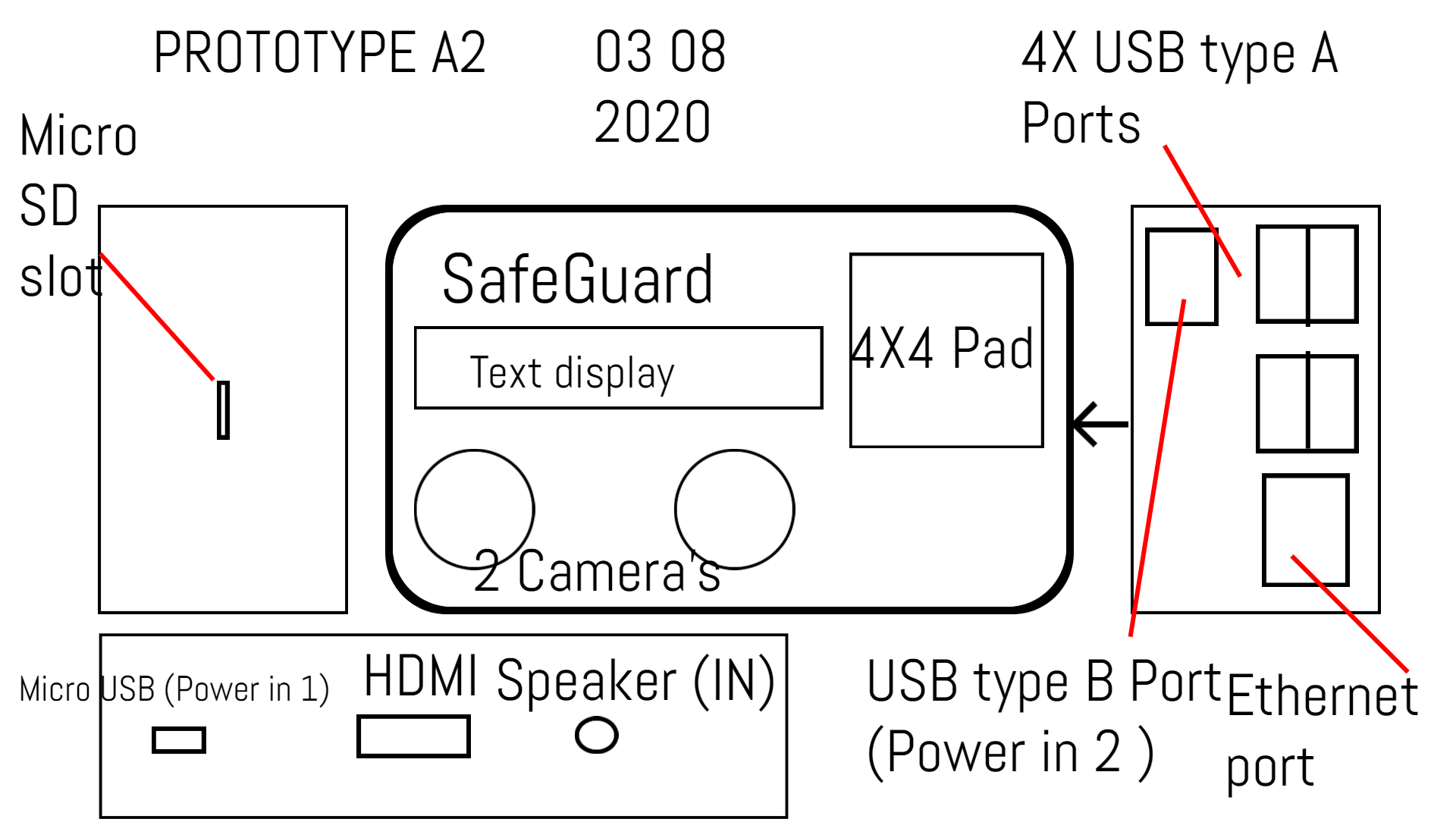
Prototype B1-A Constraints
The core hurdle preventing mass scalability inside custom security logic generally surrounds thermal throttling boundaries during constant video-frame scraping, and severe space density requirements.
Because the architecture demands native USB UART serial handshakes between the Raspberry Pi acting as master and the ATmega acting as slave (additionally providing standard 5V USB output rails locally to power the Atmel logic gates directly from the Pi's dedicated supply matrix), physical wire routing and spatial geometry demands heavily complicate physical enclosure matrices. Thermal constraints regarding the Broadcom CPU array often mandate explicit passive heatsync configurations during extended Linux camera module frame-buffer scraping operations.