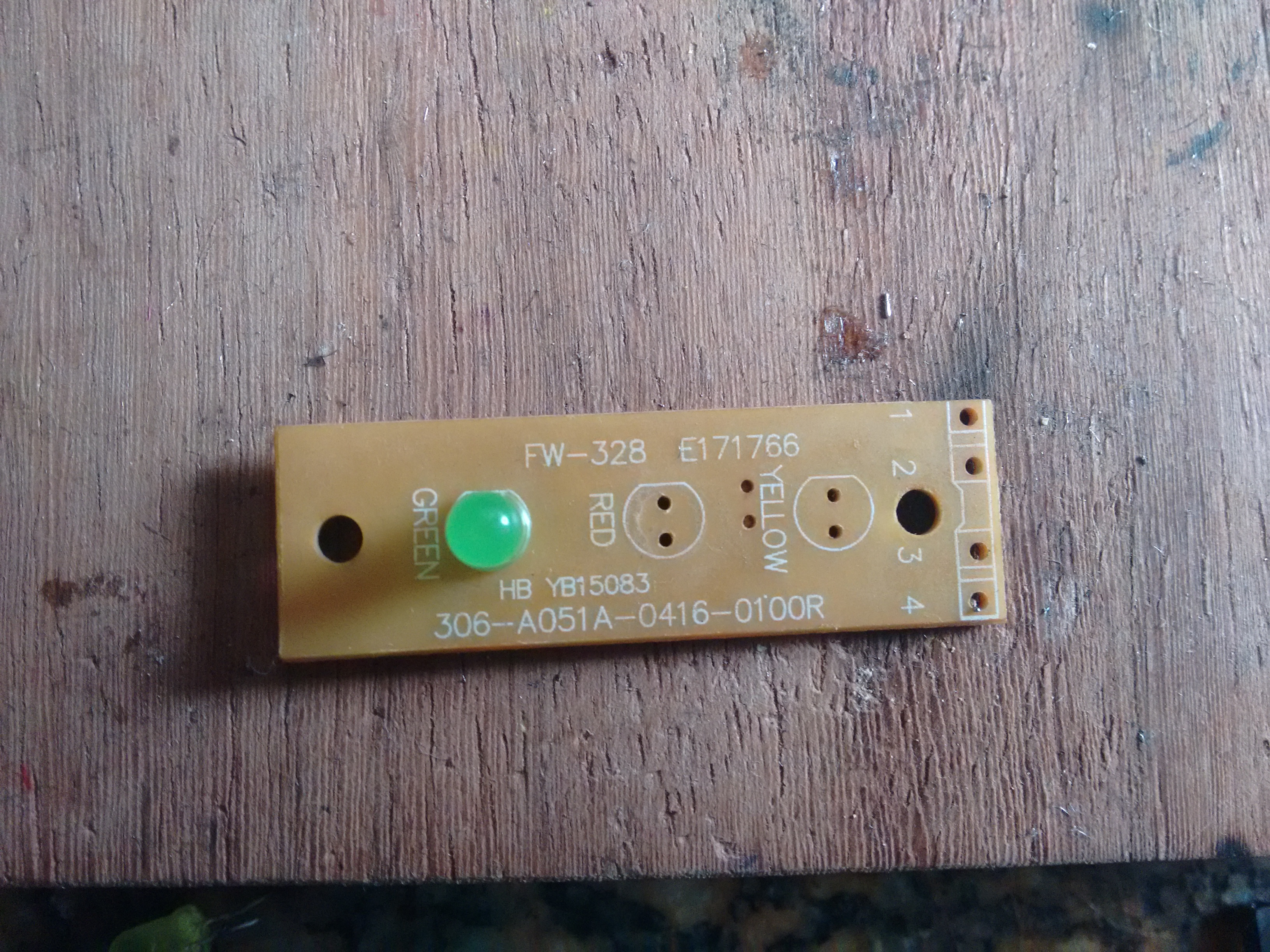
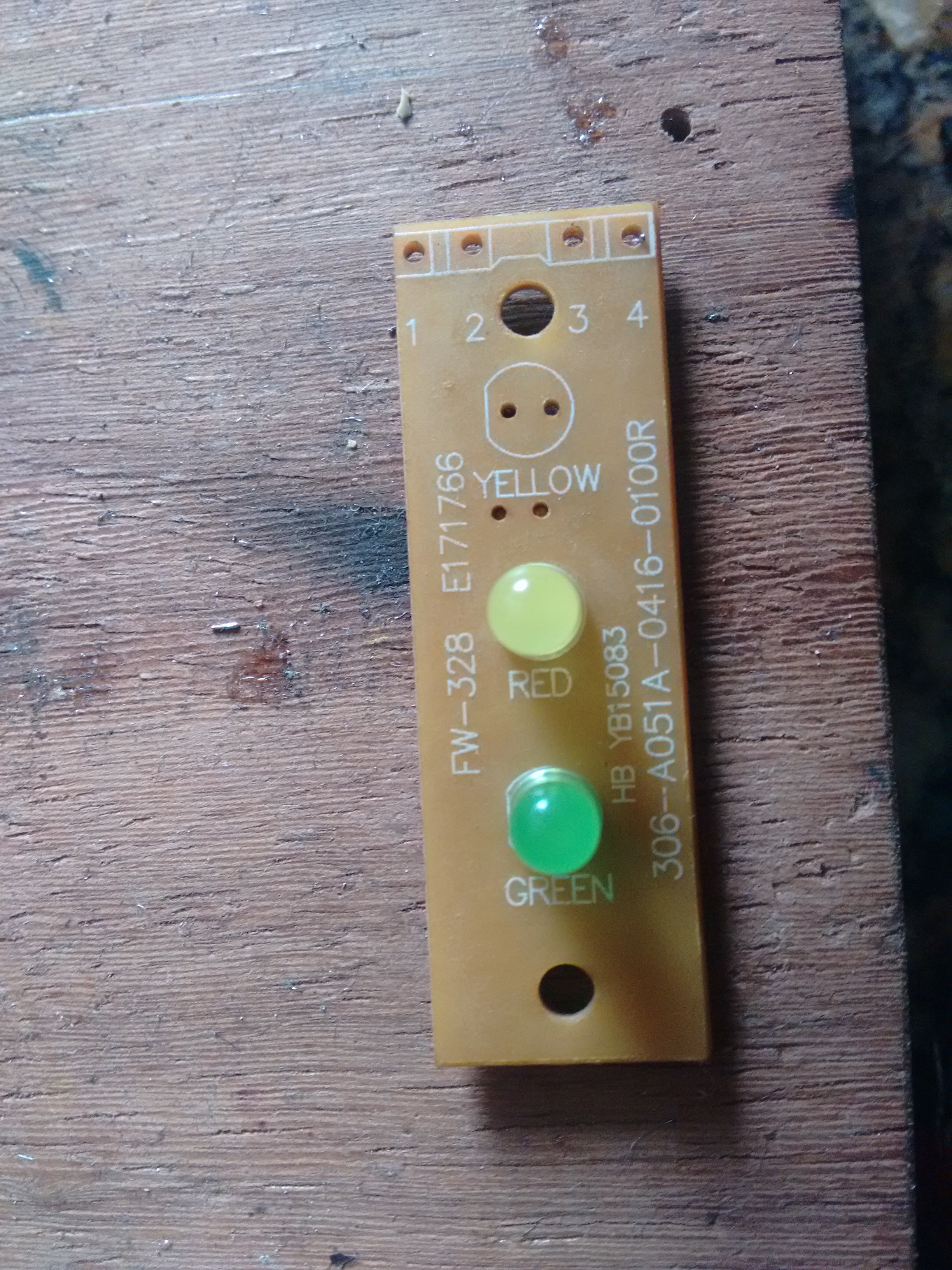
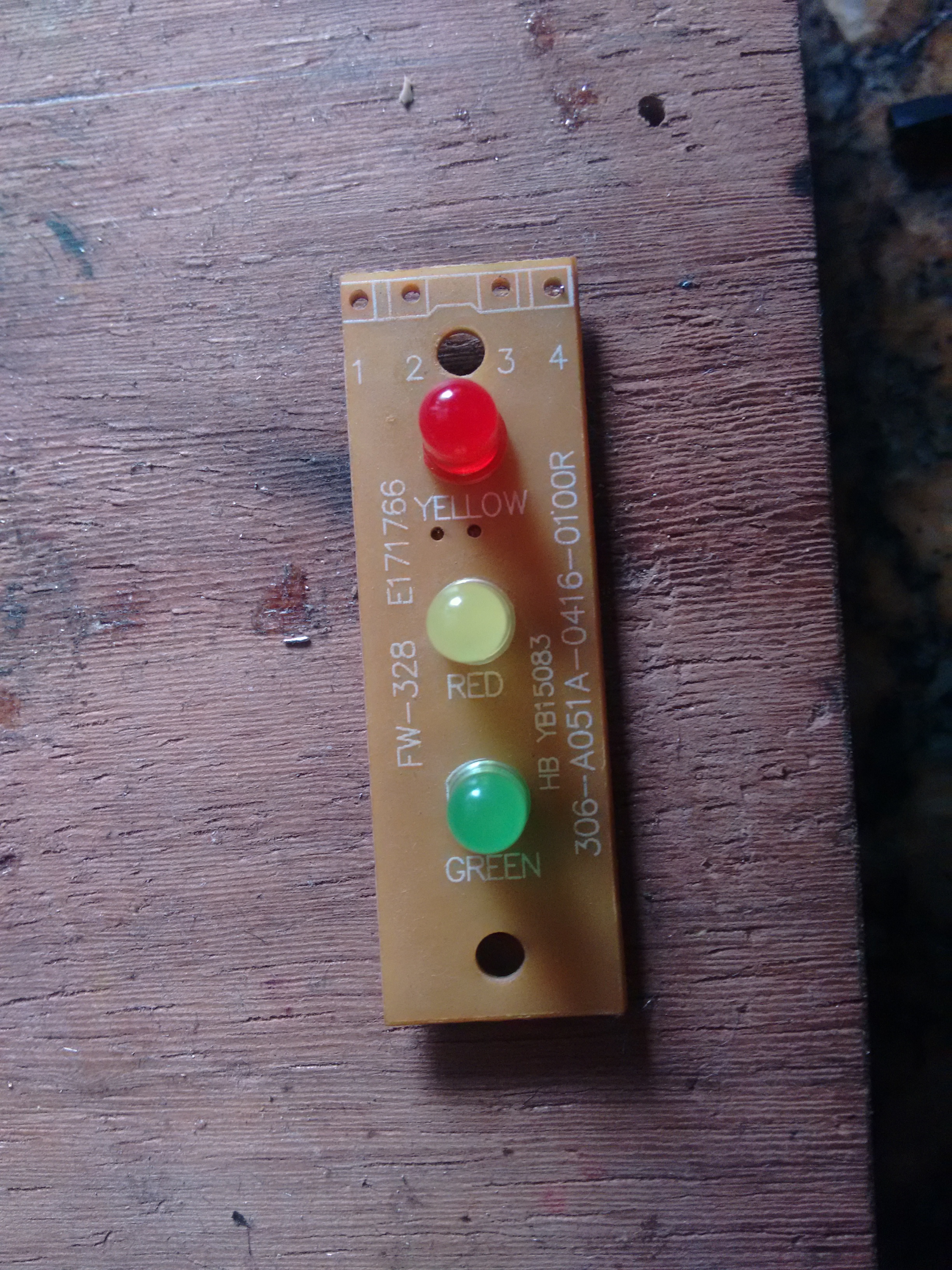
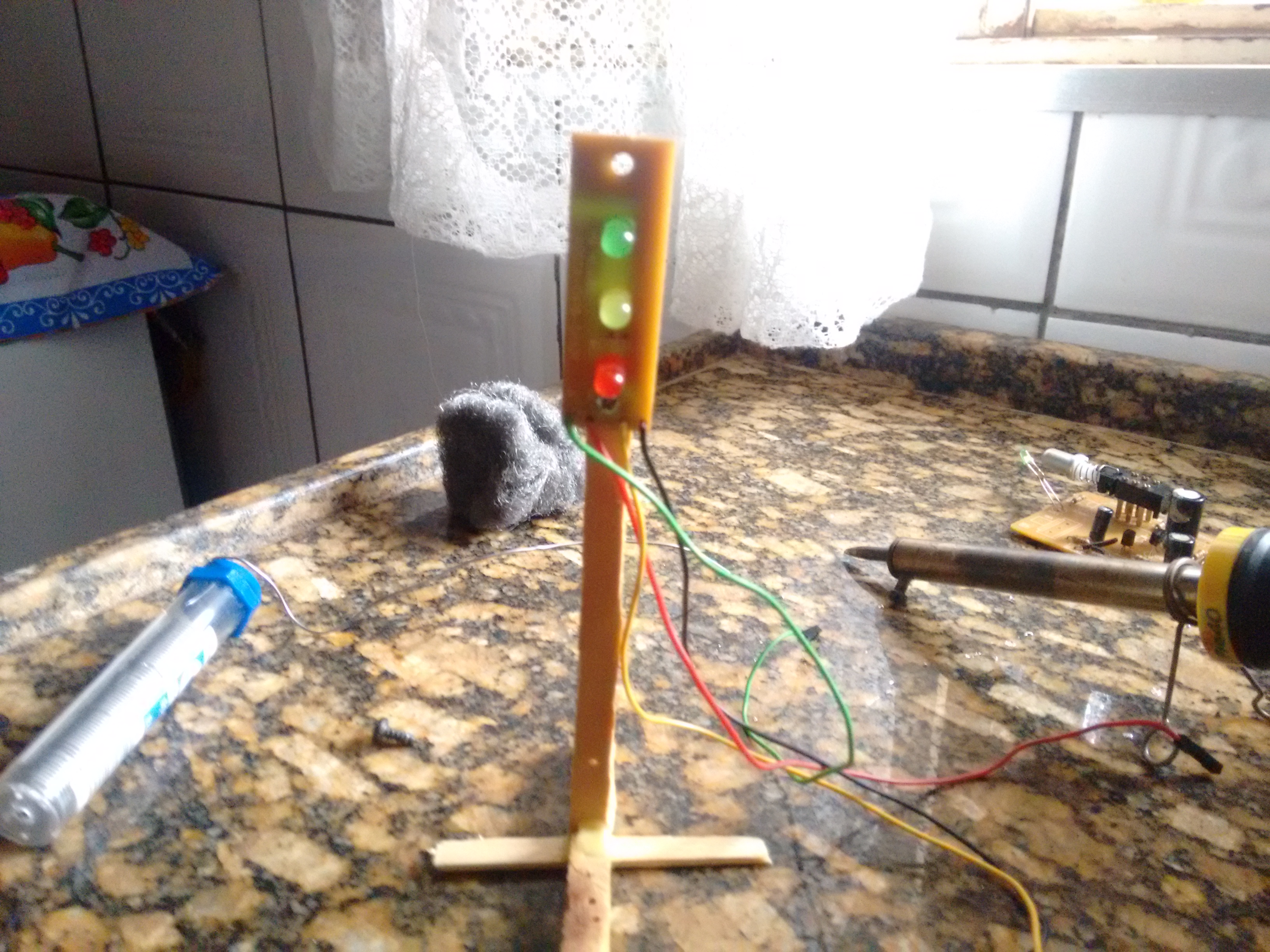
This is a Semaphore with Arduino made on a PCB.
Project Overview
"Transit-Node" is a precise exploration into Cyclic State-Machine Logic and Infrastructure Forensics. Signaling systems are the bedrock of modern transit automation, requiring fail-safe deterministic timing to manage traffic flow. This project transforms an Arduino Uno into a professional semaphore controller, utilizing synchronized LED nodes to simulate industrial traffic lights. By transitioning from a prototype breadboard to a permanent soldered PCB, Transit-Node demonstrates the requirements for ruggedized signaling hardware.
Technical Deep-Dive
- Signaling State-Machine Logic:
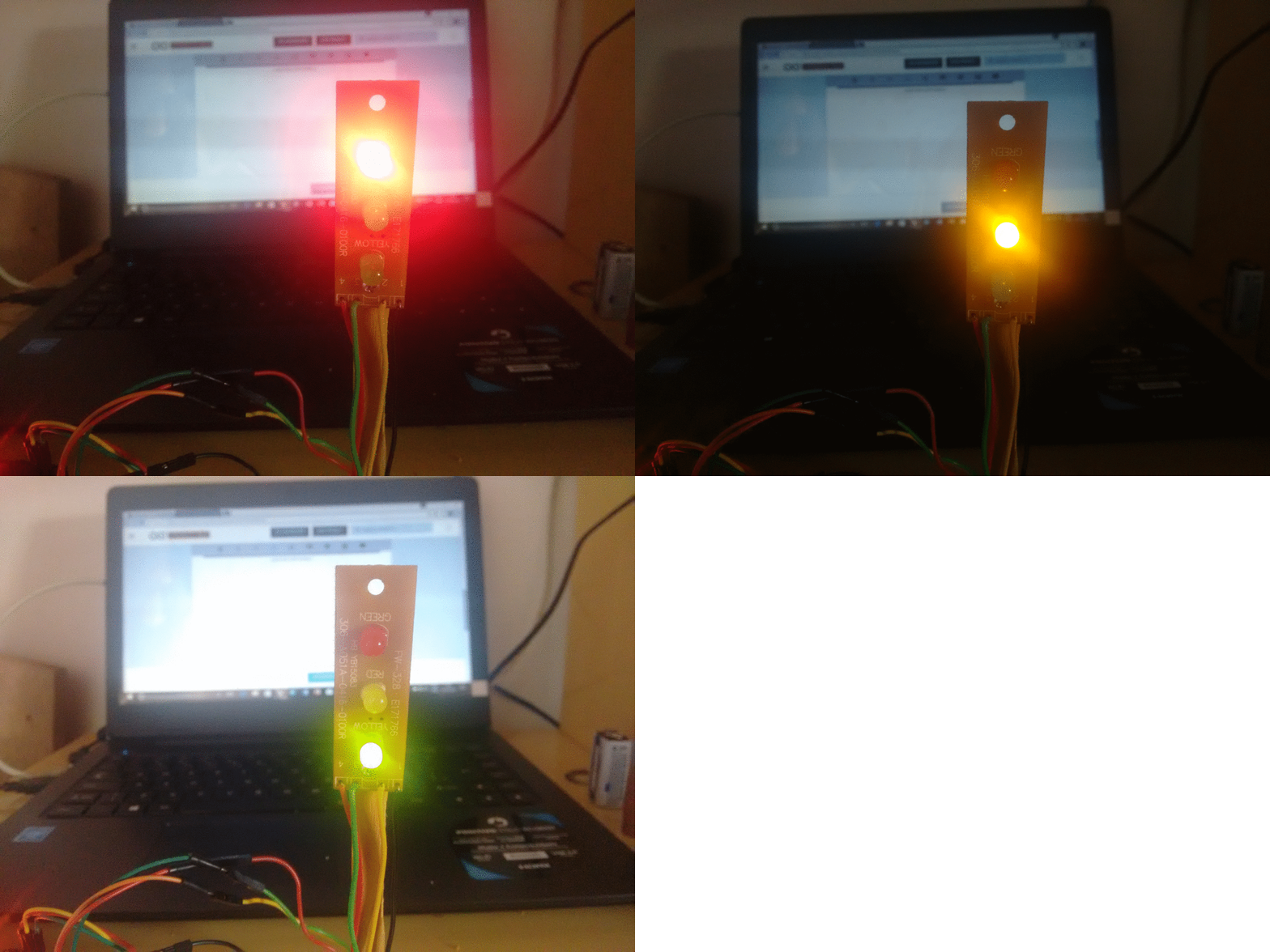
- Deterministic Sequencer: The system operates as a classic 3-stage state-machine. The firmware cycles through specific logic-high $(\text{V}{OH})$ states: Green (Transit Authorized), Yellow (Deceleration Alert), and Red (Stance Mandatory). The "Yellow Phase" forensics is critical, providing a calculated buffer $(t{yellow})$ to prevent abrupt kinetic transitions in a real-world traffic model.
- Non-Blocking Delay Harmonics: Advanced implementations utilize
millis()based timing forensics rather than standarddelay(), allowing for the integration of "Pedestrian Logic" or "Emergency Overrides" without interrupting the primary signaling cycle.
- Current-Balance & Visual Integrity:
- Impedance-Matched Diagnostics: The LEDs are coupled with 221 Ohm resistors. This specific value is chosen to balance the forward voltage $(V_f)$ of different colors (Red vs. Green) against the 5V logic rail, ensuring uniform luminosity and preventing the ATmega328p GPIO pins from entering thermal saturation during the "Red" steady-state phase.
- PCB Structural Forensics:
- Soldered Trace Reliability: Moving the circuit to a PCB, as shown in the images, eliminates the contact-resistance issues inherent in breadboards. This project emphasizes Interconnect Integrity, where soldered joints provide a low-impedance path that can withstand the vibrations and thermal cycling of an active infrastructure environment.
Engineering & Implementation
- HMI Efficiency & Logic Flow:
- Visual Feedback Loop: The system provides immediate visual state-confirmation, as seen in the animation. The timing intervals are typically calibrated as follows: Green (10s), Yellow (3s), and Red (12s), mimicking the standard duty-cycles used in urban municipal forensics.
- Logic Consolidation: By using an Arduino Uno, the project can potentially control multiple intersections by expanding the GPIO node-mask to drive secondary and tertiary LED banks in a synchronized master-slave configuration.
Conclusion
Transit-Node demonstrates the fundamental principles of Logic-Driven Infrastructure. By mastering State-Machine Forensics and PCB Deployment, viniciuslindoss has created a scalable blueprint for automated transit signaling, proving that even simple designs require rigorous engineering to achieve industrial-grade reliability.
Logic in Motion: Mastering transit signaling through state-machine forensics.