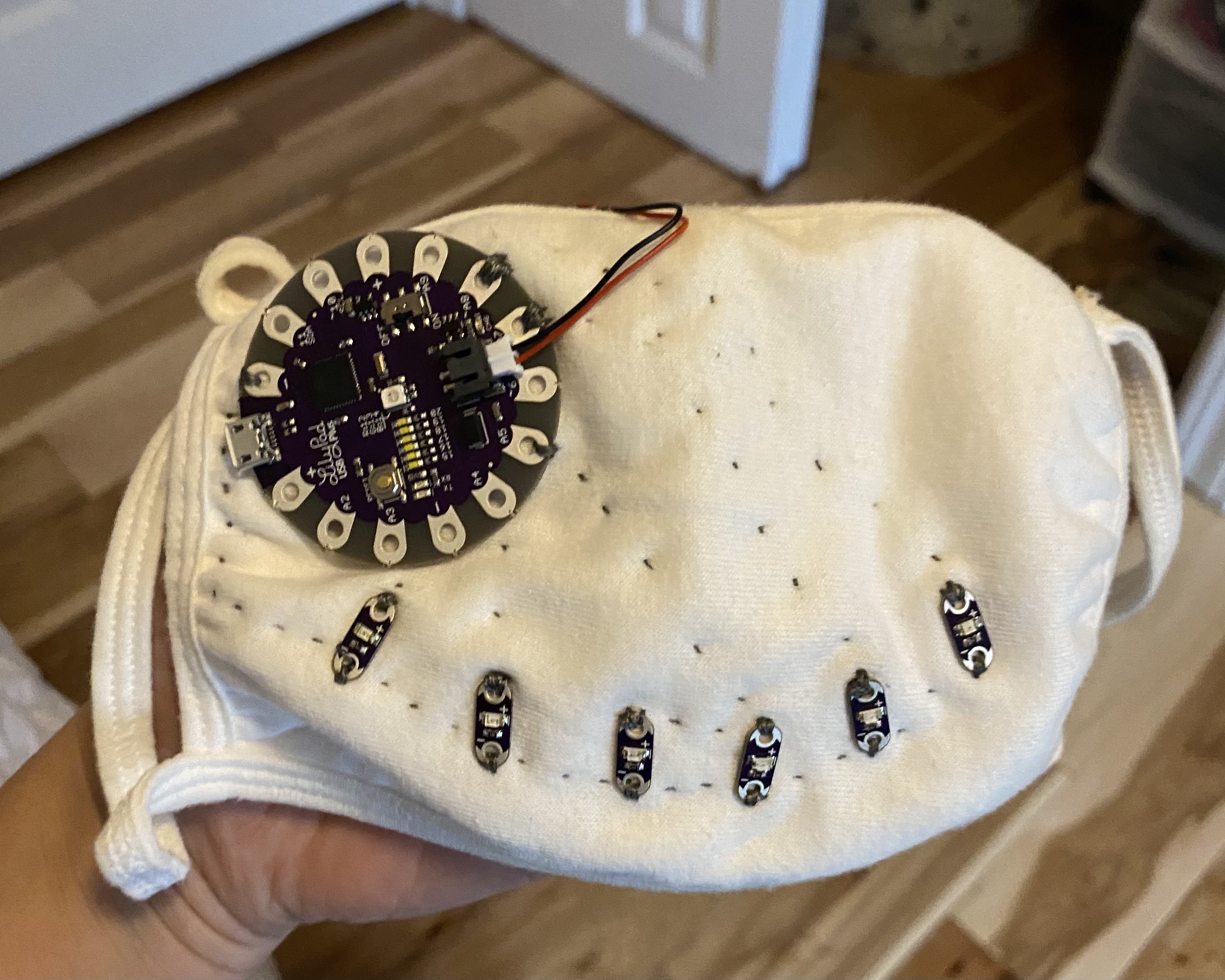
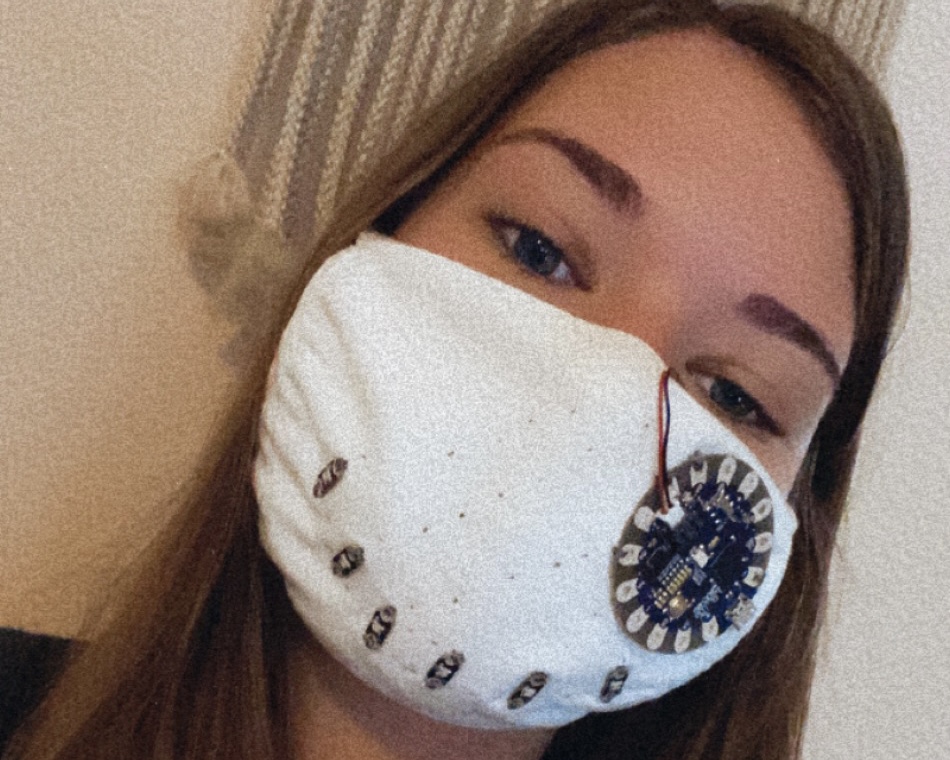
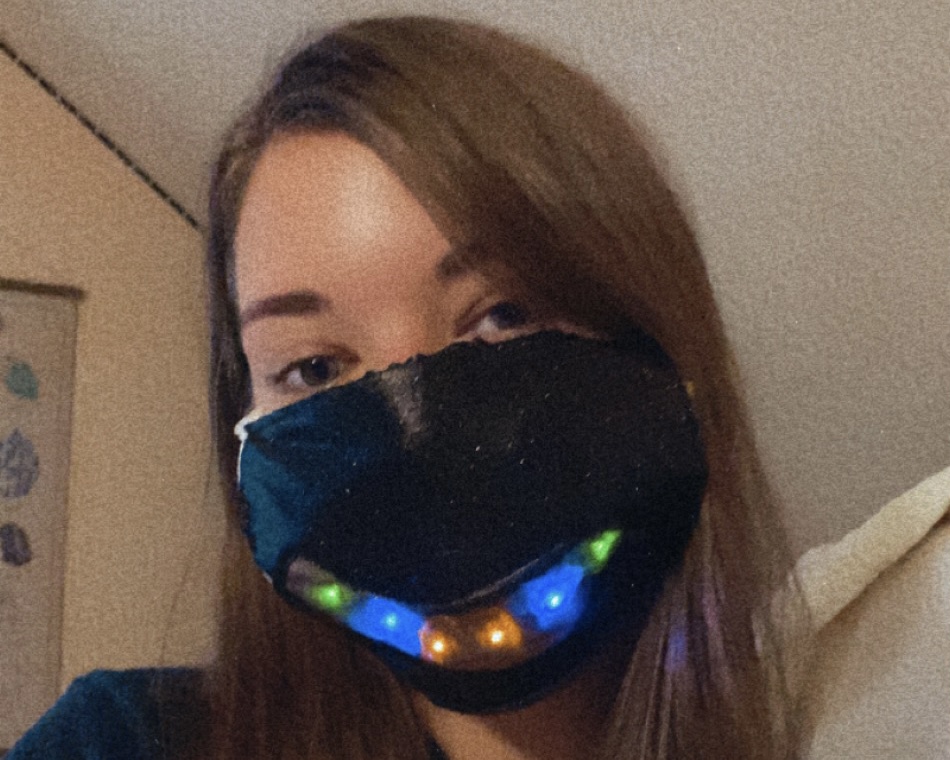
My project was made for my soft wearables class. We had to embed our Lilypad Protosnap Plus kit into a wearable. I decided to choose a mask because they are so relevant today during the Covid-19 pandemic. A lot of people look at masks negatively so I wanted to give it a more positive spin. I decided to embed colorful LEDs to the mask and put them into the shape of a smile. This way when a person decides to wear this mask it blinks these colorful LEDs to look like the individual is smiling even though you can't see their mouth.
Technical Implementation: Sewable Threads and LED Patterns
The project reveals the hidden layers of simple sensing-to-fashion interaction:
- Identification layer: The Arduino Code acts as a high-resolution chronological eye, measuring every point of the animation intervals to coordinate the system dispatch.
- Conversion layer: The system uses a high-speed digital protocol (Wearable-PWM) to receive high-speed brightness packets to coordinate mission-critical sensing tasks.
- Visual Interface layer: A LilyPad LED Array provides high-definition visual and aesthetic feedback for each smile status check (e.g., Blinking, Fading).
- Textile Gateway layer: A Conductive Thread provides a manual circuitry-override or automated continuity-sync status check during initial calibration to coordinate status.
- Processing Logic: The ATmega code follows a "pixel-pattern-dispatch" (or mask-dispatch) strategy: it interprets interval timings and matches LED states to provide safe and rhythmic fashion illumination.
- Communication Dialogue Loop: Codes are sent rhythmically to the Serial Monitor during initial calibration to coordinate status.
Hardware-Wearable Infrastructure
- LilyPad ProtoSnap: The "brain" of the project, managing multi-directional pattern sampling and coordinating LED and fabric sync.
- Sewable LEDs: Providing a clear and reliable "Visual Link" for every point of the smile layout.
- Textile Mask: Providing a high-capacity and reliable physical interface for your first successful "Fashion Mission."
- Conductive Thread: Essential for providing clear and energy-efficient protection for every point of the flexible electrical circuit.
- Battery Pack: Essential for providing a clear and energy-efficient current path for every point of your data sensing array.
- Micro-USB Cable: Used to program your Arduino and provides the primary interface for the system controller.
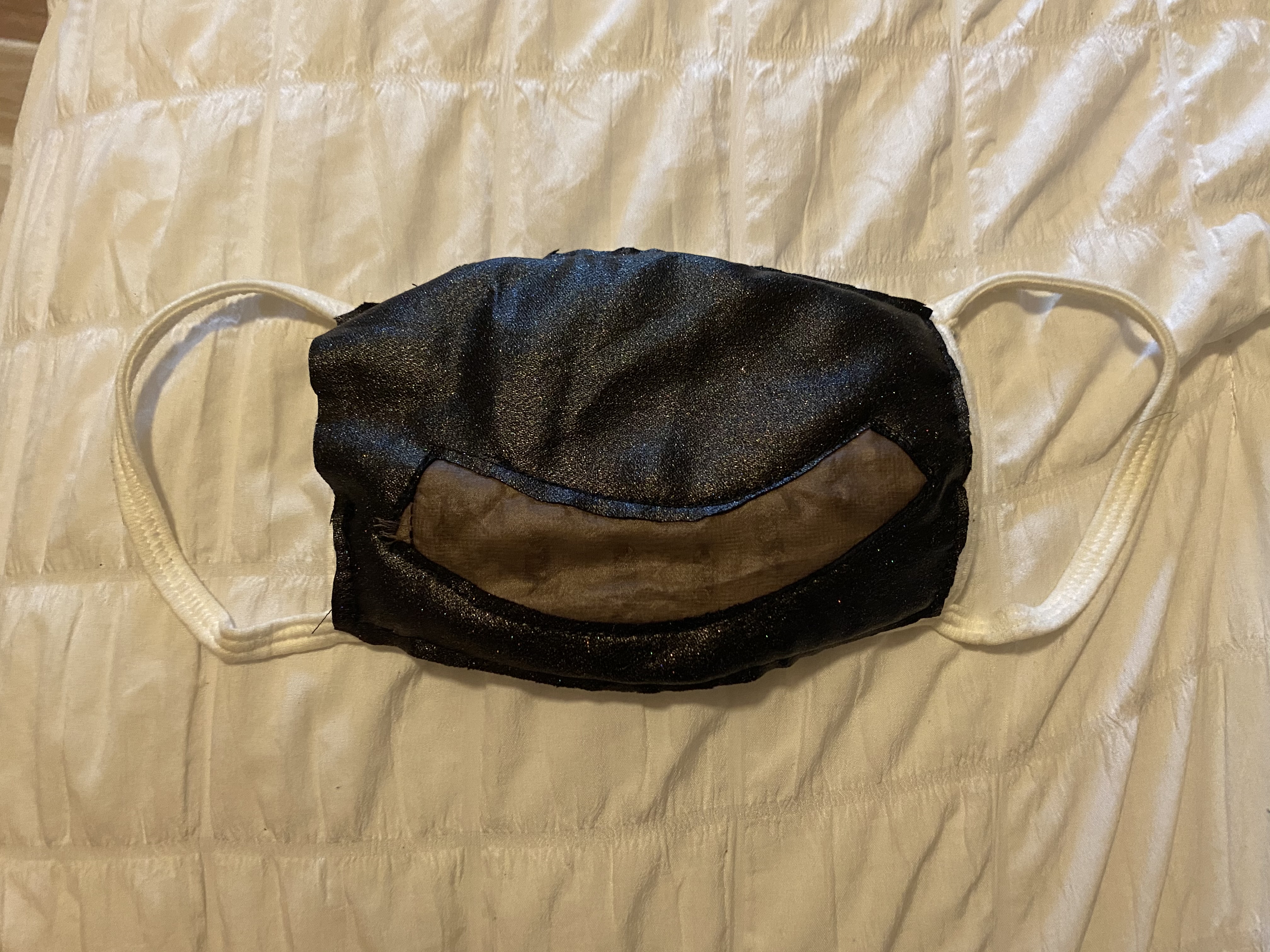
Fashion Hub Automation and Interaction Step-by-Step
The proximity-driven aesthetic process is designed to be very efficient:
- Initialize Workspace: Correctly sew your LEDs and LilyPad inside your cloth mask and connect them properly with the conductive thread.
- Setup High-Speed Sync: In the Arduino sketch, initialize
pinMode(leds, OUTPUT)and define the smile patterns insetup(). - Internal Dialogue Loop: The station constantly performs high-performance periodic signal checks and updates the mask status in real-time based on your location and settings.
- Visual and Data Feedback Integration: Watch your mask automatically become a rhythmic status signal, pulsing and following your style settings from every point of the room.
Future Expansion
- OLED Identity Dashboard Integration: Add a small OLED display to show "Smile Speed" or "Battery (%)."
- Multi-sensor Climate Sync Synchronization: Connect a specialized "Sound Sensor" to perform higher-precision "Voice-Reactive-Sync" wirelessly via the cloth.
- Cloud Interface Registration Support Synchronization: Add a specialized web-dashboard on a smartphone over WiFi/BT to precisely track and log total social history.
- Advanced Velocity Profile Customization Support: Add specialized "Machine Learning (vCore)" to the code to allow triggers to be changed automatically based on the user's height!
Smile LED Mask is a perfect project for any science enthusiast looking for a more interactive and engaging wearable tool!
[!IMPORTANT] The Conductive Thread requires accurate Isolation mapping (e.g., for preventing short-circuits) in the setup to ensure reliable circuit performance; always ensure you have an appropriate Fail-Safe flag in the loop if the serial bus overloads!