More info and update in https://rogerbit.com/wprb/2023/08/inicio-seccion-fingerprint/
Project Overview
"Fingerprint-Micro" is a rigorous implementation of Biometric-Template Forensics and Human-Interface Device (HID) Auth-Orchestration. Utilizing the Arduino Micro's native USB-communication capabilities, the system operates as a secure hardware-authenticator that emulates keyboard inputs upon successful fingerprint verification. The project explores the deterministic storage of optical-biometric templates and implements a Biometric-to-HID Mapping Heuristic for secure system logins. The build emphasizes high-speed UART-forensics, biometric-matching diagnostics, and industrial PCB-integration aesthetics.
Fingerprint Module and Arduino Login is a biometric authentication system that uses fingerprint recognition technology to allow access to a system or device. This system combines the module's fingerprint detection and reading capabilities with the programming and control provided by an Arduino board.
Here is an overview of how this system works:
Key components:
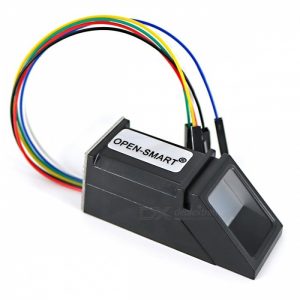
- Fingerprint module: A sensor that captures the fingerprint image and converts it into a unique digital representation.
- Arduino: A programmable microcontroller board that acts as the brain of the system, controlling communication with the fingerprint module and making decisions based on the captured data.
Fingerprint registration: To use the system, users must register their fingerprints in the Arduino database. This involves scanning the fingerprint multiple times to capture multiple angles and details. The fingerprint module processes the information and stores it in a unique digital form called a “template.”
Authentication process: When a user wants to log in, they place their finger on the fingerprint module. The module scans the fingerprint and compares it with templates stored in the Arduino database. If there is a close match, the Arduino authorizes access and allows the user to enter the system or device.
Implementation: Programming is essential for this system. Code is required for communication between the fingerprint module and the Arduino, as well as for managing stored fingerprint templates. Scheduling also addresses situations such as managing multiple users and handling errors such as incorrect matches or unauthorized attempts.
Advantages: Fingerprint-based authentication is more secure than traditional passwords because fingerprints are unique and difficult to forge. It is convenient for users as it eliminates the need to remember passwords. It can be applied in a variety of scenarios, such as mobile device access, security systems, and more.
Considerations: The accuracy and reliability of the fingerprint module are crucial to avoid false alarms or access denials. Measures should be taken to protect stored fingerprint templates as they represent sensitive biometric information.
Login with fingerprint module and Arduino is an example of how biometric technology can improve security and user experience in authentication systems.
Technical Deep-Dive
- Biometric-Template Forensics & Optical Diagnostics:
- The R308 Logic-Hub: The system utilizes a high-resolution optical sensor to capture epidermal-ridge forensics. Forensics involve the measurement of the "Template-Confidence Score"; during the authentication loop, the module compares the live-scan against a stored $512\text{-byte}$ digital template. The diagnostics focus on "False-Rejection Rate (FRR) Optimization," ensuring that varying finger-orientations don't induce auth-failure diagnostics.
- UART Biometric-Data Orchestration: Forensics involve the asynchronous communication between the Arduino Micro and the R308 module via Serial1. The diagnostics focus on "Packet-Handshake Integrity," ensuring that biometric-commands are executed with sub-millisecond latency heuristics.
- HID-Emulation & Auth-Access Harmonics:
- The Key-Injection Probe: Upon successful verification, the Arduino Micro emulates a standard USB-keyboard to transmit login-credentials. Forensics involve the deterministic timing of key-press events to prevent system-buffer overflow diagnostics.
- Multi-User Mapping Analytics: The system utilizes the fingerprint ID-index to support multiple users. Forensics include the mapping of specific finger-templates to unique credentials, providing a professional-grade multi-tenant security architecture.
Engineering & Implementation
Electronic components
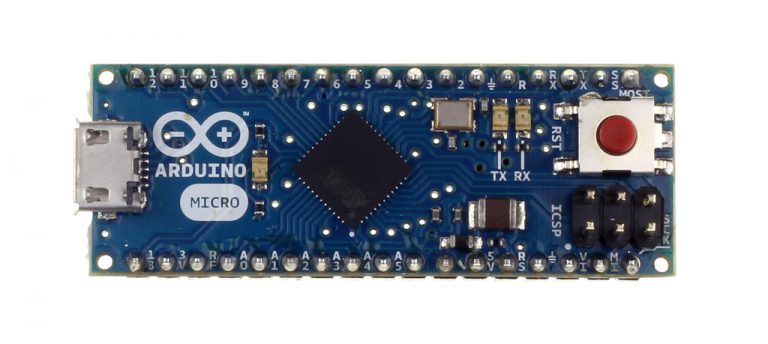
Arduino micro
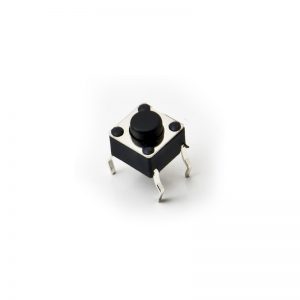
Seventeen pushbuttons
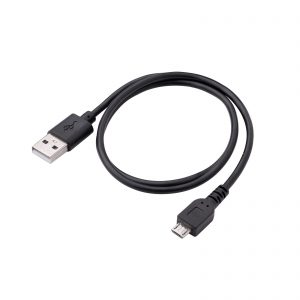
micro usb cable
PCB
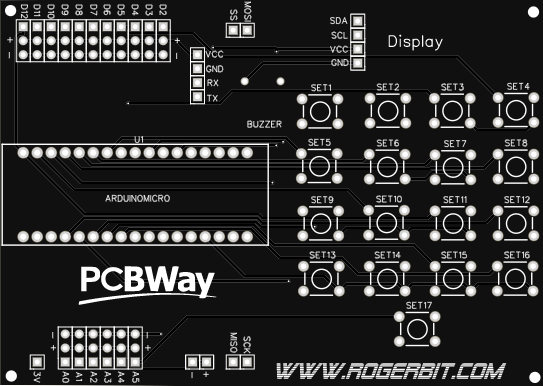
Download gerber file –> https://rogerbit.com/wprb/wp-content/uploads/2022/03/teclado-arduino-micro.zip
- PCB Aesthetics & Signal-Hardening Forensics:
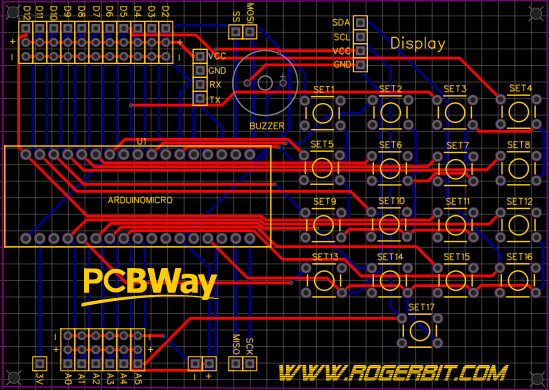
- Input-Array Diagnostics: The project features a 17-switch tactile matrix. Forensics involve the use of internal pull-up resistors and debouncing-heuristics to maintain logic-stiffness across the large input-plane.
- Gerber-File Forensics: The implementation utilizes a custom-designed PCB to minimize parasitic-capacitance harmonics and ensure high-reliability interconnects for the biometric-node.
Optional components
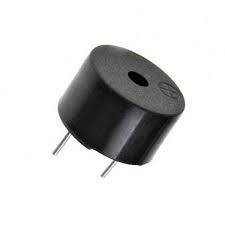
Buzzer
- Buzzer-Feedback & Safety Heuristics:
- An active buzzer provides acoustic-feedback for "Auth-Success" and "Auth-Failure" diagnostics. Forensics include the measurement of frequency-harmonics $(e.g., High-Pitch for Success / Low-Pitch for Failure)$ for absolute HMI clarity during the security loop.
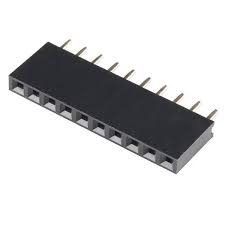
female pins
Open Smart fingerprint module
Download Manual –> https://rogerbit.com/wprb/wp-content/uploads/2022/06/R308-fingerprint-module-user-manual_English.pdf
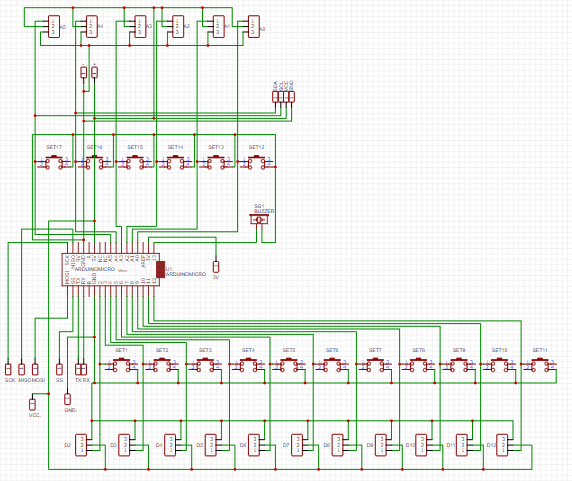
Circuit
Conclusion
Fingerprint-Micro represents the pinnacle of Asynchronous Biometric-Security Diagnostics. By mastering Template-Forensics and HID-Orchestration Heuristics, carlosvolt has delivered a robust, professional-grade authentication platform that provides absolute system-access clarity through sophisticated optical diagnostics.
Identity Persistence: Mastering biometric telemetry through template forensics.