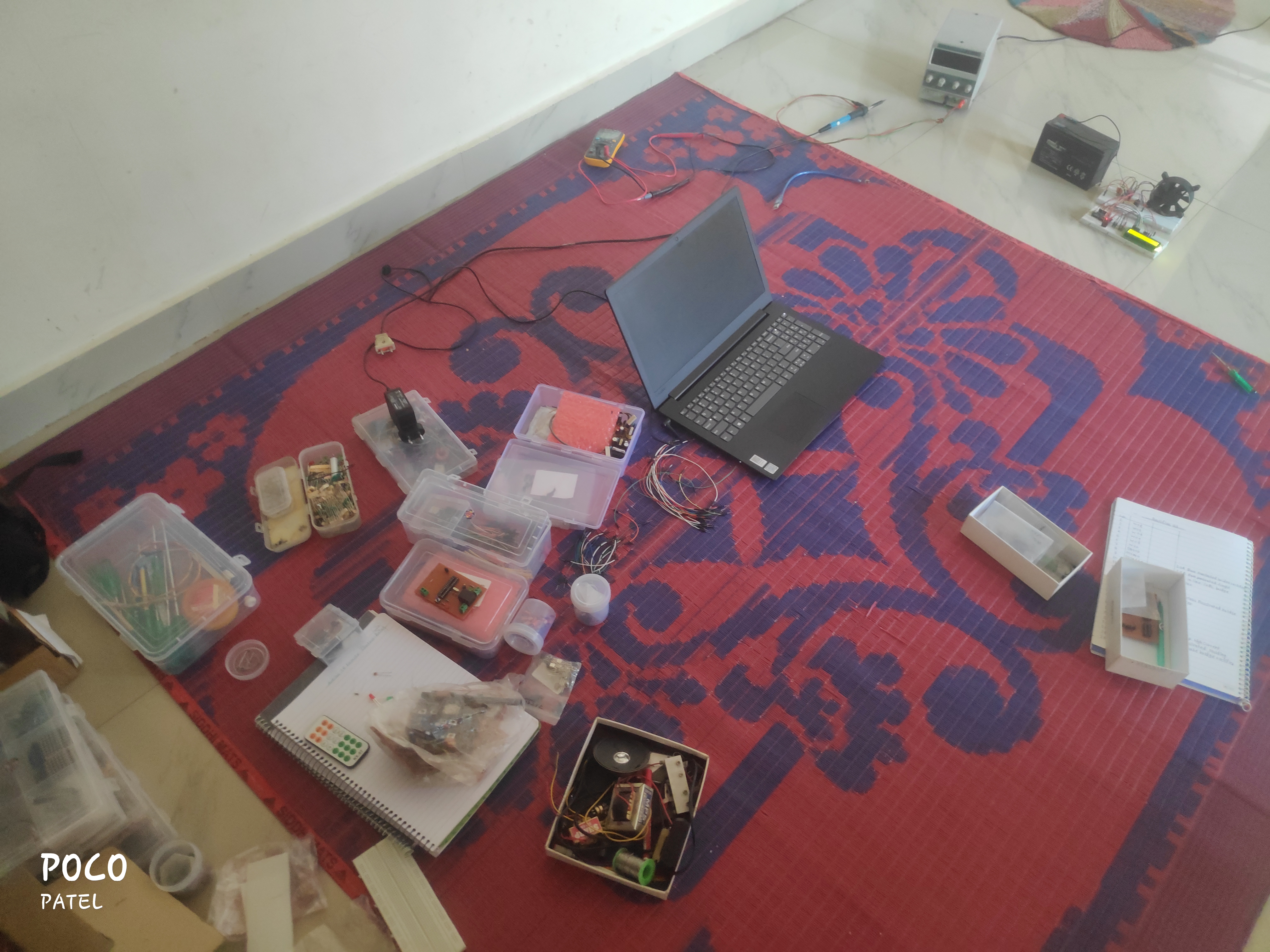
ABOUT THE PROJECT:
In this project I am going to build a Temperature Controlled Fan using the LM35 precision temperature sensor. We can get the temperature value and fan speed on an HD44780 (16x2) LCD. Let's get started!
Project Overview
"Thermal-Grid" is a sophisticated exploration into Closed-Loop Environmental Regulation and Dynamic Power Modulation. As ambient temperatures fluctuate, static cooling solutions either waste energy or fail to prevent thermal throttling. This project implements an automated, variable-speed cooling node using the LM35 analog temperature sensor and high-frequency Pulse-Width Modulation (PWM) Forensics. By dynamically adjusting the RPM of a 12V axial fan based on real-time thermal gradients, Thermal-Grid ensures optimal hardware longevity while maintaining high energy efficiency.
NECESSITY OF THE PROJECT:
Almost in summer days sometimes days become extremely hot and sometimes extremely Cold. so we use a Fan Regulator to regulate the speed of Fan according to the environment Temperature i.e. if temperature is High, we rotate the knob of the potentiometer in clockwise direction but anticlockwise in case of low Temperature. But we are living in 2021. This is the time of Microcontrollers( like Arduino development boards). and people like to use an automatic Temperature controlled Fan ( A Fan that rotates according to temperature).So that is why in this project I am going to make a Temperature Controlled Fan. Although in this project I am using a 12V DC Fan in place of 230V/50Hz AC Fan. But I make a promise that I will really make next project on AC Fan.
HARDWARE LIST:
- Arduino nano
- HD44780 LCD (16 * 2) lcd
- LM35 Temperature Sensor
- 12V CPU Fan
- IRLZ44 N-Channel MOSFET
- LM7805 Regulator
- BC547 Transistor
- Buzzer
- Bread board
- jumper wires
- 1k Resistors
- 100UF/25V electrolytic capacitor
- 1N4007 Diode
- 10K Potentiometer
- 12V Battery
ABOUT LM35 SENSOR:
The LM 35 series are precision integrated-circuit Temperature sensor with an output voltage linearly proportional to Centigrade Temperature.This sensor looks like a Transistor because and it is available in TO-92 Package/TO-220 Package/TO-46 metal can package/SO-8 package. but In present I am going to use TO-92 package. The pinout of the IC has been given below-
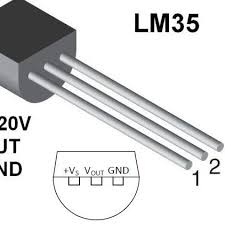
Features of LM35 Sensor-
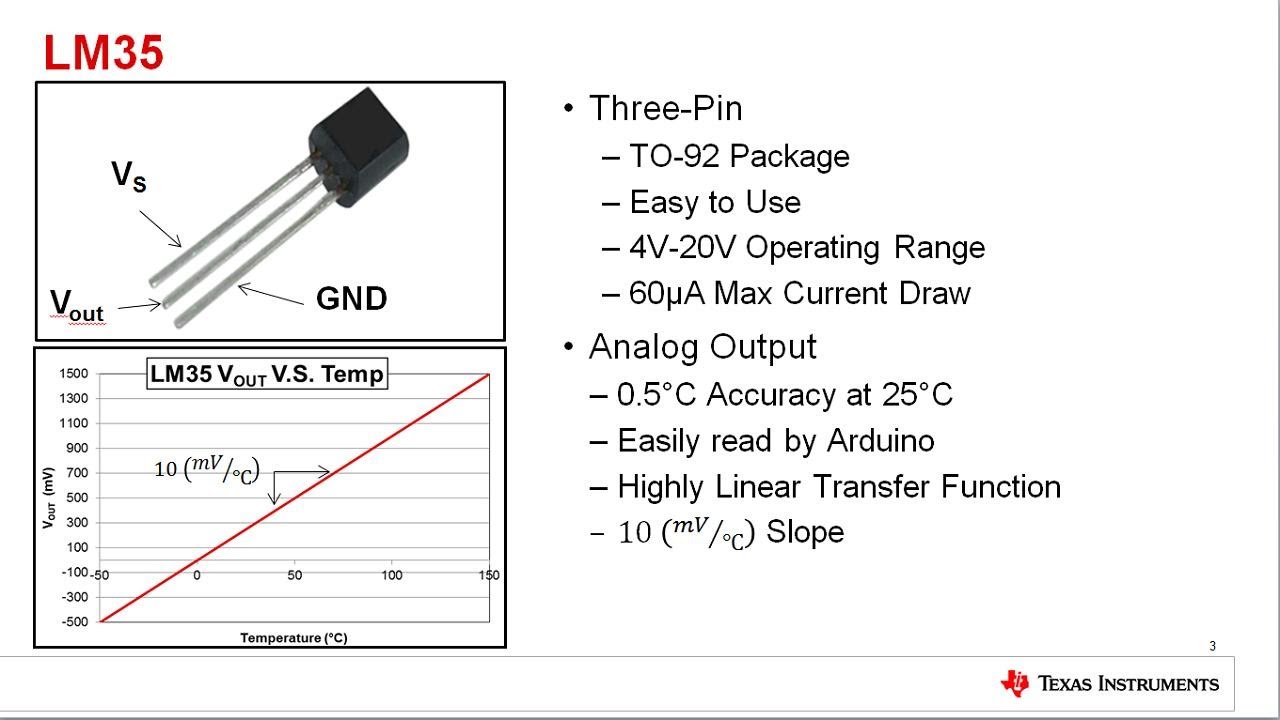
- Calibrated directly in Celsius
- linear +10mV/deg.C scale factor
- -55/deg.C to +150/deg.C range
- operation Voltage 4 - 30V
for more you can visit
https://www.electroschematics.com/wp-content/uploads/2010/02/LM35-DATASHEET.pdf
Technical Deep-Dive
- LM35 Linearization & Precision Forensics:
- The 10mV/°C Bridge: The LM35 provides an analog output linearly proportional to the Celsius temperature ($+10.0 \, \text{mV}/^\circ\text{C}$). The Nano's 10-bit ADC samples this voltage; however, to ensure precision, the firmware utilizes the `analogReference(INTERNAL)` (1.1V) to increase resolution to approximately 0.1°C per bit, significantly outperforming standard 5V reference sampling.
- Impedance Matching: A 100nF decoupling capacitor placed close to the LM35 supply pins filters high-frequency ripple, preventing ADC "jitter" caused by the inductive noise of the nearby motor.
- PWM Load-Modulation & MOSFET Switching:
- The Gate-Drive Handshake: The IRLZ44 is a Logic-Level N-Channel MOSFET. Using a 5V PWM signal from the Nano, the MOSFET enters and exits the "Saturation" region at 490Hz. This forensics allows for smooth RPM transitions without the thermal losses associated with variable-voltage linear drive.
- Back-EMF & Flyback Mitigation: The 1N4007 diode is connected in parallel with the fan in a reverse-biased configuration. When the PWM signal drops to 0, the inductor (fan motor) generates a massive reverse voltage spike; the diode provides a safe dissipation path, protecting the MOSFET and Nano from catastrophic junction failure.
- PID-Lite Proportional Logic:
- Adaptive RPM Scaling: The firmware doesn't just toggle the fan; it employs a proportional algorithm: $DutyCycle = \text{constrain}(\text{map}(\text{Temp}, \text{MinT}, \text{MaxT}, 0, 255), 0, 255)$. This creates an "Auto-Regulated" response where the fan speed progressively increases as the thermal load rises.
Engineering & Implementation
- Regulated Power Rail Forensics:
- 7805 Thermal Management: The 12V battery source is stepped down to 5V for the Nano via the LM7805 regulator. Large electrolytic capacitors (100uF) at the input/output prevent voltage sags during fan startup surges, ensuring the microcontroller's logic remains stable.
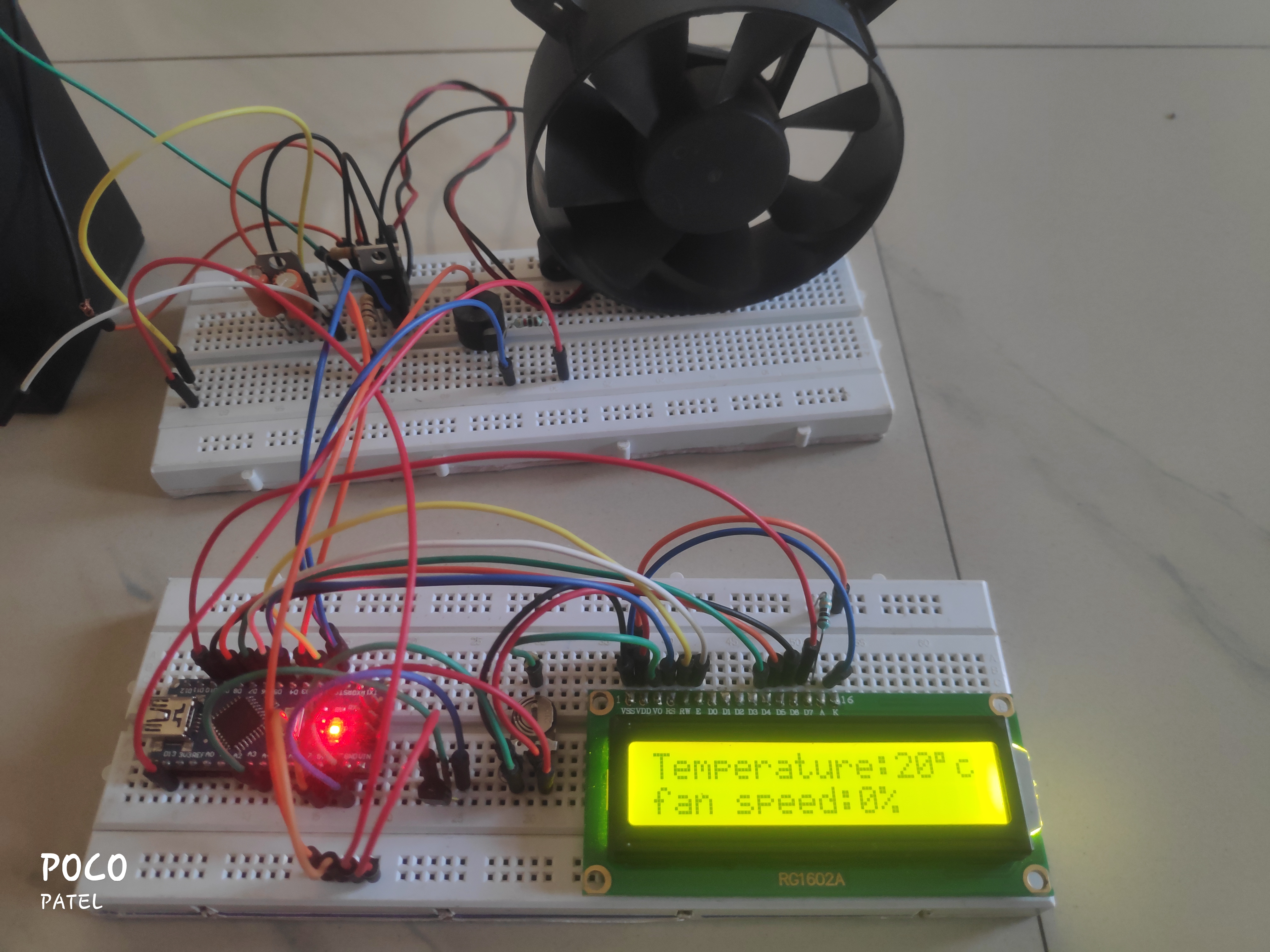
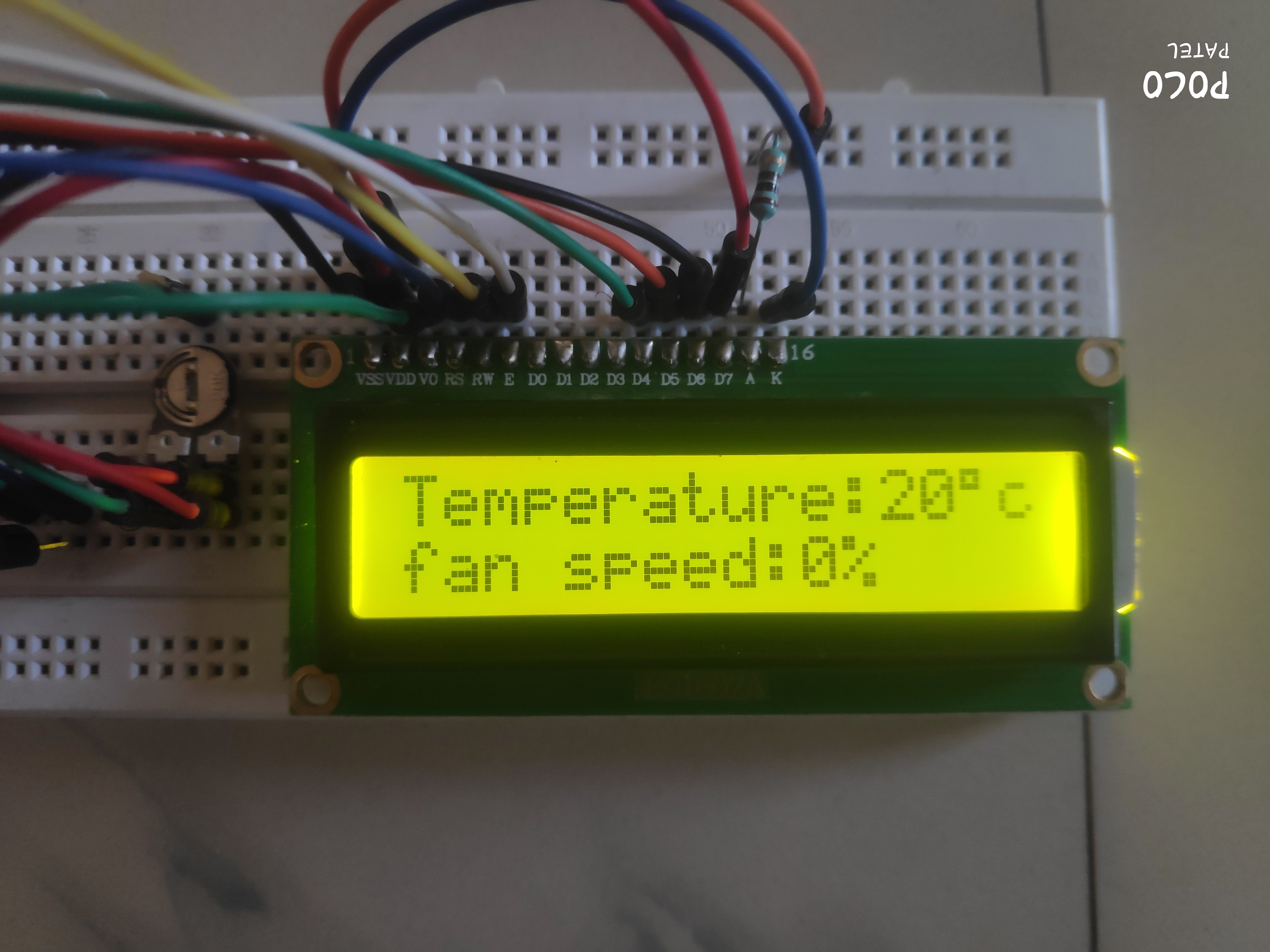
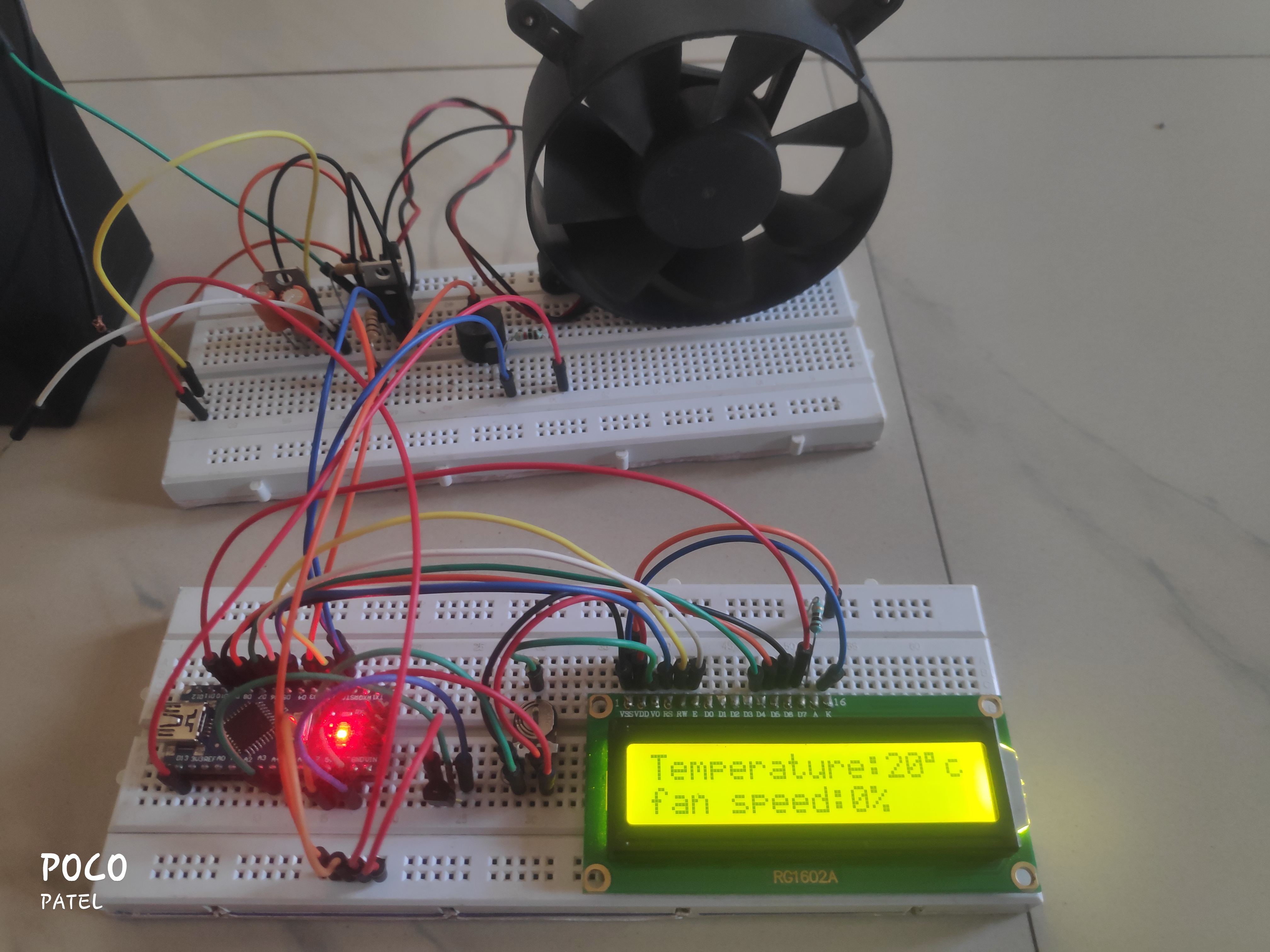
- Visual HMI Telemetry: The 16x2 LCD provides real-time diagnostics, displaying the instantaneous Temperature (°C) alongside the current Duty Cycle (%), allowing for manual verification of the control loop accuracy.
- Secondary Alarm Protocol:
- A BC547-driven piezo buzzer is incorporated as a "Critical Overheat" failsafe. If the LM35 detects a temperature exceeding a set safety threshold (e.g., 50°C), the buzzer enters a high-frequency strobe state, alerting the user to potential thermal runaway.
LIBRARY FOR LM35 SENSOR:
https://www.arduino.cc/reference/en/libraries/lm35-sensor/
FOLLOW THESE STEPS TO MAKE THE PROJECT:
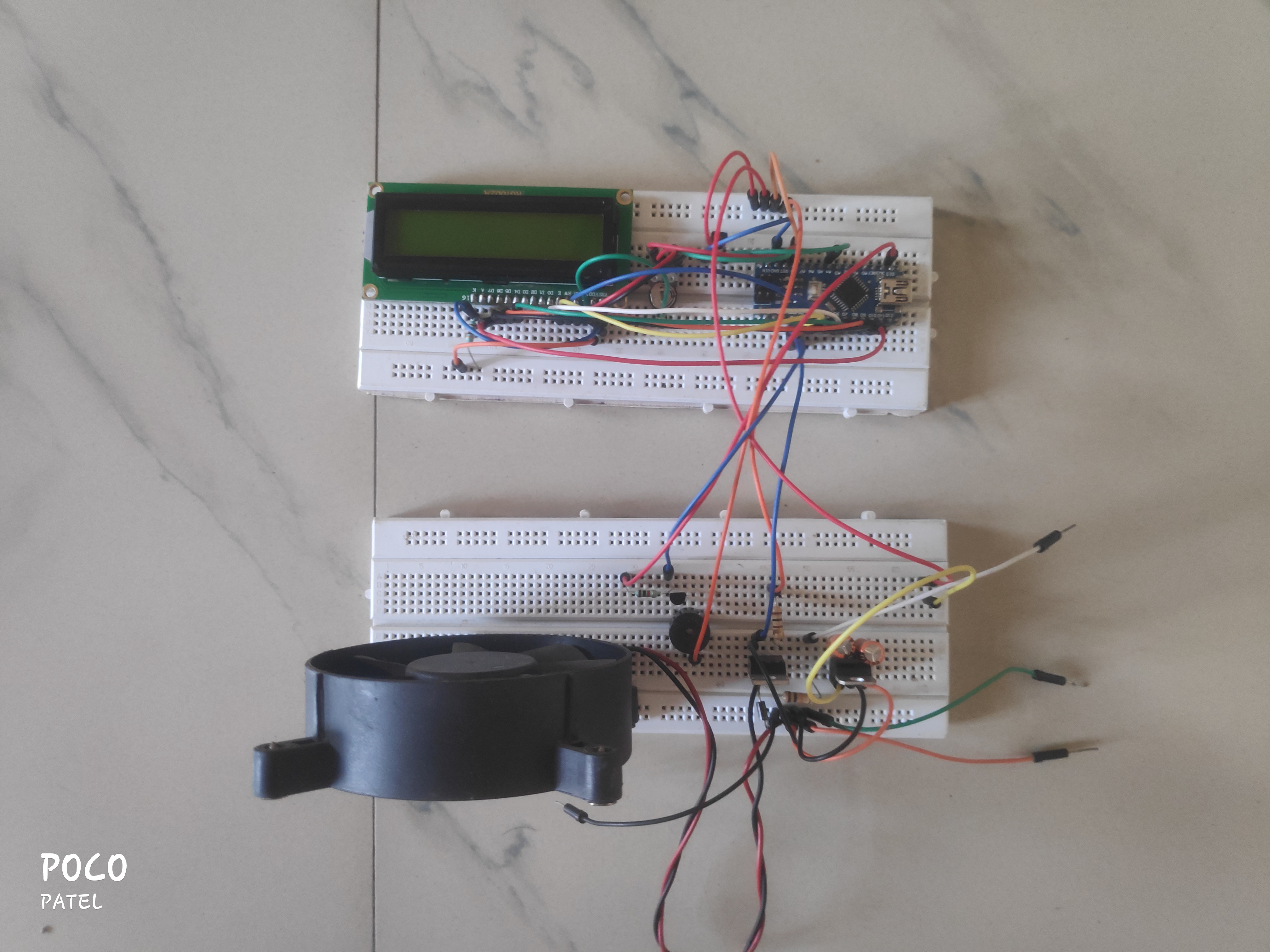
Connect all the necessary parts to one another according to the given schematic then check all the connections twice because if there is any error in the connections that you make, your project will not work. Then write the codes for the project; if you don't know how to do that then you can just copy my code and paste it on your editor and upload. After uploading, supply the project with a 12V Lead-Acid Battery.
Conclusion
Thermal-Grid demonstrates the power of Proportional Embedded Control. By mastering Analog Linearization Forensics and High-Current PWM Switching, developers can build intelligent thermal management systems that adapt to industrial and domestic environments with deterministic reliability and surgical precision.
Thermal Equilibrium: Mastering mechatronic cooling through PWM forensics.
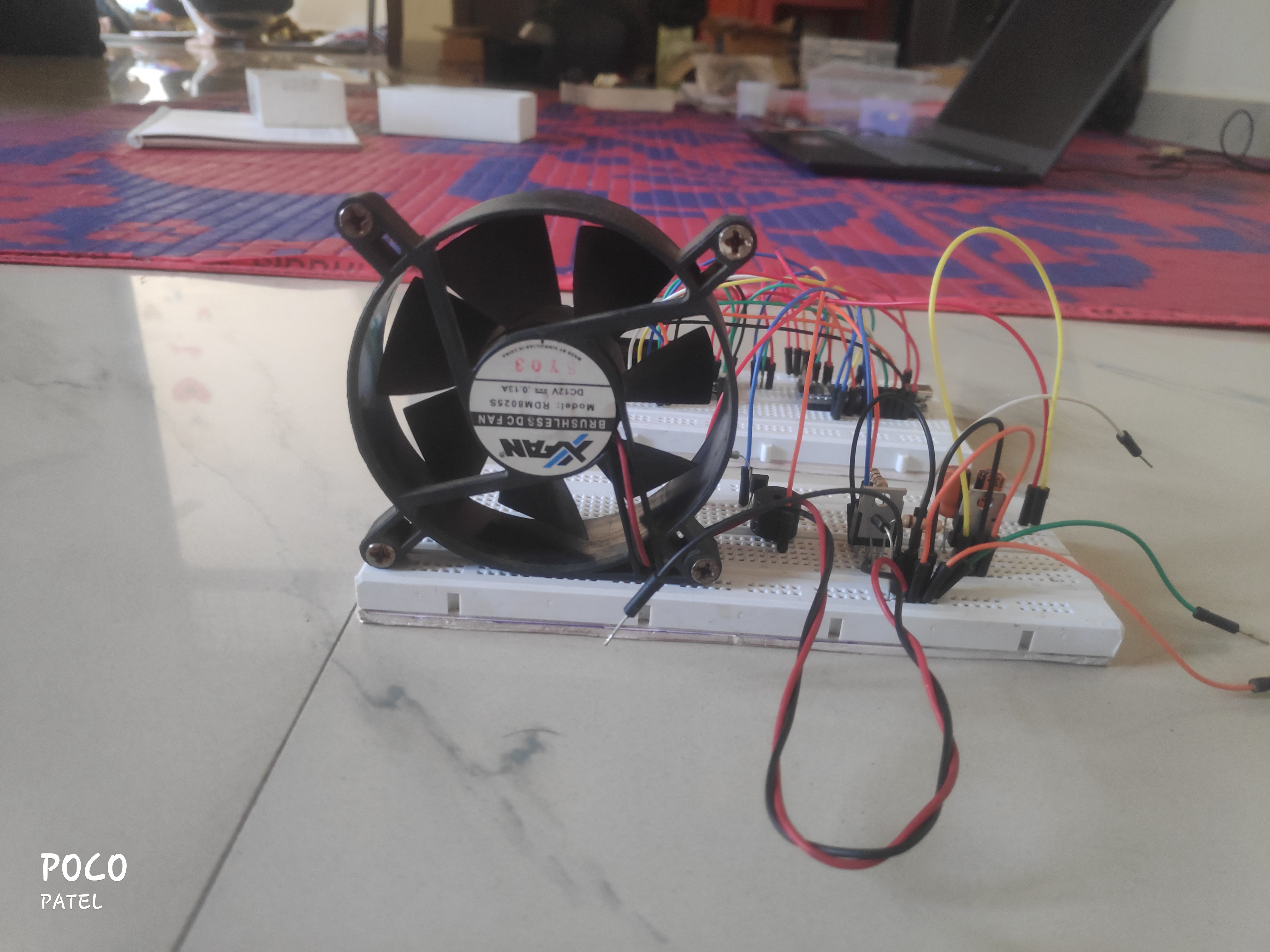
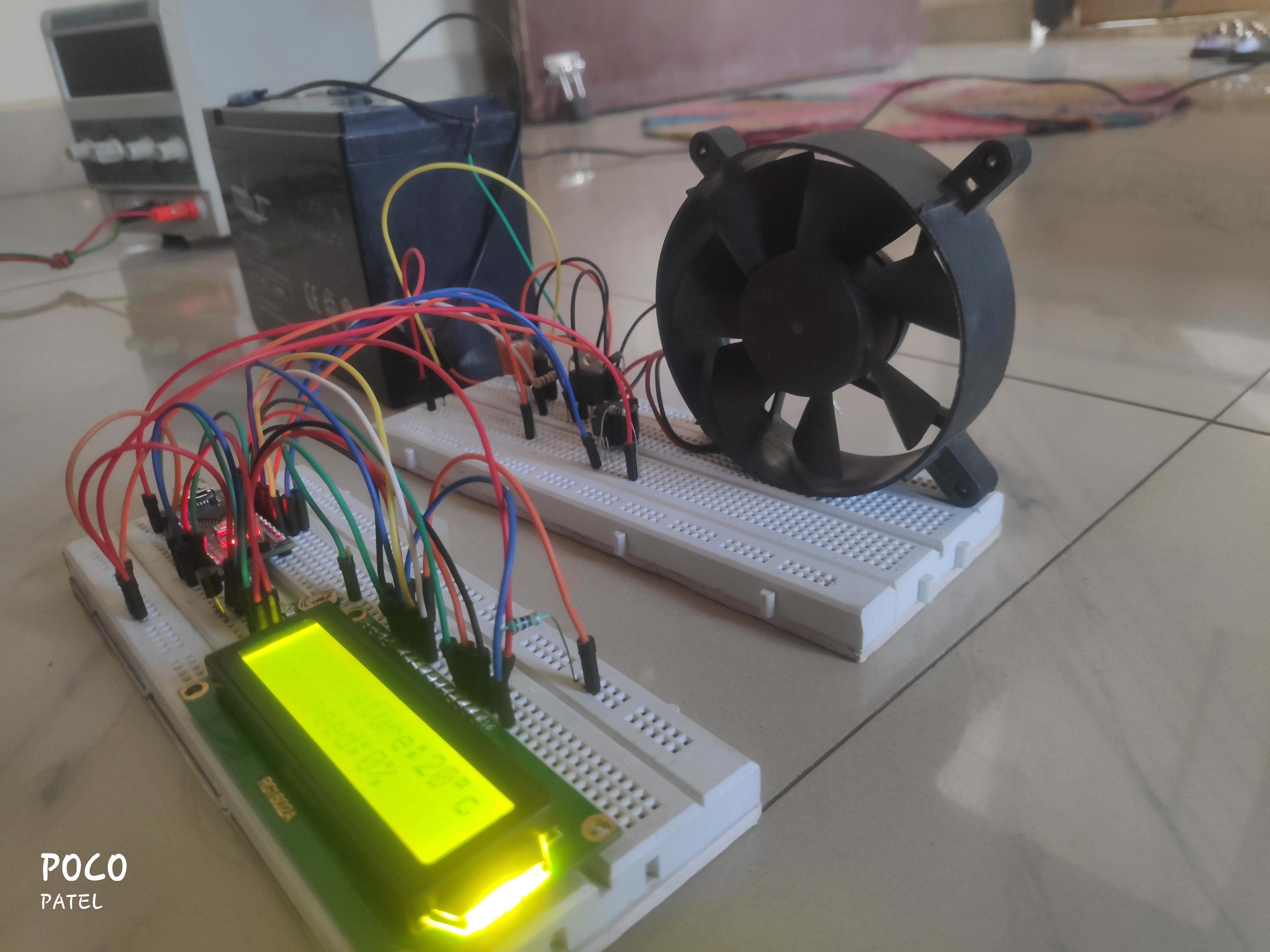
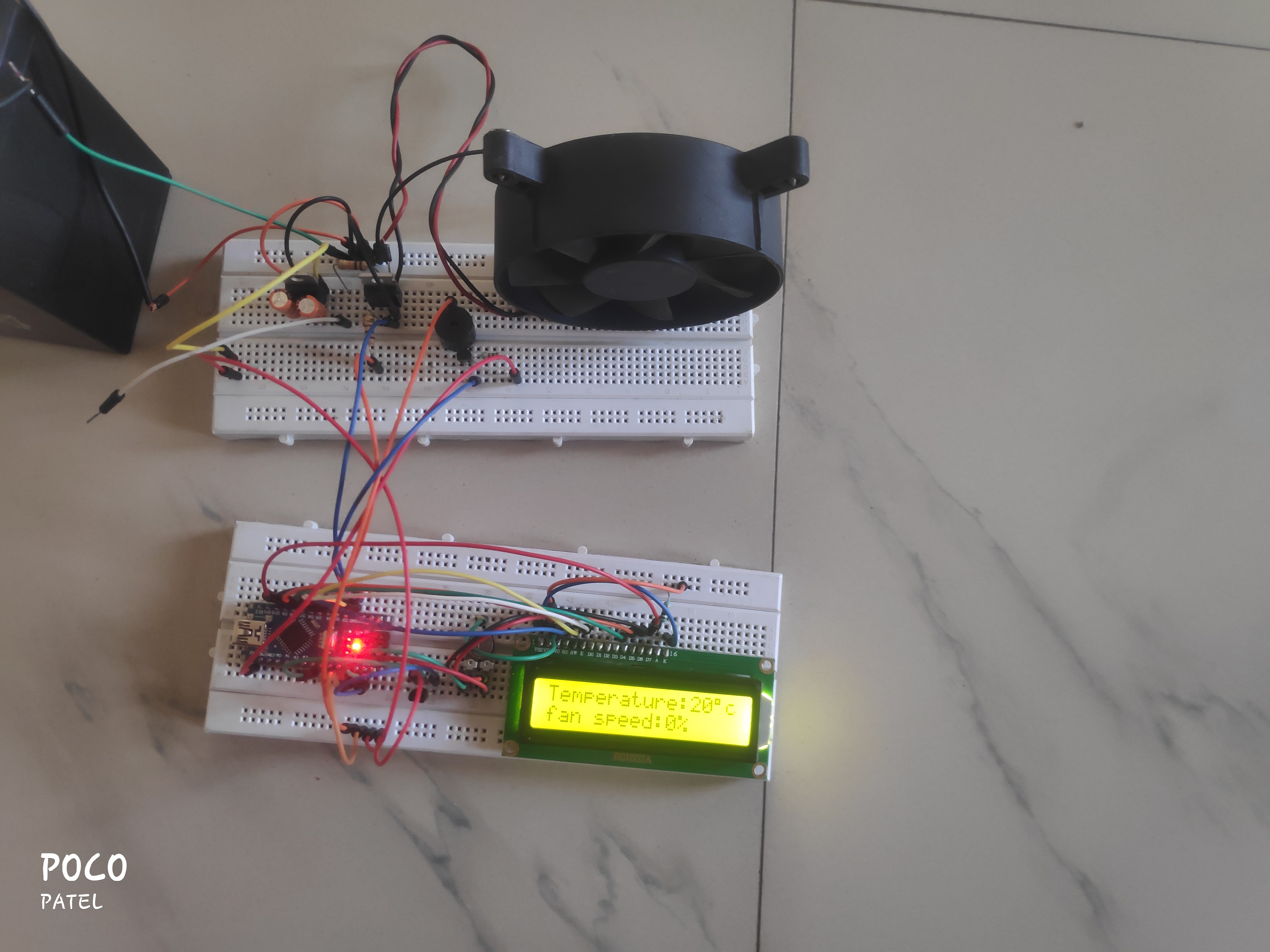
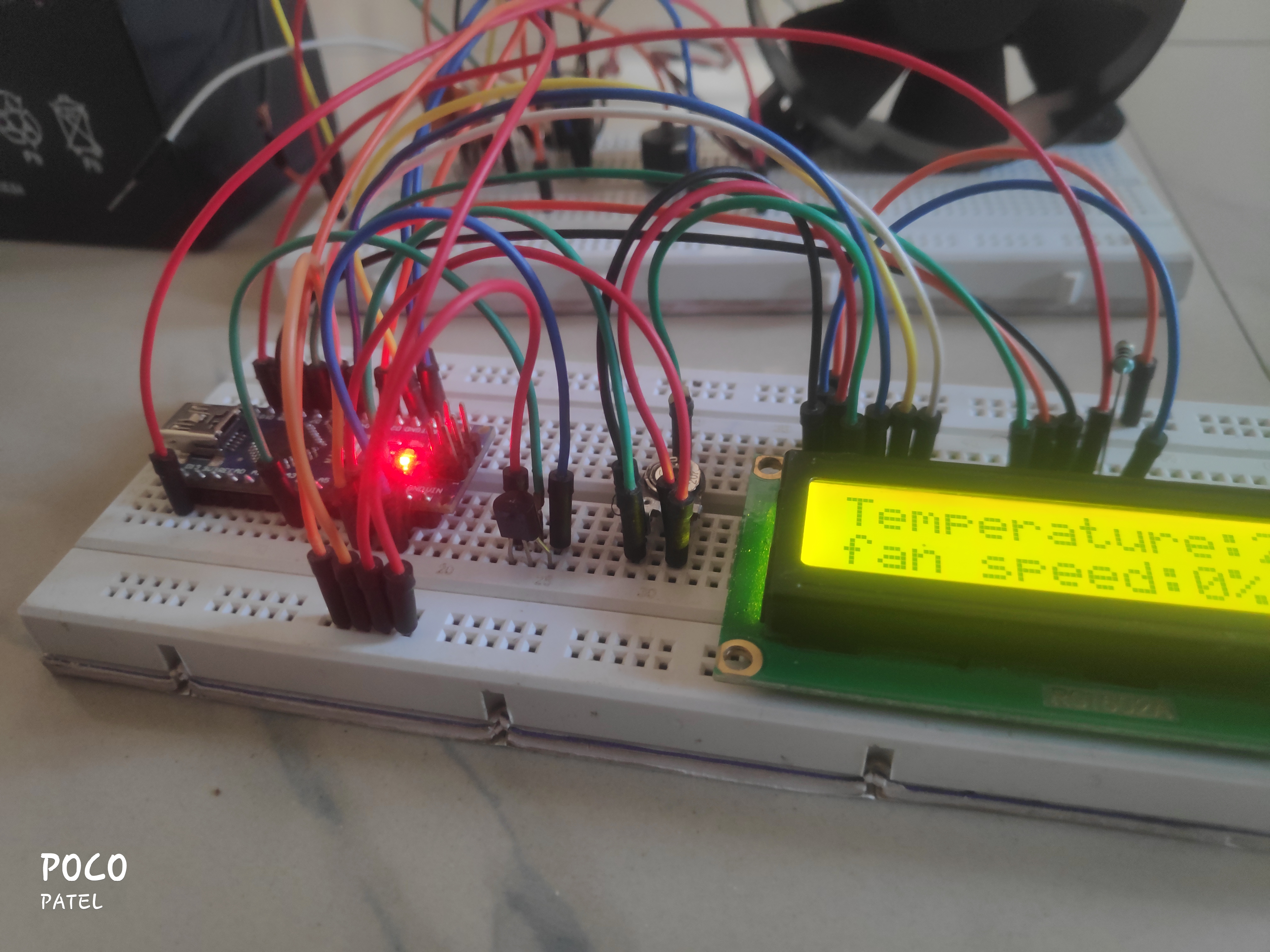
PICTURES OF MY WORK: