For an exposition highlighting the history of a historic manor in the Netherlands called Oud Amelisweerd we created an interactive installation out of electric votive candles that light up in the silhouette of the visitor.
Called Thoughts and Prayers, the installation refers to a part of the history of the house, when this specific room was used as the chapel for an order of friars. Over eighty friars lived in the house for several years after they were forced out of their own monastery because of the second World War.
Novices were trained at the manor in skills like woodworking and electrics, which gave us an interesting personal connection to this history while building the installation. From coming up with the idea to installing the finished piece in the house the whole thing took us about two weeks.
Thoughts and Prayers is a meditative installation that shows a candle-light reflection of the visitor in real-time, on an altar table filled with 240 votive candles. The warm, flickering candle light in the dim room, combined with the soothing sound of Gregorian chants gives the visitor a chance to slow down, breathe, and take a moment to literally reflect.
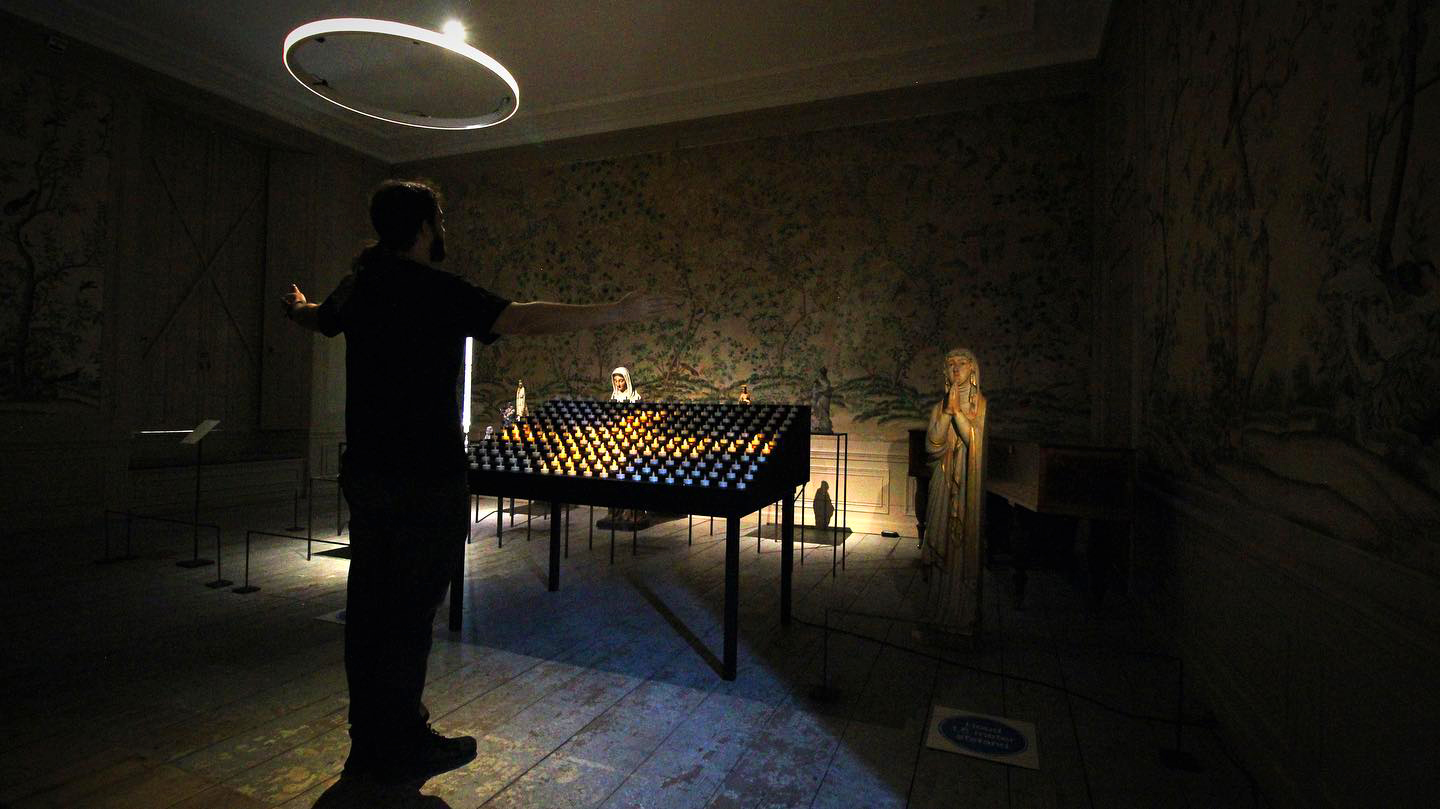
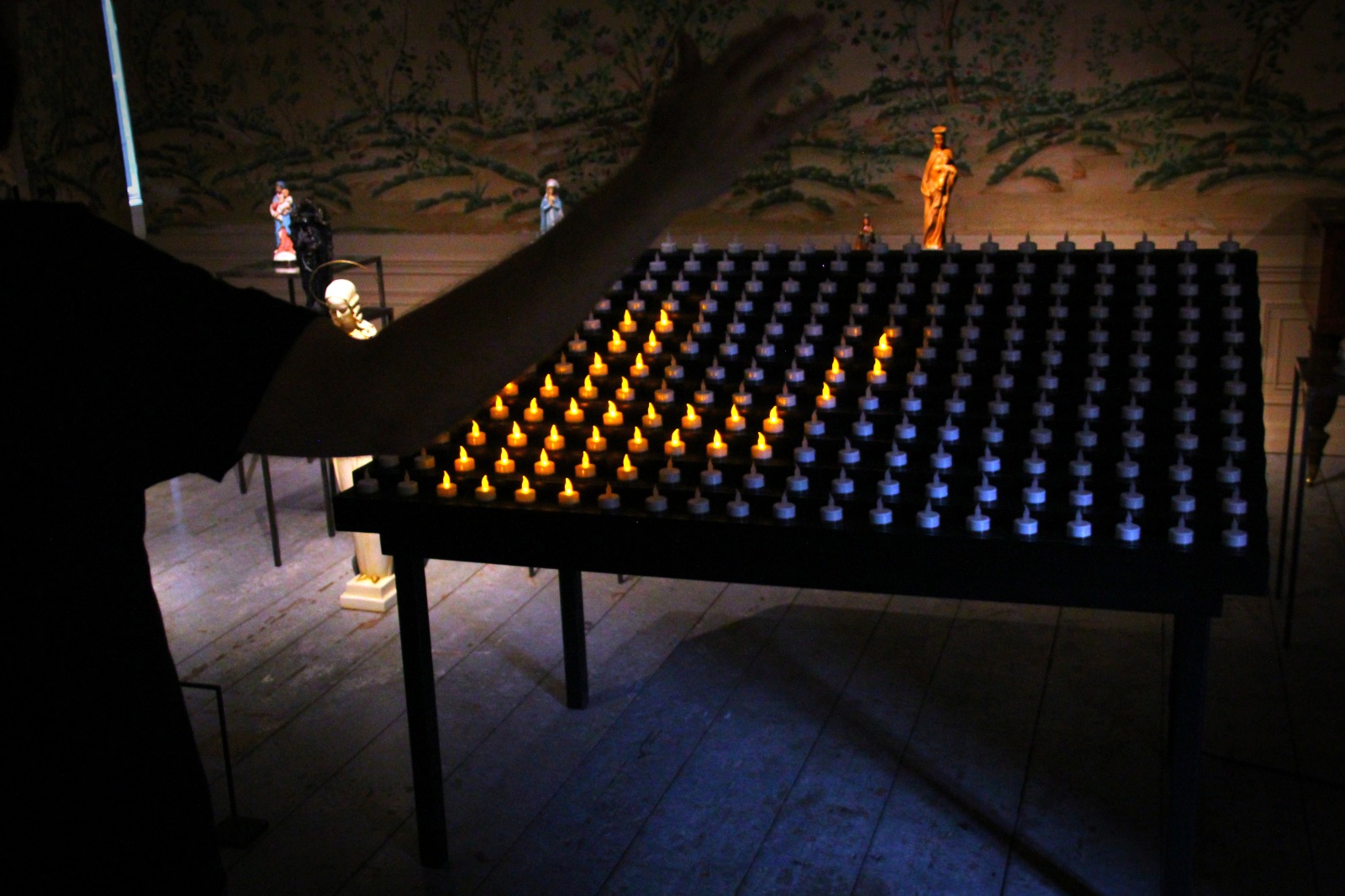
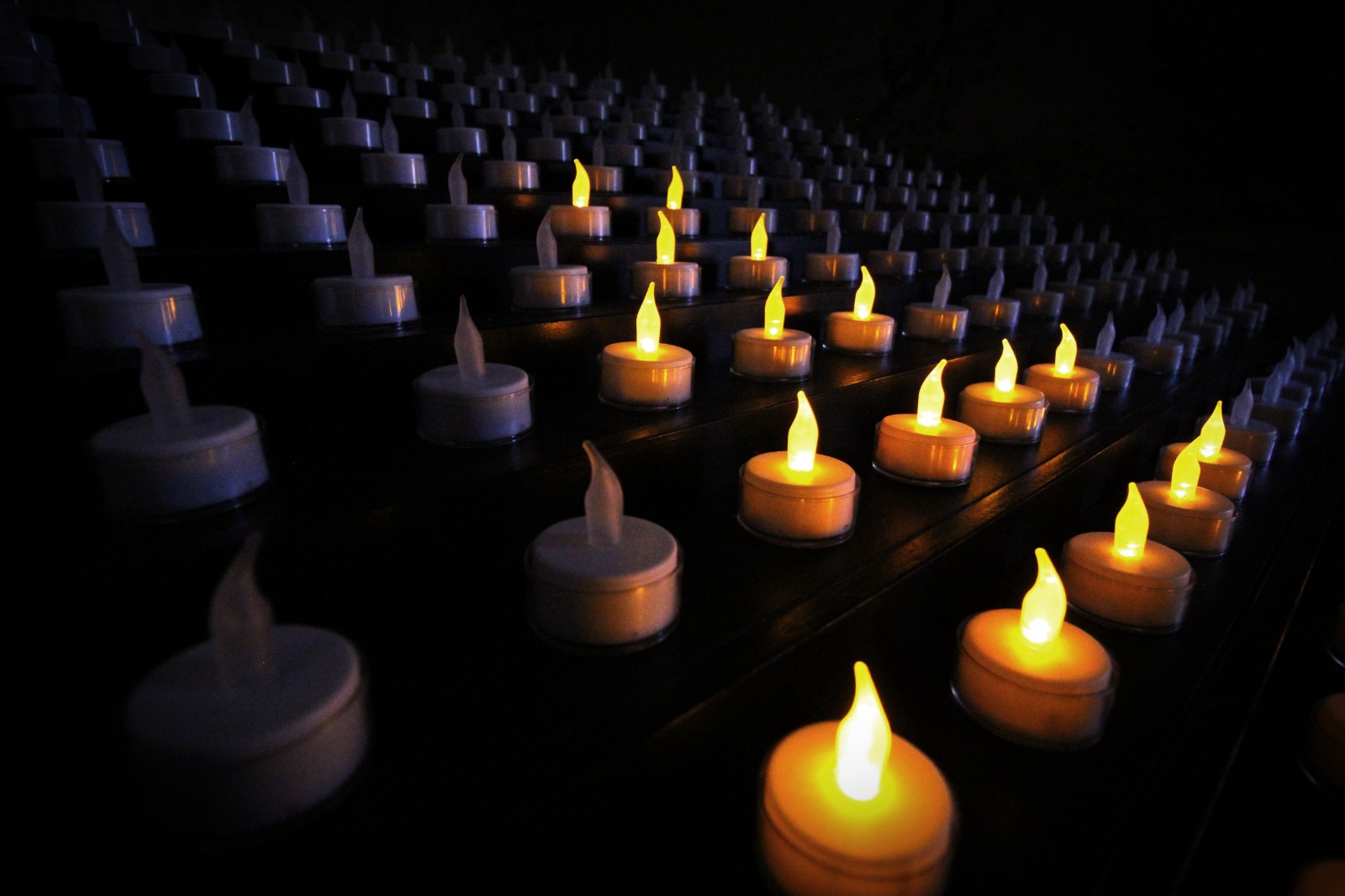
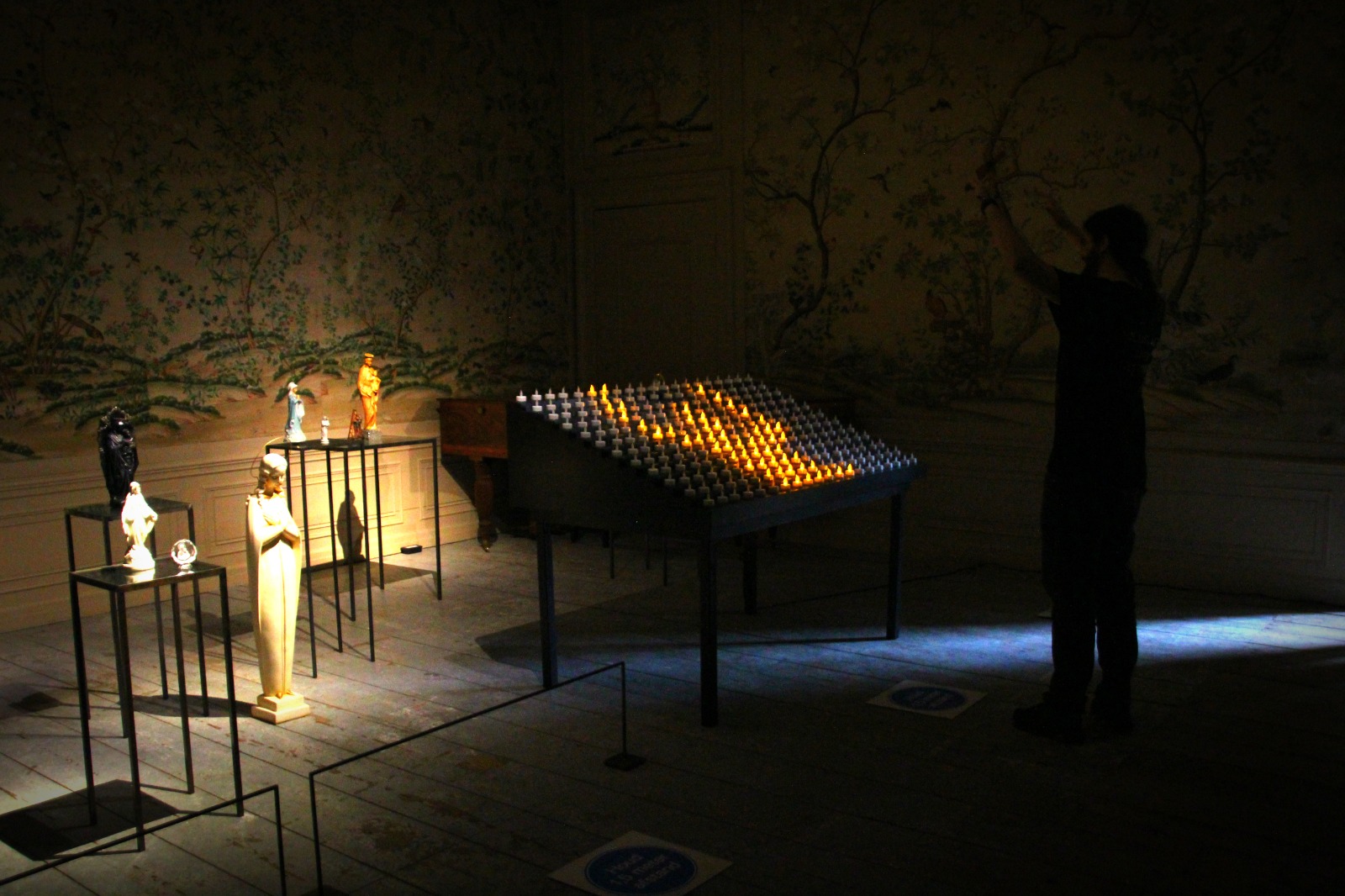
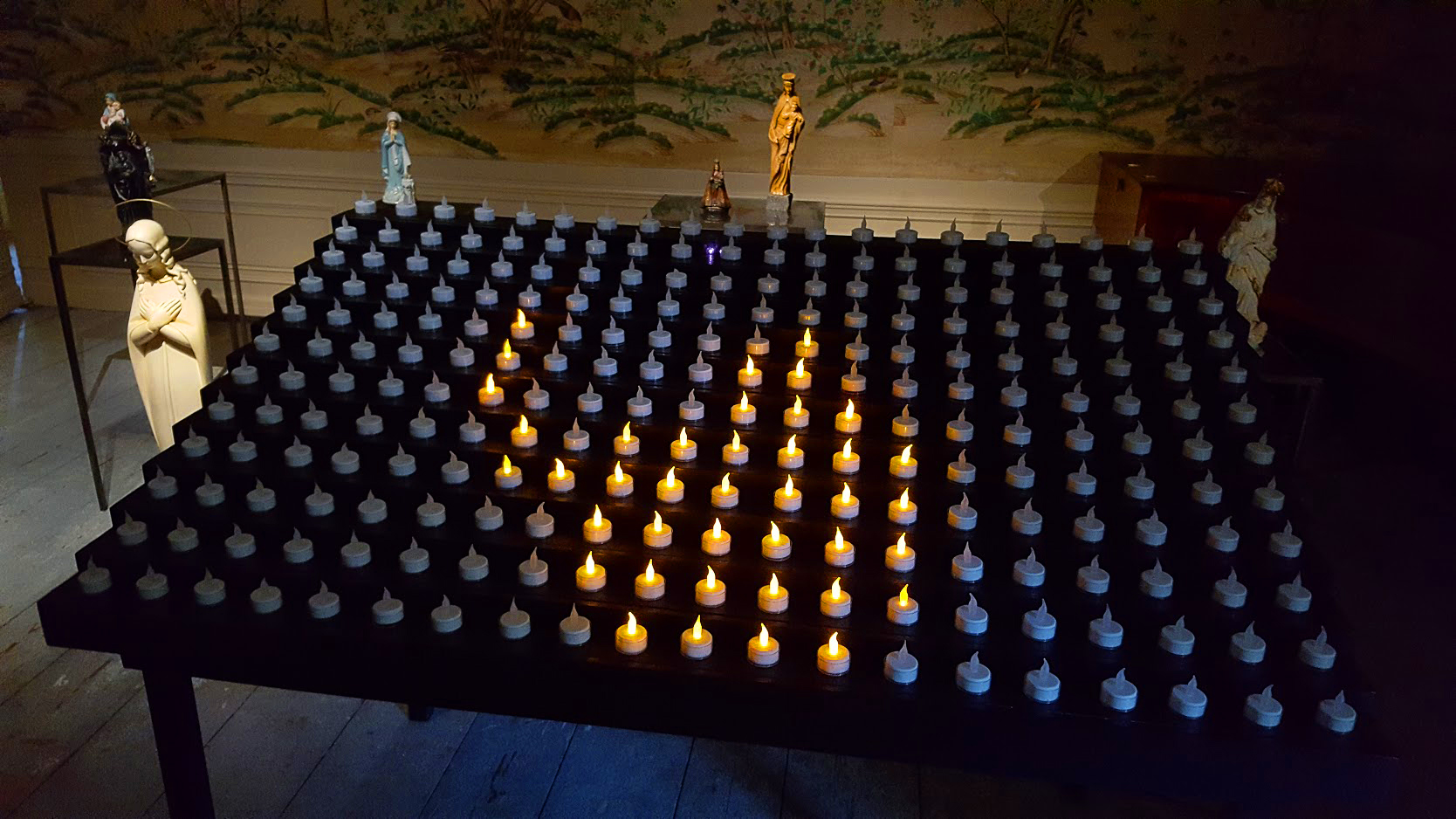
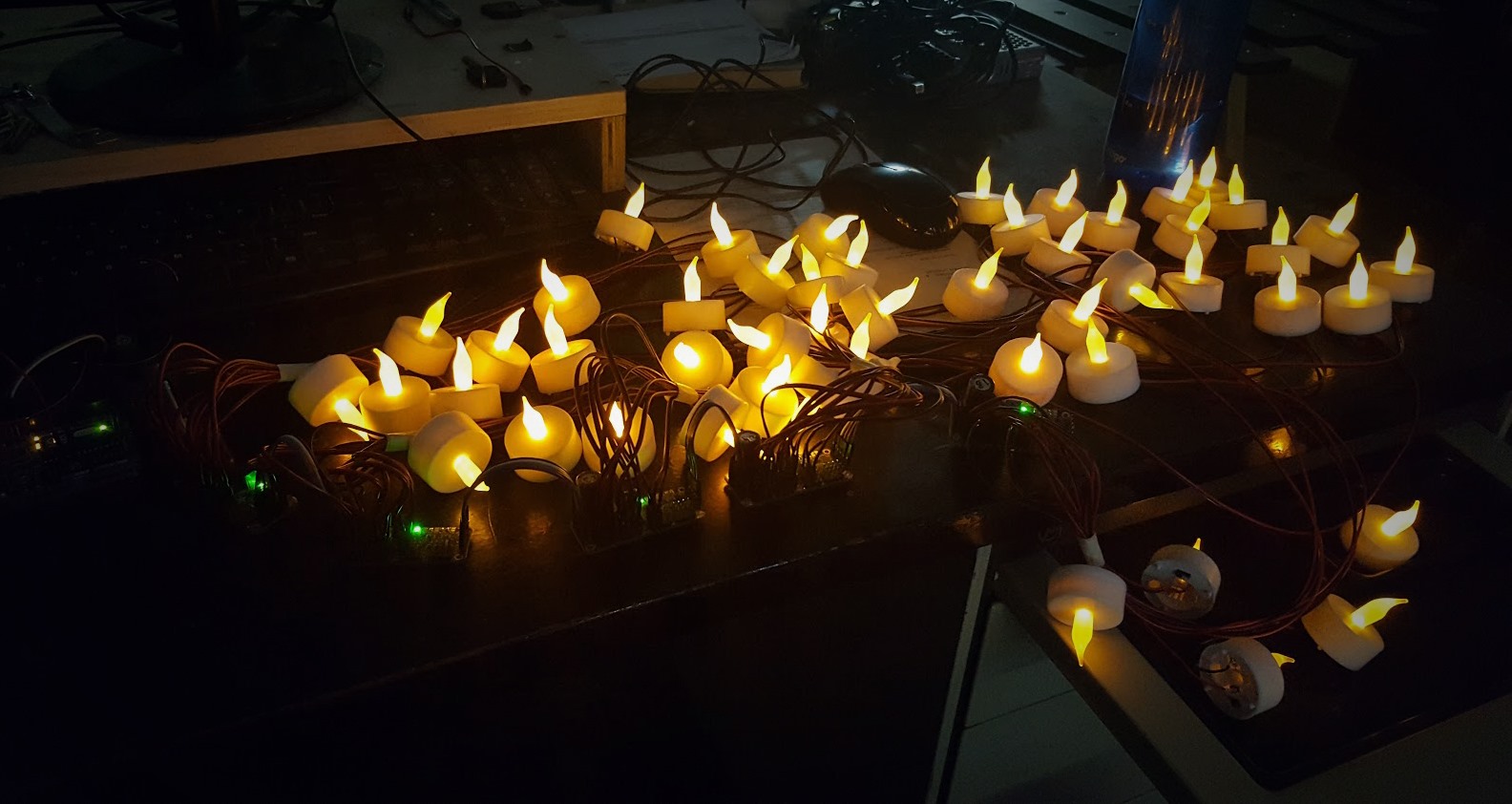
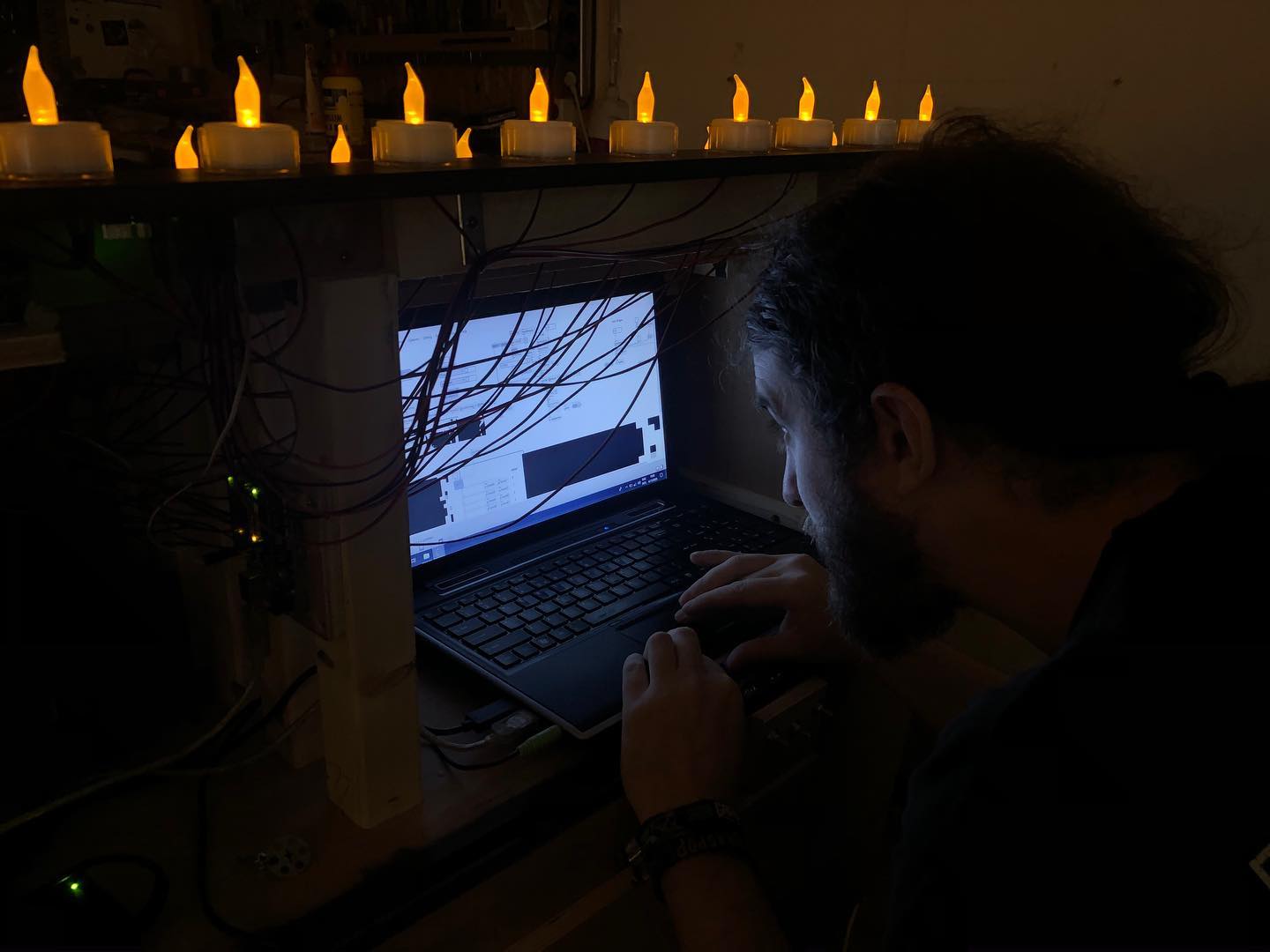
We rewired 240 LED candles, and connected them to 24 daisy-chained Adafruit PCA9685 boards, which we use to turn the candles on or off. We made a program in Max/MSP that uses a Kinect 3D camera to create a black and white silhouette of the visitor. The pixel information is then sent to an Arduino Uno which controls the Adafruit boards and turns the candles on or off.
Technical Implementation: System Architecture
The project reveals the hidden layers of a complex real-time interactive system:
- Sensing Layer: A Microsoft Kinect 3D camera captures depth and silhouette data of the visitor in real-time.
- Processing Layer: A custom program in Max/MSP processes the Kinect data, converting the visitor's silhouette into a simplified black-and-white pixel map.
- Control Layer: An Arduino Uno acts as the central controller. It receives the pixel map data from the computer and translates it into commands for the LED drivers.
- Actuation Layer: 24 daisy-chained Adafruit PCA9685 16-channel PWM/Servo drivers provide the necessary control channels to individually address each of the 240 LED candles. These boards receive I2C commands from the Arduino to turn specific candles on or off, creating the live silhouette.
Hardware Infrastructure
- Arduino Uno: The central "brain" of the installation, managing communication between the computer software and the array of PWM driver boards.
- Adafruit PCA9685 Boards: These specialized boards are essential for scaling control, as a single Arduino cannot directly control 240 individual outputs. Each board controls 16 candles, and they are linked together via the I2C bus.
- 240 LED Votive Candles: The core visual elements, each rewired to be controlled by the PWM drivers instead of their original switches.
- Microsoft Kinect: Provides the real-time 3D spatial data needed for silhouette capture.
- Computer running Max/MSP: Handles the heavy computational load of processing the Kinect video feed and calculating the silhouette map.
System Workflow
The interactive process is designed for real-time response:
- Visitor Detection: The Kinect continuously scans the room, identifying the visitor's position and shape.
- Silhouette Processing: The Max/MSP software isolates the visitor's silhouette, converting it into a low-resolution grid that matches the 240-candle layout.
- Data Transmission: This grid data, essentially a map of which candles should be on or off, is sent serially to the Arduino Uno.
- Candle Control: The Arduino interprets the data and sends corresponding commands over the I2C bus to the daisy-chained PCA9685 boards.
- Visual Output: The specific LED candles illuminate, creating a flickering candle-light reflection of the visitor's silhouette on the altar.
Future Expansion
- Dynamic Flickering Patterns: Modify the Arduino code to incorporate PWM-based flickering algorithms for each candle, creating a more organic, flame-like effect rather than simple on/off states.
- Multi-User Interaction: Upgrade the software logic to handle silhouettes from multiple visitors simultaneously, creating merged or interactive light patterns.
- Environmental Responsiveness: Integrate additional sensors, such as microphones, to modulate the light intensity or pattern based on ambient sound or visitor proximity.
- Wireless Control & Monitoring: Add a WiFi module (e.g., ESP8266) to the Arduino to enable remote diagnostics, pattern updates, or control from a secondary interface without physical access to the installation computer.
Thoughts and Prayers is a perfect project for any electronics enthusiast looking to understand large-scale interactive installations, computer vision integration, and scalable hardware control!