In the times of Covid have you missed the everyday rustle and bustle of cars? Well, Personally I have and to imitate a few of the traffic jam scenarios I decided to create my own Traffic light signals.
I could even stick the leds out of breadboard into a cardboard but I am too too lazy to do that. If you want to do that you have to attach the jumper wires male to female with the male side on breadboard and female on Leds.
The Side corresponding to Resistor end should be connected to the positive terminal and you can directly connect the gnd from the -ve column of the breadboard.
I decided to make this project as I was too bored and this would be a good practice for my beginner skills in Arduino.
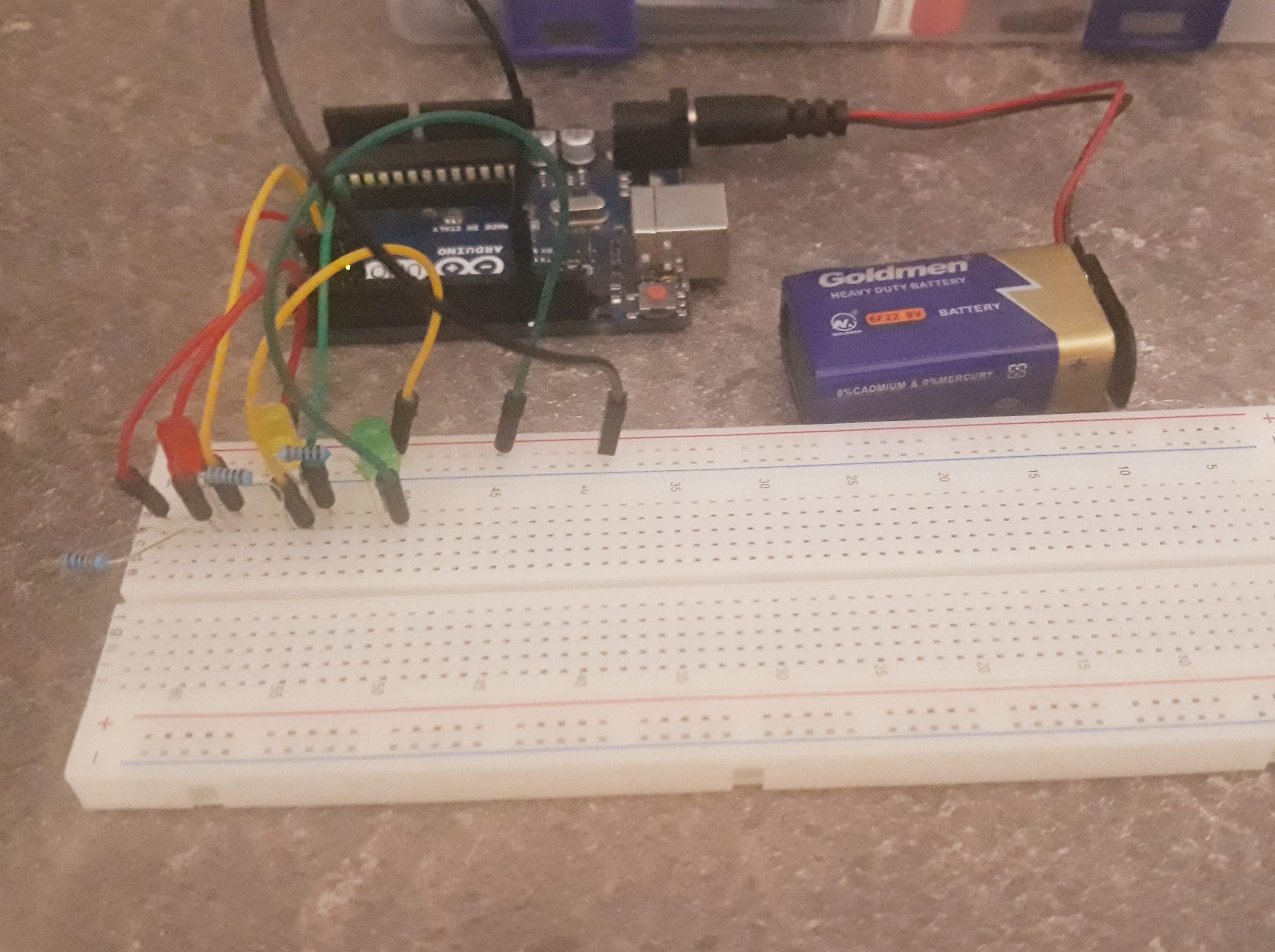
EXPANDED TECHNICAL DETAILS
Real-World Timing Logic
This project simulates a standard 4-way intersection or a single pedestrian crossing.
- Timing Sequence: Implements the standard Red -> Green -> Yellow sequence using
millis()for precise, non-blocking control. - Hardware setup: Uses high-brightness 10mm LEDs with 220Ω current-limiting resistors to protect the Arduino pins.
Safety Features
- Pedestrian Override: A pushbutton acts as the "Crosswalk" request. The Arduino logic ensures that the light doesn't change instantly; it finishes the current cycle Safely before transitioning to the pedestrian phase (Yellow then Red for traffic).
- Emergency Mode: Can be expanded to include an IR receiver that detects an "emergency vehicle" signal, forcing a green light path, demonstrating the basics of municipal traffic management systems.