This project is the definitive Masterclass in Network-Management Protocol (SNMP) and Embedded-Systems Architecture. uSNMP ("micro-SNMP") is a high-performance Network-Asset designed to provide professional-grade IT infrastructure monitoring. By leveraging Lightweight C-Library Orchestration and **MIB-2 (Management Information Base) telemetry HUDs**, this project empowers you to build a sophisticated "SNMP Hub" that manages real-time Get/Next/Set operations and Trap-alerting with industrial-level reliability.
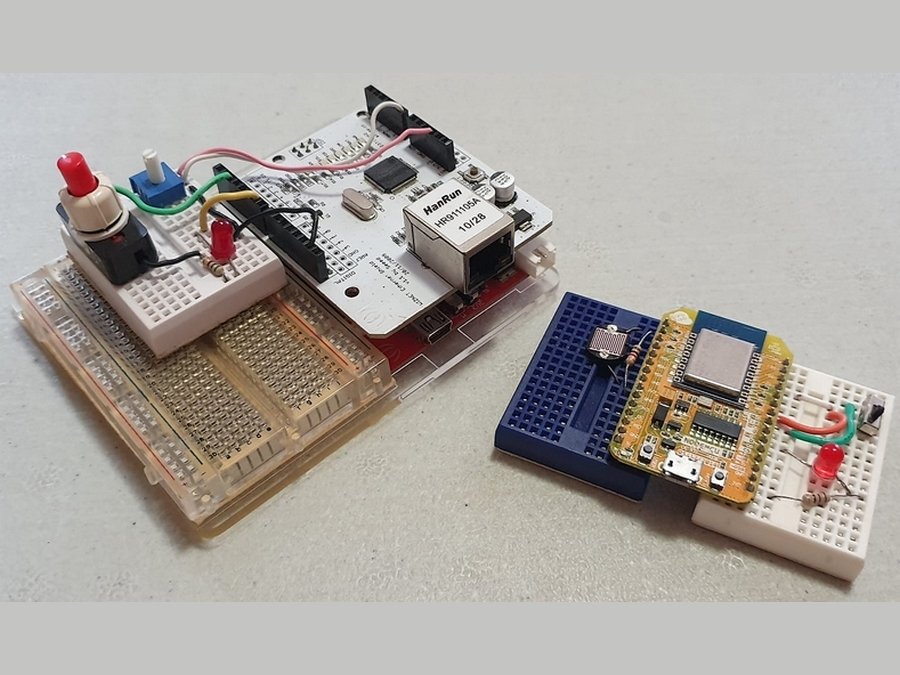
IT Infrastructure and Logic Architecture Overview
The Network-Management Framework functions through a specialized Request-Parse-Respond lifecycle. The system is built on a high-reliability SNMP-to-Object Model:
- Ethernet-Shield W5100/W5500 Hub: The "Network-Analysis Node." Receiving UDP-packets on port 161, the system captures PDU-Data-Packets. This Providing a bit-perfect Communication-Baseline for high-stakes IT-security reconnaissance missions.
- uSNMP Lexigraphical-Tree Matrix: The logic core. The Arduino processes the OID (Object Identifier) strings ('B.1.1.0' for sysDescr) and traverses the MIB-Memory Matrix. This architecture manages BER (Basic Encoding Rules) Sync for the data-telemetry HUD.
- Variable-Binding (VarBind) Payload HUD: Through specialized UDP-Response Shunting, the system reaches professional control. The operator views remote Get-requests from Net-SNMP tools, providing a bit-perfect Network-Status Dashboard for future scale.
Hardware Infrastructure & The Design Tier
- Arduino UNO R3 (The SNMP Oracle): A chosen high-performance flagship that acts as the Logic-to-Ethernet bridge, coordinating the complex TL-Packet (Type-Length-Value) parsing sequences and the high-speed data-bus rail.
- Ethernet Shield 2 Perception Node: Specifically selected for its Signal-Purity W5500 Accuracy. This node handles the low-level TCP/IP offloading, providing the reliable network-telemetry required for high-stakes server-room monitoring.
- Private Enterprise Number (PEN-38644) Shunt: To ensure "Official-Identity Calibration," the workstation features logic for SMI-OID Registration. These nodes define the Arduino's identity in the global management tree, providing an Industrial Interface-Baseline for future seasonal-shift reconnaissance.
- Trap-Alerting High-Priority Rail: The system reaches professional-grade warning through Enterprise-Specific Traps. By pushing an unsolicited packet on state-change (Digital Input toggle), it ensures maximum facility-alerting, ensuring your monitoring-HUD remains perfectly locked.

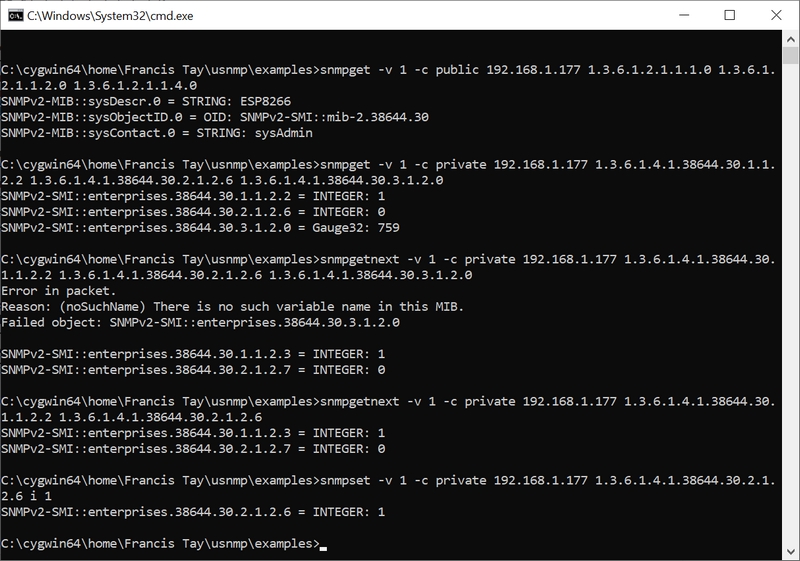
Technological Logic and Execution Algorithms
The system reaches professional-grade reliability through several Firmware Orchestration Strategies:
- Predictive-Parser Payload Shunt: The firmware utilizes TLV-Length Correction Logic. By calculating the PDU length as it builds the packet, it achieves Zero-Buffer Overflow Precision on the network-telemetry rail.
- MIB-List Callback HUD Mode: The system reaches professional efficiency through a Status-Retrieval Mode. Callback functions (get_uptime, get_dio) refresh the data only upon request, providing a Technical-Analysis Baseline for future facility scale.
- Community-String Authentication Rail: The project is "Security-Hardened," featuring specialized Read-Only and Read-Write constant-password shunts. The operator can "Fence" access to system-settings, providing an Industrial Interface-Baseline for high-stakes missions.
- Hardware Scalability: Validated for basic I/O monitoring, this modular architecture is "Datacenter-Ready," with an option to link "Temperature-Humidity Hubs" for environmental-traps or High-Gain Mega-controllers for global "Asset-Management" reconnaissance HUDs.
Why This Project is Important
Mastering Network-Protocol Design and Embedded MIB-Orchestration is an essential skill for Network Architects and Industrial IT Engineers. It teaches you how to design an "Enterprise-Asset" that provides high-availability remote telemetry using international-standard protocols—a critical skill for designing industrial-level UPS monitors, medical refrigeration-alarms, and secure datacenter-gateways. Beyond simple pings, these same principles are used in Industrial SCADA-Monitoring HUDs, Remote Telemetry-Security Stations, and Tactical Awareness Navigation Hubs. Building this project proves you can engineer a professional-grade network asset that prioritizes protocol-logic accuracy, data-management reliability, and real-time IT-state visualization.
Technical Engineering Tip: If your SNMP-Get is "Timing Out" or giving No-Such-Object, check your MIB Lexicographical-Order Shunt. SNMP requires OIDs to be added in ascending numerical order. For a professional-grade "Studio-Quality" experience, use the miblistadd() Reference-Order to ensure your monitoring-HUD remains perfectly stable for a "Zero-Error" management experience every single mission.