Functions:
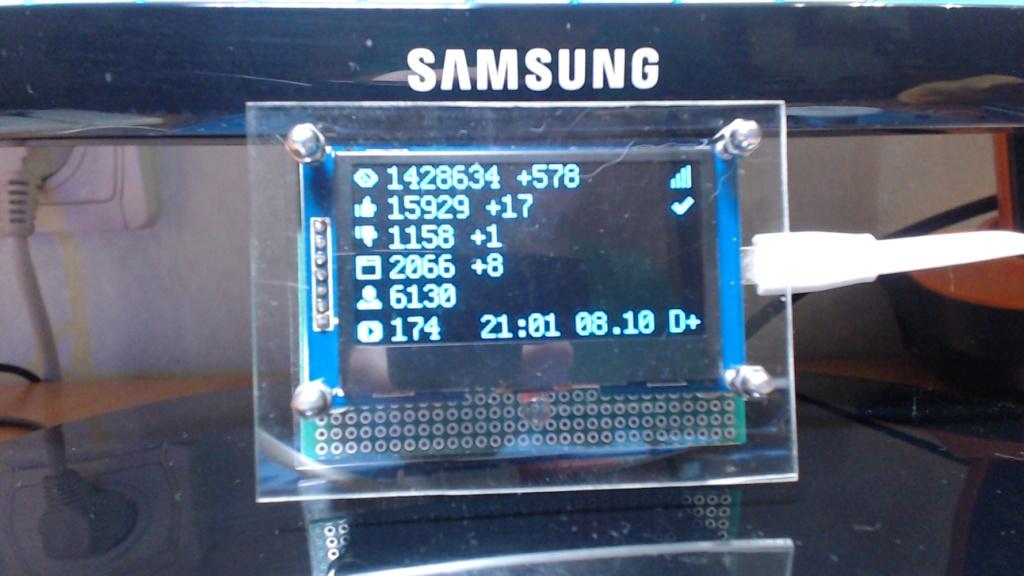
- Displaying the number of views, likes, dislikes, comments:
- for the current 5 minutes (M +)
- for the previous 5 minutes (M-)
- for the current hour (H +)
- for the previous hour (H-)
- for the current day (D +)
- for the previous day (D-)
- subscriber counter
- number of videos on the channel
- light indication in case of a new comment (maximum update time 5 minutes)
- the ability to turn off the display
- touch interface
- the ability to turn off the power (saving data for an hour and a day)
- This is quite enough to track activity on your own or any other channel.
Project Perspective
YouTube analytics on ESP32 is a sophisticated exploration of network technology and API interaction. By focusing on the essential building blocks—the HTTPS-JSON-to-stats mapping and your high-performance ESP32-dispatch and secure-sync logic, you'll learn how to communicate and synchronize your data tasks using specialized software logic and a robust, high-performance setup.
Technical Implementation: Secure Clients and JSON Buffers
The project reveals the hidden layers of simple sensing-to-cloud interaction:
- Identification layer: The ESP32 WiFi Core acts as a high-resolution network eye, measuring every point of the cloud socket to coordinate the system dispatch.
- Conversion layer: The system uses a high-speed digital protocol (HTTPS/REST) to receive high-speed JSON packets to coordinate mission-critical sensing tasks.
- Visual Interface layer: A Serial Monitor / OLED provides high-definition visual and textual feedback on your channel status (e.g. Subs: 10K, Views: 1M).
- Communication Gateway layer: A YouTube API Key provides a manual data-override or an automated security-sync status check during initial calibration to coordinate status.
- Processing Logic layer: The server code follows an "api-fetch-dispatch" (or youtube-dispatch) strategy: it interprets web responses and matches JSON fields to provide safe and rhythmic analytics extraction.
- Communication Dialogue Loop: Data chunks are sent rhythmically to the Serial Monitor during initial calibration to coordinate status.
Hardware-IoT Infrastructure
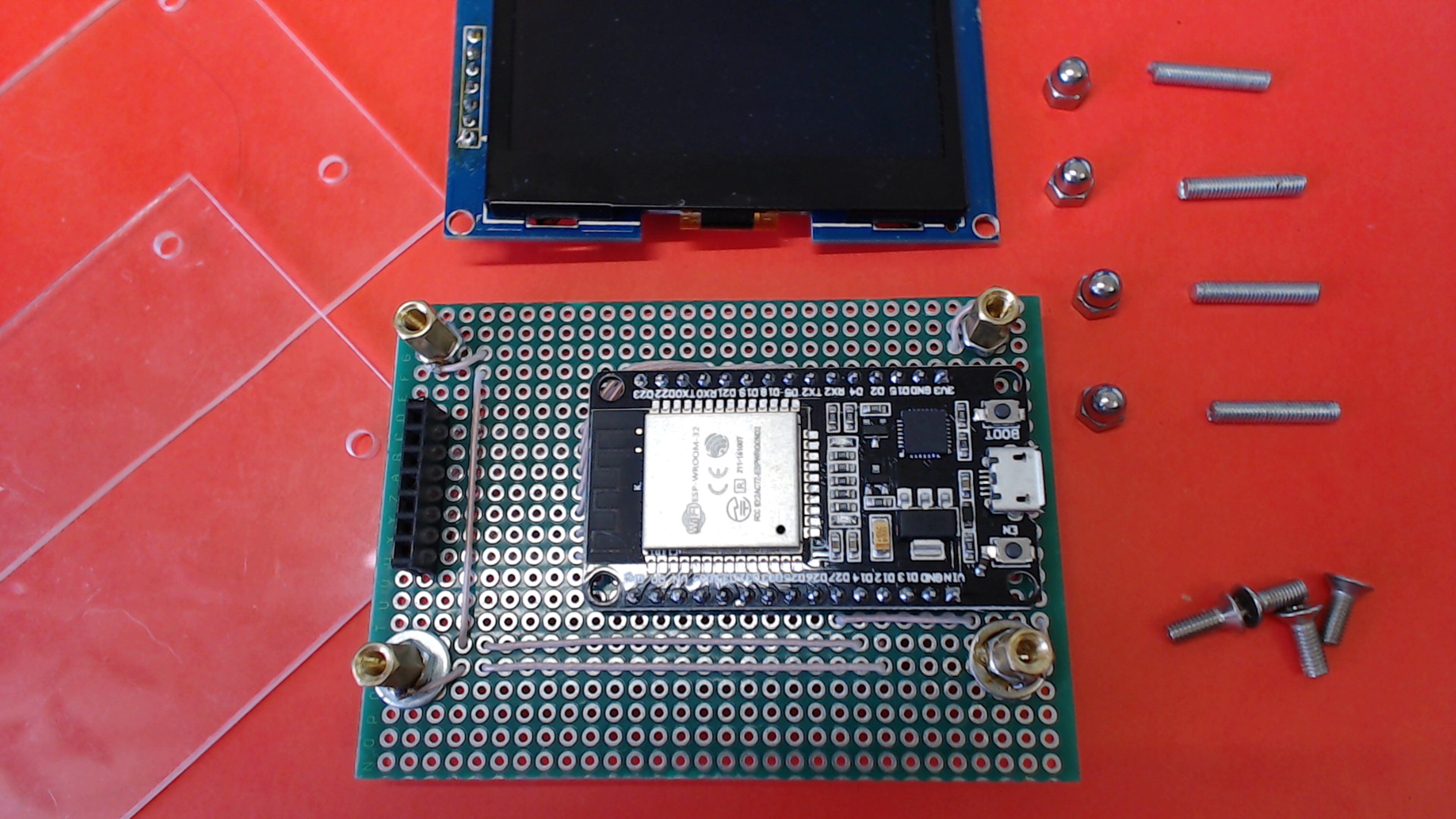
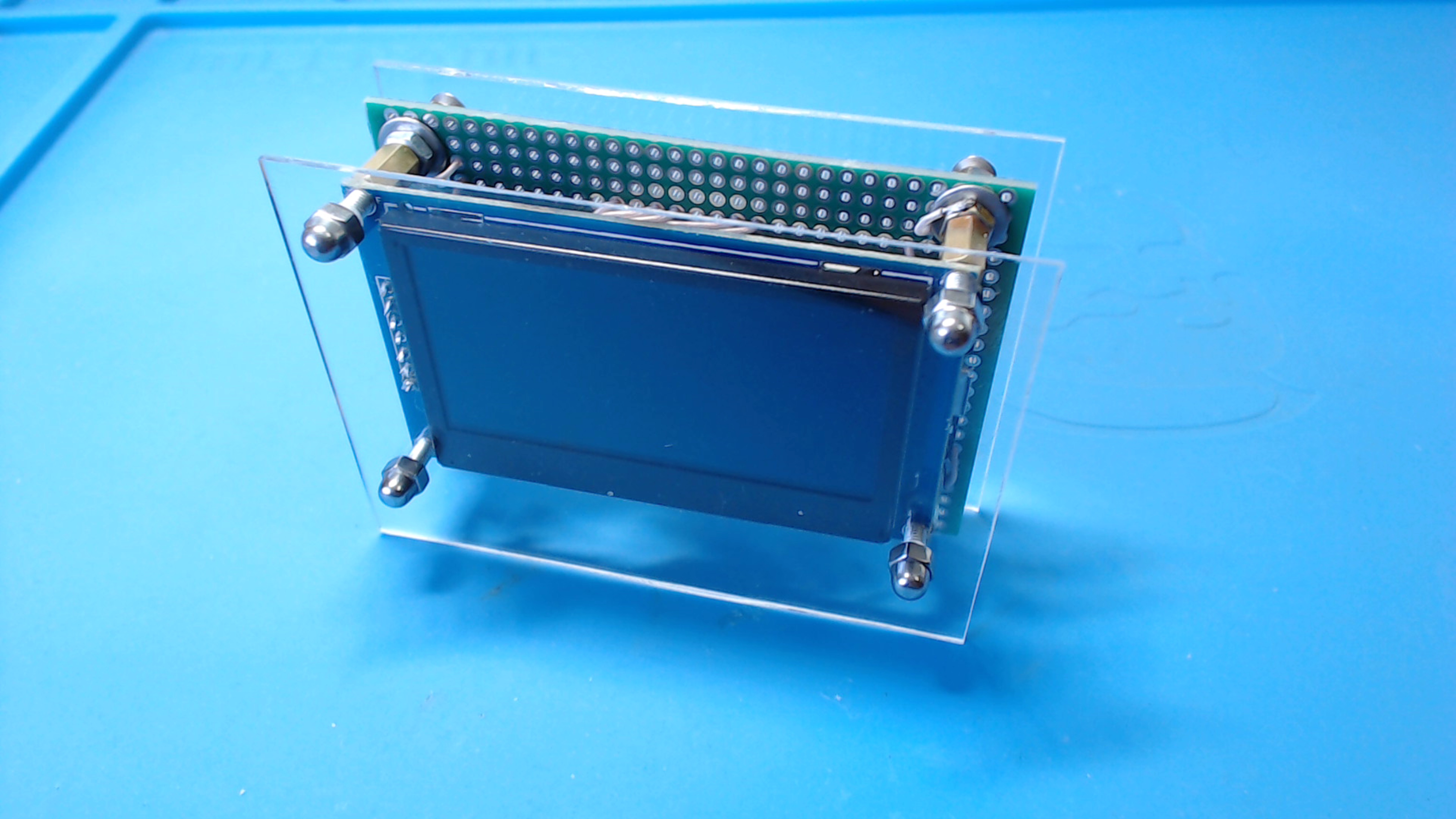
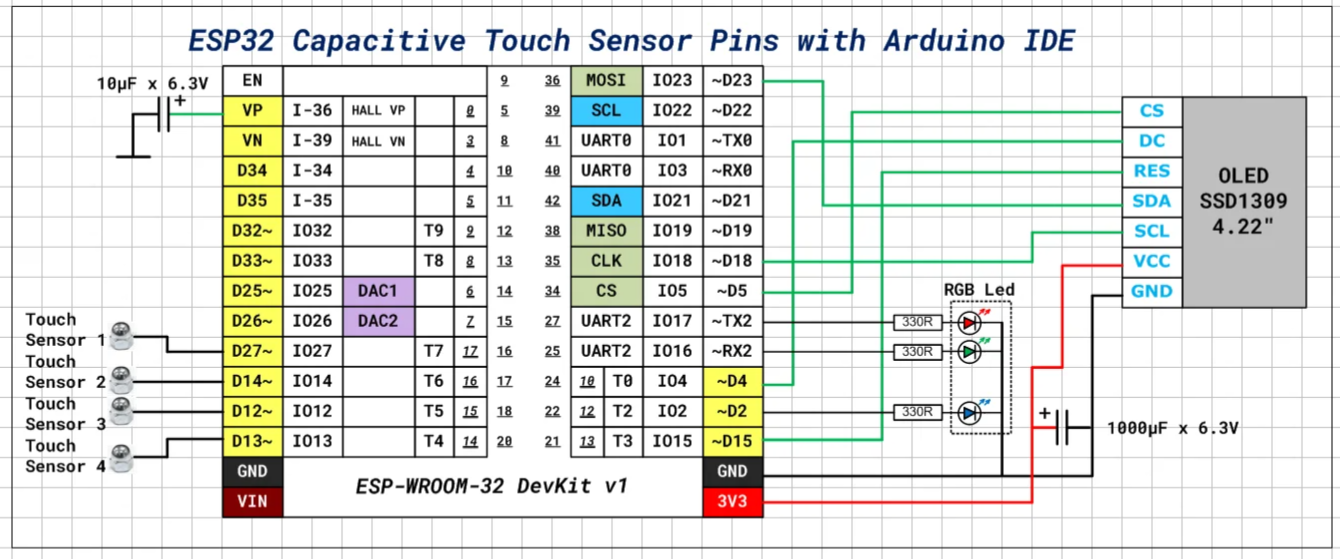
The project uses a monochrome OLED display with a diagonal of 2.42 "and a resolution of 128 * 64 on the SSD1309 controller. It is connected to the SPI bus of the ESP32 board. RGB LED is connected to pins D17, D16, D2 - and is intended to indicate important notifications. (In the future it is planned to add notifications for social networks and forums) The interface of the device is touch-sensitive - ordinary nuts and caps are used as buttons.
Capacitor with a capacity of 10 microfarads. is needed so that sketches can be loaded without problems. A 1000 microfarad capacitor between pins 3V3 and GND had to be installed due to the fact that sketches stopped loading into the board when connected to Wi-Fi (reduced supply voltage from a USB PC).
The core hardware components include:
- FireBeetle ESP32: The "brain" of the project, managing multi-directional network sampling and coordinating API and display sync.
- Google Cloud API: Providing a clear and reliable "Data Link" for every point of global analytics.
- Optional Display: Providing a high-capacity and reliable physical interface for your first successful "Dashboard Mission."
- Breadboard: Essential for providing clear and energy-efficient protection for every point of the prototype circuit.
- Jumper Wires: Essential for providing a clear and energy-efficient digital signal path for all points of your data sensing array.
- Micro-USB Cable: Used to program your Arduino and provides the primary interface for the system controller.
Analytics Hub Automation and Interaction
After powering on and connecting to the Internet, the ESP32 board makes a complete list of the video channel, and summarizes the data for each video.
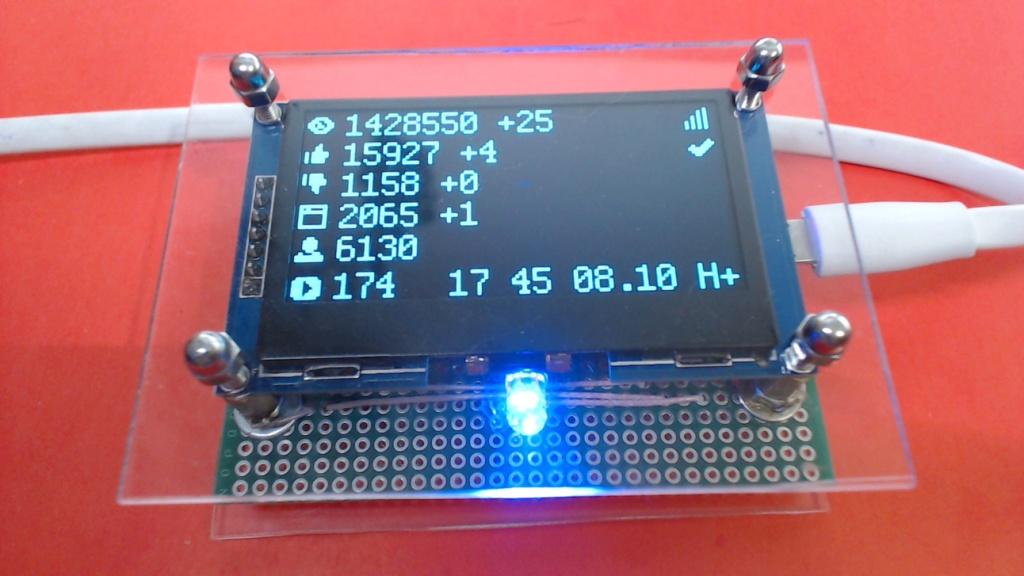
Number of views, likes and dislikes, number of comments. The request is performed every 5 minutes, which allows you to receive statics online without the need to use a PC or smartphone.
The proximity-driven tracking process is designed to be very efficient:
- Initialize Workspace: Correctly configure your API Key inside your Google console and connect properly to the ESP32 sketch.
- Setup High-Speed Sync: In the Arduino sketch, initialize the
WiFiClientSecureand define the target channel ID insetup(). - Internal Dialogue Loop: The station constantly performs high-performance periodic HTTP requests and updates the stat status in real-time based on your location and settings.
- Visual and Data Feedback Integration: Watch your display automatically become a rhythmic status signal, pulsing and following your analytics settings from all points of the web.
Future Expansion
- OLED Identity Dashboard Integration: Add a small OLED display to show "Likes Count" or "Battery (%)".
- Multi-sensor Climate Sync Synchronization: Connect a specialized "Bluetooth Tracker" to perform higher-precision "Local Paging" wirelessly via the cloud.
- Cloud Interface Registration Support Synchronization: Add a specialized web-dashboard on a smartphone over WiFi/BT to precisely track and log total social history.
- Advanced Velocity Profile Customization Support: Add specialized "Machine Learning (vCore)" to the code to allow triggers to be changed automatically based on user height!
YouTube ESP32 Dashboard is a perfect project for any science enthusiast looking for a more interactive and engaging IoT tool!
[!IMPORTANT] The WiFi Client Secure requires an accurate SSL certificate mapping (e.g. for Google Root CA) in the setup to ensure a reliable HTTPS connection; always ensure you have an appropriate Fail-Safe flag in the loop if the internet goes down!